• De:versify – New Poetry
  • Welcome
  • About
  • Blog
  • Reviews and Comments
  • BORVO
  • Denagerie of Poems
  • The Reunion
  • Contact

Denny Bradbury Books

Denny Bradbury Books

Author Archives: dennybradburybooks

Pagan Healing

30 Friday Oct 2015

Posted by dennybradburybooks in Misc

≈ Leave a comment

Tags

antiseptic, concoction, digestion, infestations, treatment

mossIn Chapter One of Denny Bradbury’s “Borvo II”, Borvo, Seofon – Borvo’s good friend and a travelling storyteller – and Cedric, the freed slave and companion to Borvo  encounter on their journey through Wales five vagabonds at night who are seeking their prey.  The ensuing fight leaves Cedric with multiple knife wounds, one of which on his arm is deep, plus a dislocated shoulder which Borvo wrenches back into its socket whilst Cedric is still unconscious.

Borvo then sets about helping to ease Cedric’s other wounds by applying a salve of agrimony – a low growing plant that thrives in hedges, fields and by ditches that as well as being a particularly good herb for the digestive system and urinary tract is also particularly useful for inflamed, weepy conditions of the body.  Cedric’s deeper cut is bound with moss as bogmoss acts like a sponge and can soak up as much as 20 times its own weight in water and is therefore often been used to dress wounds. Being naturally sterile, the use of moss to dress a wound aids the healing process.

Comfrey leaves are then used to help prevent too much loss of blood as the chemicals in the comfrey plant have a healing effect that reduces inflammation when applied to the skin.  The plant contains the small organic molecule allantoin which is thought to stimulate cell growth and repair.

To help Seofen’s cut on his head, Borvo applies a moss poultice without any other treatment as this would draw the dirt from the wound and help it to seal.

Some of the mediations and herbs used centuries ago are no longer so popular but certain herbs and plants are still used today by modern herbalists, thousands of years later.

A few to mention are honey, which is an excellent antiseptic that is still used to treat wounds by the British Military today; Willow, a concoction of which was used to treat toothache, with willow bark forming the basis of modern aspirin; Mint, still used today to treat gastric ailments and is often found as an aid to digestion and Pomegrante which was used to treat infestations of parasite worms and whose high tannin content has actually been found to paralyse worms.


 

Sad November

30 Friday Oct 2015

Posted by dennybradburybooks in Denny's Diary, Poetry

≈ Leave a comment

Tags

November poem

As November is nearly upon us I remembered a short poem I wrote for my first collection – Denagerie of Poems. The thoughts I had in my head when I wrote it have come flooding back to me today:

The journey of the writer at the dullest time of year,
An empty page, an empty head and sad November’s here.
If only gay December were to enter dancing sprightly
The happiness and jollity would come with muses, brightly.

But no! The dull and wet and dank bring on the dread and gloom;
What a prize a thought would be, just anyone would do.
I will give up this worsening state; I shall dispel this fog,
I’ll don my coat and hat and boots and go and walk the dog.

Very best wishes for a happy November kicking at leaves and dodging the rain – Denny Bradbury

A Sign of those Anglo Saxon times..

11 Sunday Oct 2015

Posted by dennybradburybooks in History

≈ Leave a comment

Tags

9th century, anglo saxon, Borvo, Roman, society

Alfred the Great image

With the launch of Denny Bradbury’s highly anticipated second novel, Borvo II, it is worth taking the time to reflect back on what the ninth century was actually like for the people who lived during it.
Society was divided into three classes, with the top being the Thanes, the Anglo Saxon upper class who enjoyed feasting and hunting and was expected to give their followers gifts of weapons. Beneath them were the Churls of whom some were reasonably well-off and in the bottom tier were the Thralls for whom life was very hard. Some Churls were lucky enough to own their own land but many rented land from a thane. By renting it meant that they worked on the thane’s land for a part of the week and by also giving him a portion of their crops.
Unlike today where England is full of cars, houses, and buildings, Anglo Saxon England was covered by forest that was occupied by wolves that were a constant danger to domestic animals. The human population was also very small with roughly a million people in England at that time. Almost all of the population lived in tiny villages, each with less than 100 inhabitants, and was mainly self-sufficient with the villagers needing only a few things from outside like salt and iron as they grew their own food and made their own clothes.
By the 11th century this had begun to change and whilst a vast majority of the population still lived in the countryside, 10% – a significant minority – were living in towns. New towns had been created and trade was flourishing. Unlike the unrest of the 9th century when Britain experienced a great deal of unrest due to the influx of Viking people resulting in the invasion of East Anglia by the Danish army in 865, followed by the city of York and the kingdom of Northumbria and the western part of Mercia, leaving just the kingdom of Wessex to be safeguarded by Alfred the Great who also re-established his Anglo-Saxon rule over the western half of Mercia, in the 11th century England had grown into a civilised, stable state with an efficient system of local government, whilst learning and the arts flourished in the monasteries.
The Anglo Saxons also provided us with most of the English place names we have today, with Saxon place name endings including those such as ham, a village or estate, tun – which was usually changed to ton over time – , a farm or estate, hurst, a wooden hill and bury, derived from the Saxon word burh meaning fortress. The Anglo Saxons also called groups of Roman buildings a caster which in time would evolve into the place name ending in chester, caster or cester.
Family ties were very important in Anglo Saxon society; if you were killed, your relatives would avenge you and vice versa if it was one of your relatives that met a grisly end. However, the law did provide an alternative which meant if you did kill or injure somebody you could pay them or their family compensation a currency called wergild and varied in amount according to the person’s rank ie the wergild for killing a thane was much higher than that for killing a churl. Thralls and slaves had no wergild and if the wergild was not paid then the relatives were entitled to seek revenge.
Whilst at first Anglo Saxon society was relatively free, with the basis of society being the free peasant, over time the Anglo Saxon churls began to lose their freedom and became increasingly dependent on their Lords who wielded the control.
As the old Roman towns fell into decay and the Roman roads became overgrown, travel in Anglo Saxon times was slow and dangerous, with most people travelling only if it was unavoidable. For Borvo, it was just that. After ten years away from home, it was now time to go back and help his family….

Poetry Day

08 Thursday Oct 2015

Posted by dennybradburybooks in Denny's Diary, Poetry

≈ Leave a comment

Tags

Poetry Day

Closeup of message stones on white background.

Closeup of message stones on white background.

To all poets everywhere

Keep writing and bringing joy.
Keep being the conscience of the people.
Keep love on the agenda.
Offer peace to troubled souls.

From one poet to the rest.

Love and peace – Denny Bradbury (Green Poet)

Autumn – welcome new season

23 Wednesday Sep 2015

Posted by dennybradburybooks in Denny's Diary, Poetry

≈ Leave a comment

Tags

Autumn poetry, John Clare The Village Minstrel

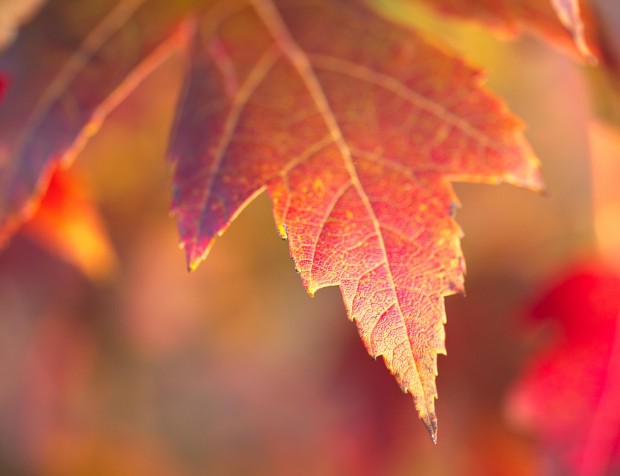
AutumnleafI do love autumn. All seasons have their own feeling but autumn is crisp and bright and when the sun shines it is clear and sharp. So many poets have written about autumn, for me some are able to capture its magic better than others. One of my favourites is John Clare. From his poem The Village Minstrel:

The summer-flower has run to seed,
And yellow is the woodland bough;
And every leaf of bush and weed
Is tipt with autumn’s pencil now.

And I do love the varied hue,
And I do love the browning plain;
And I do love each scene to view,
That’s mark’d with beauties of her reign.

Best wishes for a beautiful autumn – Denny Bradbury

← Older posts
Newer posts →

Subscribe

  • Entries (RSS)
  • Comments (RSS)

Archives

  • March 2021
  • January 2021
  • April 2020
  • February 2020
  • January 2020
  • February 2019
  • September 2018
  • April 2018
  • March 2018
  • February 2018
  • January 2018
  • December 2017
  • November 2017
  • September 2017
  • August 2017
  • June 2017
  • May 2017
  • April 2017
  • March 2017
  • January 2017
  • December 2016
  • October 2016
  • September 2016
  • August 2016
  • July 2016
  • June 2016
  • May 2016
  • April 2016
  • March 2016
  • February 2016
  • January 2016
  • December 2015
  • November 2015
  • October 2015
  • September 2015
  • August 2015
  • June 2015
  • May 2015
  • April 2015
  • March 2015
  • February 2015
  • January 2015
  • December 2014
  • November 2014
  • October 2014
  • September 2014
  • August 2014
  • July 2014
  • June 2014
  • May 2014
  • April 2014
  • March 2014
  • February 2014
  • January 2014
  • December 2013
  • November 2013
  • October 2013
  • September 2013
  • August 2013
  • July 2013
  • June 2013
  • May 2013
  • April 2013
  • March 2013
  • February 2013
  • January 2013
  • December 2012
  • November 2012
  • October 2012
  • September 2012
  • August 2012
  • July 2012
  • June 2012
  • May 2012
  • April 2012
  • March 2012
  • February 2012
  • January 2012
  • December 2011
  • November 2011
  • October 2011
  • September 2011
  • August 2011
  • July 2011
  • June 2011
  • May 2011
  • April 2011
  • March 2011

Categories

  • Denny's Diary
  • fairytales
  • Fiction
  • History
  • Literacy News
  • Misc
  • Poetry
  • Polls
  • Reviews

Meta

  • Create account
  • Log in

Latest Tweets from Denny Bradbury Books

Tweets by DennyBradbury

Blog at WordPress.com.

Privacy & Cookies: This site uses cookies. By continuing to use this website, you agree to their use.
To find out more, including how to control cookies, see here: Cookie Policy
  • Subscribe Subscribed
    • Denny Bradbury Books
    • Join 73 other subscribers
    • Already have a WordPress.com account? Log in now.
    • Denny Bradbury Books
    • Subscribe Subscribed
    • Sign up
    • Log in
    • Report this content
    • View site in Reader
    • Manage subscriptions
    • Collapse this bar
 

Loading Comments...