Amy Gerstler – In Perpetual Spring

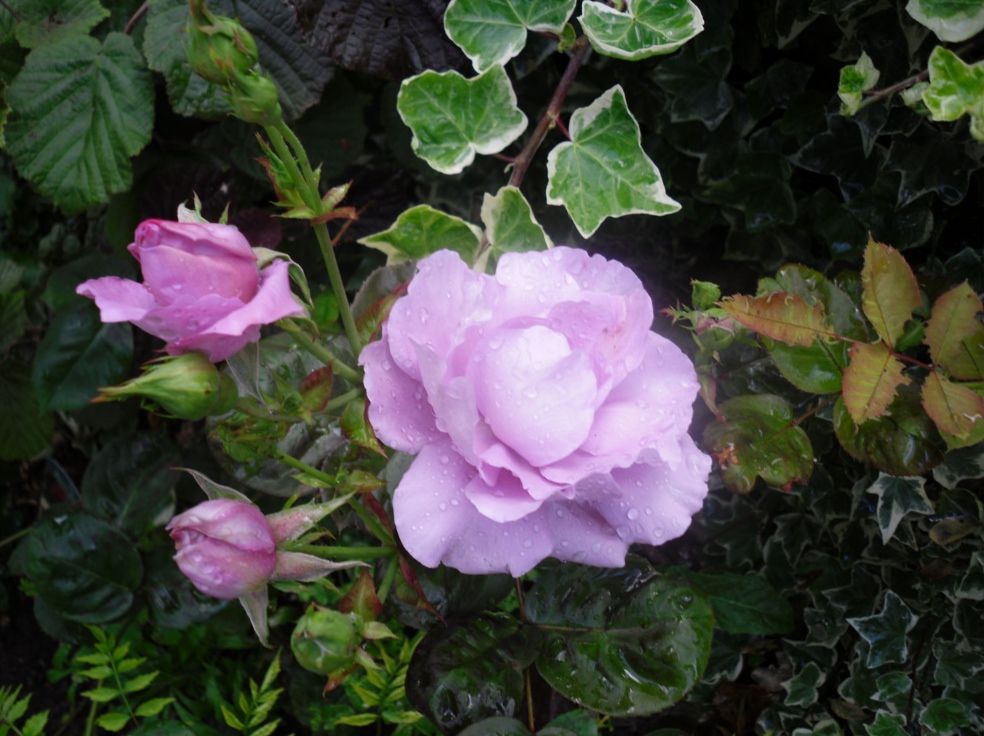
roses2010-0041.jpg

Gardens are also good places
to sulk. You pass beds of
spiky voodoo lilies
and trip over the roots
of a sweet gum tree,
in search of medieval
plants whose leaves,
when they drop off
turn into birds
if they fall on land,
and colored carp if they
plop into water.

Suddenly the archetypal
human desire for peace
with every other species
wells up in you. The lion
and the lamb cuddling up.
The snake and the snail, kissing.
Even the prick of the thistle,
queen of the weeds, revives
your secret belief
in perpetual spring,
your faith that for every hurt
there is a leaf to cure it.

For Gerstler, being with nature gives a calming affect to humankind, letting stresses and strains go away: “the archetypal human desire for peace/with every other species wells up in you.”

She talks in In Perpetual Spring of how spring brings the idea of peace, and hope. It’s time for a new start, a fresh start, a hopeful start: “your secret belief/in perpetual spring,/your faith that for every hurt/there is a leaf to cure it.”

The freshness of spring and new life also gives hope that unlikely friendships could form, that even the most fearsome predator can be tamed. “The lion/and the lamb cuddling up./The snake and the snail, kissing.”

Yet this idea of Spring bringing peace and love isn’t shared by Denny Bradbury. In March Spring, she shows that it can be a letdown, “bumblebees awaken now to stumble out their food to find from early stems/of nectar sweet that disappoint and so too cold to fly they fall on path awhile”.

She tells of how humankind “watch and interfere” with nature’s cycle, rather than sitting back and appreciating it and letting us have hope as in Gerstler’s In Perpetual Spring. Instead of interfering, we should “learn that we’re here by chance/so let the world still turn in time”.

Spring is not so awesome now late flowering of an ageing soul
flowers bloom and sway and stay away from winds that blow too soon
too rough and with uncommon gusts send buds into defensive mood
leaves know not whether they should come and hang their pretty green
or keep within their safe cocoon till March to April warmth gives way

Birds build their nests as ever seen with twigs and grasses softly strewn
in branches not yet swathed in clothes that mean to hide their eggs by day
bumblebees awaken now to stumble out their food to find from early stems
of nectar sweet that disappoint and so too cold to fly they fall on path awhile
to gather sun which warms their wings so they can soar once more to sup
and gather all this instant cup of cheer and so back to nest and eggs to lay

this cycle round and round it goes and we just watch and interfere where
nature needs no help from those who ruin all by base degrees of selfish
harm when all we need to do is tread with lighter step upon the head
of this blue planet so designed to swirl through space as undefined
by human souls as it should be and we learn that we’re here by chance
so let the world still turn in time while we live on in humble rhyme

Mother Julian of Norwich – Infinite Love

Because of the great,


infinite love which God has for all humankind,


he makes no distinction in love between the blessed soul of Christ


and the lowliest of the souls that are to be saved . . .


We should highly rejoice that God dwells in our soul


and still more highly should we rejoice that our soul dwells in God.


Our soul is made to be God’s dwelling place,


and the dwelling place of our soul


is God who was never made.

Julian’s words from over six centuries ago focus on God’s warmth, nurturance, compassion, generosity and love. She is focused on desire for human salvation: “he makes no distinction in love between the blessed soul of Christ/and the lowliest of the souls that are to be saved”.

She has been a source of inspiration for many writers, including Denny Bradbury, who writes about her in “The Call.”

Denny wonders about Julian’s origins, “I don’t know your name/the one that your mother would call/as you wandered away from your home/in the grip of your holy enthral”. She looks back on her life and ponders whether Julian was the same person before God’s revelations to her: “were you always convinced of your goal/did you instinctively know what is right/was yours always a pure childish soul?”.

She wonders if her religious beliefs are are strong as Julian’s “Shall I ever be even so true/to a tenth of what you left behind?” but admits that “only god knows”.

The Call

Mother Julian! Mother Julian!

I don’t know your name

the one that your mother would call

as you wandered away from your home

in the grip of your holy enthral.

As you sat looking out at the blue

of the sky be it daytime or night

were you always convinced of your goal

did you instinctively know what is right

was yours always a pure childish soul?

Did Gods voice on the wind or the tide

gently slide in with delight

and rock you with thoughts so divine

you said, ‘Now Im for an Anchorite

I know the course that is mine

Was it simple for you, did you doubt

were you ever tempted to sin?

When children bullied and fought

were you there on the edge looking in

thinking violence will all come to nought?

I hope that you gave up some gritty

childhood pleasures and joys

that you threw sticks and muddied the water

and you cried over old broken toys

wishing to stay evermore as a daughter

freezing time that was precious and good

but then you discovered your Father

in churches so simple and plain

that you walked away from your family

a much greater one for to gain.

How proud and how sad was your mother

when you donned the linen pure

the mark of your face in her memory

full of light and conviction so sure

holy work the one truth in your story.

Do I envy you the faith that was riven

so deep in your brilliant mind?

Shall I ever be even so true

to a tenth of what you left behind?

Only God knows but maybe I do!

John Donne – The Sun Rising

Busy old fool, unruly Sun,

Why dost thou thus,

Through windows, and through curtains, call on
us?

Must to thy motions lovers’ seasons run?

Saucy pedantic wretch, go chide

Late schoolboys, and sour prentices,

Go tell court-huntsmen that the king will ride,

Call country ants to harvest offices,

Love, all alike, no season knows, nor clime,

Nor hours, days, months, which are the rags of
time.


Thy beams, so reverend and strong

Why shouldst thou think?

I could eclipse and cloud them with a wink,

But that I would not lose her sight so long:

If her eyes have not blinded thine,

Look, and tomorrow late, tell me

Whether both the’Indias of spice and mine

Be where thou leftst them, or lie here with me.

Ask for those kings whom thou saw’st yesterday,

And thou shalt hear: ‘All here in one bed lay.’


She’is all states, and all princes I,

Nothing else is.

Princes do but play us; compar’d to this,

All honour’s mimic, all wealth alchemy.

Thou, sun, art half as happy’as we,

In that the world’s contracted thus;

Thine age asks ease, and since thy duties be

To warm the world, that’s done in warming us.

Shine here to us, and thou art everywhere;

This bed thy centre is, these walls, thy sphere.

For many people the sun is the centre of the universe. However, in The Sun Rising, John Donne implies that the speaker’s love affair is so important, that the centre of the universe is his bedroom. “This bed thy centre is, these walls, thy sphere.”

Indeed, the sun is a mere inconvenience to the man in love. “Busy old fool, unruly Sun/Why dost thou thus,/Through windows, and through curtains, call on us?”. The speaker doesn’t want the sun interrupting his love life. He doesn’t need outside interference, as his inner feelings give him the satisfaction that he needs.

This idea of inner feelings giving satisfaction rather than a meaning coming from the outside world can also be seen in Denny Bradbury’s Searching, Searching, Searching.

This work by Denny was inspired by an observation of someone who is always looking for an outside balance to life. However, like the speaker in The Sun Rising, Denny believes that it’s inside that the answer will be found. Denny may not have been inspired by love, like the speaker in Donne’s work, but it’s clear that she believes nature may not be the centre of the universe in terms of personal feelings :

‘Within myself the answer lies’.

Like Donne, there is a clear distinction in Denny’s work between the outside world and the world inside your body. “the grass between your feet/is soft and green and welcoming/the place where two worlds meet.” For Denny, the outside world is not as much as a distraction compared to the speaker in The Sun Rising.

Denny shows how life goes on despite the constant change of nature and the outside world: ‘So when the rain blots out the sun/or wind whips clouds in view/ ’tis certain sure I will survive/of all, now, this is true.’ This idea is also seen through Donne’s speaker, who also believes that true feelings can eclipse whatever the outside world can throw at you. ‘Love, all alike, no season knows, nor clime,/Nor hours, days, months, which are the rags of
time.’

Searching, Searching, Searching

Searching, searching always searching

the grass beneath your feet

is soft and green and welcoming

the place where two worlds meet.


Look down and see the planet earth

so brown and green and blue

look up and there is more to come

the light shines down on you.


“Oh where oh where is what I seek

what is my soul to do?

There is nothing new for me yet

I need to know the who,


the whys and wherefores, how its done

what makes us stand alone

our need to drive the rest to ground

what price the moral zone?


Within myself the answer lies

for it is plain to see

expose the heart that rests and hides

and there is more to me.


So when the rain blots out the sun

or wind whips clouds in view

’tis certain sure I will survive

of all, now, this is true.


I stand before the world to show

that this is how I’m made

naked as through the glass of life

no longer in the shade!

Poems for trees

Tags

, ,

Inspiration from nature seems endless. Usually the poems appear in my head and are almost complete needing just a tweak to satisfy.  However I have had one on going for 6 months and can’t seem to get it right.  It is a poem about a magnificent larch tree. I am sure it is worth pursuing but just for now it is elusive.  How right the American poet Joyce Kilmer was when he wrote:

Poems are made by fools like me, but only God can make a tree.

My attempt starts from the point of view of the tree:

What mighty larch, how see you?  What mighty larch is your view?

Hug a tree for fun, people will think you’re mad but then in the long run it doesn’t really matter.

Very best wishes

Denny Bradbury

Archibald Lampman – Heat

From plains that reel to southward, dim,

The road runs by me white and bare;

Up the steep hill it seems to swim

Beyond, and melt into the glare.

Upward half-way, or it may be

Nearer the summit, slowly steals

A hay-cart, moving dustily

With idly clacking wheels.

By his cart’s side the wagoner

Is slouching slowly at his ease,

Half-hidden in the windless blur

Of white dust puffing to his knees.

This wagon on the height above,

From sky to sky on either hand,

Is the sole thing that seems to move
In all the heat-held land.


Beyond me in the fields the sun
Soaks in the grass and hath his will;

I count the marguerites one by one;

Even the buttercups are still.

On the brook yonder not a breath

Disturbs the spider or the midge.

The water-bugs draw close beneath

The cool gloom of the bridge.


Where the far elm-tree shadows flood

Dark patches in the burning grass,

The cows, each with her peaceful cud,

Lie waiting for the heat to pass.

From somewhere on the slope near by

Into the pale depth of the noon

A wandering thrush slides leisurely

His thin revolving tune.


In intervals of dreams I hear

The cricket from the droughty ground;

The grasshoppers spin into mine ear

A small innumerable sound.

I lift mine eyes sometimes to gaze:

The burning sky-line blinds my sight:

The woods far off are blue with haze:

The hills are drenched in light.


And yet to me not this or that

Is always sharp or always sweet;
In the sloped shadow of my hat
I lean at rest, and drain the heat;
Nay more, I think some blessèd power

Hath brought me wandering idly here:

In the full furnace of this hour

My thoughts grow keen and clear.

Throughout Heat, Lampman describes the effect of extreme heat on nature, including people. Lampman says the sun hath his will, showing how nature cannot be controlled by man. He also implies that nature can control his feelings, In the full furnace of this hour / My thoughts grow keen and clear.

Just like Lampman, Denny Bradbury is also inspired by nature. She also looks at nature controlling human emotions. In a poem from her recent collection, inspired by sitting and watching field of horses and noticing how the natural and animal world reacts and adjusts to extreme heat, she says shadows are drawing me in / to twilight rest. For Denny, the end of the sunlight, the natural end to the day, makes her tired.

Butterflies mate on the wing in clusters
Bumblebees bumble into wild mallow
heady with the heat
horses run to escape the fly
in quick retreat

garden swing swinging cushion soft
bird on the wing winging aloft
sun dips slowly west
shadows are drawing me into twilight rest

cool haven of night sky offering calm
respite from this hottest of summers
stars appearing to overcome
the brilliant light of day shine in their
navy blue dome

Like Lampman, Bradbury focuses on the effects the heat has on animals, Butterflies mate on the wing in clusters / Bumblebees bumble into wild mallow / heady with the heat / horses run to escape the fly / in quick retreat. These animals react to the heat, with one animal’s action having a knock on effect to others.

Whereas Bradbury portrays a picture of constant movement, Lampman’s Heat describes a scene almost frozen in time. Even the buttercups are still.
/ On the brook yonder not a breath
/ Disturbs the spider or the midge. / The water-bugs draw close beneath
/ The cool gloom of the bridge.