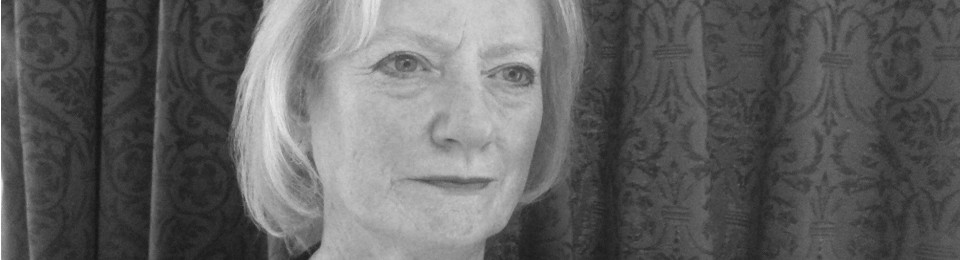
Emily Dickinson

Tags

, ,

Emily Elizabeth Dickinson was a 19th century American poet.

She once defined poetry “If I read a book and it makes my whole body so cold no fire can warm me I know that is poetry. If I feel physically as if the top of my head were taken off, I know that is poetry. These are the only way I know it. Is there any other way?” (Letter342a, 1870)
The Letters of Emily Dickinson, ed. Thomas H. Johnson and Theodora Ward (Cambridge, Mass.: The Belknap Press of Harvard University Press, 1958).

Emily was born on December 10th 1830 to a prominent family in Amherst, Massachusetts with a brother Austin and sister Lavinia.  Their lineage can be traced back to the Puritan Great Migration two hundred years earlier who travelled to the New World from Europe.

Emily was considered to be a very able student studying the classics.  However the subject of death seemed to haunt her throughout the years:  the death of her second cousin Sophia Holland early in her life appeared to have had a deep impact on Emily.

Leonard Humphrey was a principal at her college who assisted in her thirst for literary knowledge and was thought to be more than a mere acquaintance who passed away at the age of 25.

Emily cared for her mother who, after suffering from a slowly deteriorating illness, died shortly after the passing of her father.

The death of her dog after so many years of companionship, and her favourite niece just three years before her own passing showed a constant stream of sadness.

There is also a thought she struggled with religion – brought up under the acceptance of God but to later turn away from the routine communal worship to that of her own private contemplation; preferring also to dress in white rather than the traditional dark colours.

By 1860 Emily was effectively a recluse.  Yet it was this seclusion that allowed Emily the opportunity to enjoy her reading and refine her own literary works.

She wrote thousands of poems yet fewer than a dozen were published during her lifetime.  Those pieces which were printed were often ‘edited’ to suit the tone and traditions of the age.

It was not until after her death in 1886 when Emily’s younger sister, Lavinia, came across all her works.

“There Is Another Sky”
There is another sky,
Ever serene and fair,
And there is another sunshine,
Though it be darkness there;
Never mind faded forests, Austin,
Never mind silent fields –
Here is a little forest,
Whose leaf is ever green;
Here is a brighter garden,
Where not a frost has been;
In its unfading flowers
I hear the bright bee hum:
Prithee, my brother,
Into my garden come!

There are many interpretations to this poem – some say it highlights her sexual desire for her brother, Austin – he had married Susan Gilbert, also perceived to be an unrequited love of Emily’s.

Others suggest the poem is her hope that Austin will see her through to a better place in heaven.  Or simply with all the death and sadness she faced, her brother was always there for her.  It is perhaps a message of hope.

Emily Dickinson died on May 15th 1886.

Phenomenal Woman – Maya Angelou

Tags

, , , ,

Phenomenal Woman Born in April 1928, at the age of eighty four Maya Angelou is an American poet, author, actress, director, screenwriter, dancer and activist who, over the course of her life so far, has published six autobiographies, five books of essays, several books of poetry and is credited with writing numerous plays, movies and television shows that span more than fifty years.  She has also worked for Martin Luther King and Malcolm X in her capacity as a civil rights activist.

Her poetry book, entitled Phenomenal Woman, published in 1995, is a collection of four poems which takes its title from a poem she wrote which originally appeared in Cosmopolitan magazine in 1978, in which Angelou describes the physical and spiritual characteristics and qualities that make her attractive:

Men themselves have wondered

What they see in me.

They try so much

But they can’t touch

My inner mystery.

When I try to show them,

They say they still can’t see.

I say,

It’s in the arch of my back,

The sun of my smile,

The ride of my breasts,

The grace of my style.

I’m a woman

Phenomenally.

Phenomenal woman,

That’s me.

“..Men themselves have wondered
What they see in me.
They try so much
But they can’t touch
My inner mystery.
When I try to show them,
They say they still can’t see.
I say,
It’s in the arch of my back,
The sun of my smile,
The ride of my breasts,
The grace of my style.
I’m a woman
Phenomenally.
Phenomenal woman,
That’s me….”

Much of Angelou’s poetry can be traced to African-American oral traditions, especially in her use of the personal narrative, just as the poet Denny Bradbury does in her poem “So Grey the Sea” from her new collection “De-versify” in which she talks of fighting for what is rightfully hers in terms of a place in society:

“..They’re dead and gone
But me, I’m here
No-one will take
What’s mine
D’you hear?

I won’t go back to
Where I’m from
Its in the city
I belong…”

“Phenomenal Woman” is a poem that encapsulates the power that Angelou felt women have, even if they are not a classical beauty, simply through a woman’s attributes such as “the fire in her eyes …and the joy in (her) feet”. Her exultation of the phenomena that is woman herself shows a strength borne from the harrowing experiences Angelou suffered as a child, when she was raped by her mother’s boyfriend and as a result of her uncles murdering the man responsible, became mute for five years, believing his murder to be her fault.   As Denny Bradbury writes in her poem “Purposely Drifting”:

“..Inner calm will be your amazing strength..”  For Maya Angelou this was certainly true and she has gone on to lead an inspirational life.

Now is the winter of our discontent…..

Tags

, , , ,

https://i0.wp.com/cdn.morguefile.com/imageData/public/files/j/johninportland/preview/fldr_2011_01_07/file3031294416087.jpgAs I write this, looking outside my window on a cold, crisp morning, my mind wanders to a Shakespeare Sonnet:

That time of year thou mayst in me behold
When yellow leaves, or none, or few, do hang
Upon those boughs which shake against the cold,
Bare ruin’d choirs, where late the sweet birds sang.

There is a golden sun illuminating the clear, blue sky.  Clouds are forming, just a few in number at present.

The trees have lost their leaves, but the sunshine glimmers off the dew on the grass.  Quite beautiful.

The cold in itself offers its own beauty – a freshness, an alertness.  Seasons change; our interpretations of life around us changes.

What good is the warmth of summer, without the cold of winter to give it sweetness.
(John Steinbeck, Travels with Charley: In Search of America)

For many, winter is a lonely time.  Percy Shelley in Ode to the West Wind reflects the hope of many:

If winter comes, can spring be far behind?

When you read through ‘De-versify’, the latest collection of poems from Denny Bradbury, you discover a variety of works.  One such piece highlights the link many people feel between the chill, the bleakness and their own internal sadness.

Reading the opening lines to Winter Soul you come across visual descriptions, setting the scene of the day:

Crisp clear air of deepest winter

Sky streaked so with pastel hue

Yet when you move on another two lines, the truth of the poem is brough to the fore:

Dig into my soul with icy finger

Make my heart with leaden blue

If we look back to 1781 we come across poet Robert Burns.  Here we see his interpretation of winter and it’s meaning, taken from his poem Winter: A Dirge:

“The sweeping blast, the sky o’ercast,”
The joyless winter day
Let others fear, to me more dear
Than all the pride of May:
The tempest’s howl, it soothes my soul,
My griefs it seems to join;
The leafless trees my fancy please,
Their fate resembles mine!

Loneliness and sadness are emotions frequently associated with the cold, bleak winter months – cold and bleak are words used to describe weather as well as characters.

Often, as we saw with Percy Shelley, hope is an emotion which guides people through the wintry days and nights.  A.A. Milne describes quite beautifully the moment when Spring has arrived in When We Were Very Young:

“She turned to the sunlight
And shook her yellow head,
And whispered to her neighbor:
“Winter is dead.”

Verse Fable

Tags

, , , ,

FableVerse fable, as well as prose, is an ancient literary genre that can be found in the works of almost every country and is one of the most enduring forms of folk literature. It is a fictional story that features a myriad of mythical creatures, animals, plants, inanimate objects or forces of nature all bestowed with human qualities –such as the ability to speak and reason – and through such human attributes are able to illustrate and express a simple moral or lesson.  This can be seen reflected in Denny Bradbury’s poem “Hare in the Moonlight” from her new collection “De-versify” where she bestows insight upon an animal :

“.. Hare knows the old ways
Hare knows what we lack

Hare sees all the mystery
Hare keeps it all back..”

There have been numerous verse fabulists over the centuries, such as Marie de France, Jean de la Fontaine, Ignacy Krasicki, Ivan Krylov, Ambrose Bierce and, possibly the most well-known of all, Aesop.   Many of Aesop’s fables are characterised by animals and inanimate objects that speak, solve problems and generally behave in the manner of human beings.

Verse fables use a variety of meter and rhyme patterns and are renowned for telling the story of talking animals that are wise, or whimsical or foolish creatures that happily mimic the faults and foibles of humans.  The moral can usually be found at the end of the story, sometimes explicitly expressed, at other times merely inferred, and verse fables often have a “twist” or a surprise at the end that the reader would not have been expecting.

Unlike fairy tales, verse fables do not generally have the fantastical elements to them that re synonymous with fairy tales and are usually written as a child’s story, conveying a simple message or lesson.  The word fable itself comes from the Latin word ‘fabula’ meaning ‘a story’. Denny Bradbury, in her poem from her new collection “De-versify” entitled “Broken in Time” writes about one particular force of nature – the sea – and refers to the boulders and pebbles as if they have human characteristics:

“..Proud boulders that thought they were ‘it’
Smart pebbles gathered en masse
Thinking safety in numbers all right…”

Over the years, verse fables became a vehicle for conveying simple moral truths, incorporating humour and giving the reader the opportunity to laugh at the mistakes made by humans by demonstrating their behaviour through animals, or forces of nature or, as in Ignacy Krasicki’s “Bread and Sword”, things inanimate:

“..As the bread lay next to the sword, the weapon demurred,
You would certainly show me more respect if you heard
How by night and by day I conscientiously strive
So that you may safely go on keeping men alive.”
“I know”, said the bread, “the shape of your duty’s course
You defend me less often than you take me by force.”

Ode.

Tags

, , , ,

Greek OdeAn ode is a form of lyrical poetry, carefully structured, that praises or glorifies an event or a person.  Odes can also be found to describe nature intellectually as well as emotionally, just as Denny Bradbury does, in her poem “Wisdom of Trees” from her soon to be published new collection “De-versify” where she draws reference to the First World War and talks of how the trees know that mankind will go on fighting from “righteous outrage” rather than learning from the past and walking “..in peaceful union” whilst the trees

“..will reach their searching branches
Up into the wind and rain
They live and die as nature dances
Next year they grow and live again.”

Odes are about celebration and reverence and were originally accompanied by music and dance with instruments such as the aulos and the lyre.  They were performed in public with a Chorus during ancient Greek times and were often composed to celebrate athletic victories.  Whilst modern odes are not written to be performed in such a way, their aim is still to describe or report a situation or individual using celebratory language and grand metaphors.

A classic ode was structured in three major parts – the strophe, the antistrophe and the epode – with three typical forms of odes: the Pindaric, of which William Wordsworth, Samuel Taylor Coleridge, John Keats and Percy Bysshe Shelley were all known to follow; the Horatian and the Irregular.

Whereas the Pindaric ode follows the three part form, the English ode,  who’s most common rhyming scheme is ABABCDECDE, of which Horace was the initial model, consists of a two or four line stanza, written in praise of, or dedicated to, someone or something that capture’s the poet’s interest as can be seen in Denny Bradbury’s poem “Broken in Time” where she talks of how the sea “reclaims its own, Pulling earth to drown..”

Some of the most famous historical odes describe traditionally romantic things and ideals, often written for a certain occasion or on a particular subject such as Keats’ “Ode to Autumn”  where he talks of how

“.. full-grown lambs loud bleat from hilly barn,
Hedge-crickets sing; and now with treble soft
The red-breast whistles from a garden-croft
And gathering swallows twitter in the skies.”

Whilst in “Ode On a Grecian Urn” he describes the timelessness of art.

An ode is usually more serious and dignified than other forms of poetry, and just as Denny Bradbury does in a number of her poems from her new collection “De-versify”, Shelley, in his “Ode to the West Wind” addresses the west wind as a powerful force and asks it to scatter the his words throughout the world.

“O Wild West Wind, thou breath of Autumn’s being
Thou, from whose unseen presence the leaves dead
Are driven, like ghosts, from an encounter fleeing,

…O Wind,
If Winter comes, can Spring be far behind?”