 Poetry has existed in many forms over many millennia. Some styles have broken away from the ‘traditional’ of their time, whereas others have stood the test of time and which transcend the various poetical eras.
From the Babylonians to Ancient Greeks, Romans to Medieval Europe, Renaissance and Romantics, poetry has reflected views of the time as well as influenced them.
During the Victorian era, the traits started by the Romantics such as personal emotions (varying extremes from sadness to euphoria) and conflicting attitudes to religion versus science, really took hold. Writings were seen to highlight the contrasts within the Industrial society and the political status of the Empire.
Lord Alfred Tennyson described beautifully the contradiction of the ‘heroic’ attitudes of imperial conquest and the questionable decisions taken in ‘The Charge of the Light Brigade’:
“Forward, the Light Brigade!”
Was there a man dismayed?
Not tho’ the soldiers knew
Someone had blundered;
(The Charge of the Light Brigade, Lord Alfred Tennyson)
‘The Cry of the Children’ by Elizabeth Barrett Browning is a moving piece exploring the use of children in factories and mines. Again, she contrasts the idyllic life children should lead with the harsh reality of life, questioning, too, whether god actually exists to allow such hardships and injustice.
Oscar Wilde is another poet who emerged in the late Victorian age; and his poetry often targeted the rights’ and wrongs’ of the times: his poem ‘The New Remorse’ is an example of forbidden love.
Aside from the new ‘topics and emotions’ expressed during the Victorian era, experimental meter also came into practice during the 19th century:
Walt Whitman was an American poet who often used free verse where strict rhyme, rhythm, and specific techniques were not required – although often incorporated to allow a structure.
Gerard Manley Hopkins introduced ‘sprung’ rhythm to poetry – again, breaking away from the strict form of ‘running rhythm’ as he saw it to a freer form, albeit still encompassing a beat.
‘The child is father to the man’.
How can he be? The words are wild.
Suck any sense from that who can:
‘The child is father to the man’.
(The Child Is Father To The Man, Gerard Manley Hopkins)
The honest and sometimes brutal outlook of life in the Victorian Era made way to the Georgian writings, war and yet another romantic wave.
This was but a short period in the history of poetry, often seen as the stepping stone between Victorian and Modern.
Yet it was during this time that DH Lawrence and TS Elliot made names for themselves.
Reject me not if I should say to you
I do forget the sounding of your voice,
I do forget your eyes that searching through
The mists perceive our marriage, and rejoice
(A Love Song, D.H. Lawrence)
Imagist poetry was a form to emerge during the Georgian era. This style was thought to be a rebuff against abstract language and romanticism – an attempt to bring poetry back to ‘exact’ interpretation.
The apparition of these faces in the crowd;
Petals on a wet, black bough.
(In A Station Of The Metro, Ezra Pound)
This poem from 1913 is exact and to the point and describes the Imagist views perfectly.
Another style emerging around the same time as the Imagist was Surrealism.
A style brought to the fore by French poets, finding a launch-pad in Andre Breton’s ‘Manifesto of Surrealism’ (1924). Poetry moved away from rigid writing within strict rules to ‘dream-state’ interpretation and accessing the subconscious mind.
Modern poetry has taken its’ own form. There are no strict rules you have to follow – if you desire, you can return to the ancient styles of rhyme and meter, finding heroes in current affairs. Alternatively, look to free verse where anything is accepted as long as you are true to yourself.
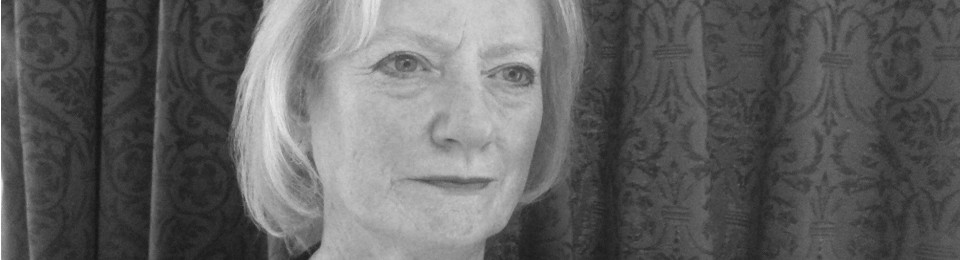
Take a look at poet from the present – Denny Bradbury varies her poetic styles yet you can see influences dating back hundreds of years. Read through ‘Denagerie of Poems’ and explore life through her eyes.
There is a poet in all of us – when will it be your time to set yourself free?
Laura Scott

 Unseen letters written by the poet Walt Whitman in the 19th century have been found.
 Denny Bradbury Books