• De:versify – New Poetry
  • Welcome
  • About
  • Blog
  • Reviews and Comments
  • BORVO
  • Denagerie of Poems
  • The Reunion
  • Contact

Denny Bradbury Books

Denny Bradbury Books

Monthly Archives: May 2011

Book inspired by To Kill a Mockingbird to be made into a film

18 Wednesday May 2011

Posted by dennybradburybooks in Literacy News

≈ Leave a comment

Tags

Broken, Cillian Murphey, Daniel Clay, Harper Lee, Inception, Rufus Norris, To Kill a Mockingbird

A book inspired by Harper Lee’s To Kill a Mockingbird is to be made into a film.  

Broken by Daniel Clay and published in 2008, will feature Inception star Cillian Murphy.  

Director Rufus Norris has said the production will be a modern take on Lee’s 1960 novel.  

Philip Roth wins Man Booker International Prize

18 Wednesday May 2011

Posted by dennybradburybooks in Fiction, Literacy News, Misc

≈ Leave a comment

Tags

fiction, Man Booker International Prize, Man Booker Prize, Philip Roth

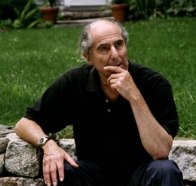
Phillip Roth

Phillip Roth

Philip Roth has been announced as the winner of the fourth Man Booker International Prize.

He was selected from a list of 13 contenders.

The Man Booker International Prize, worth £60,000, is awarded for an achievement in fiction on the world stage and awarded every two years.

The World and Universe of J.R.R. Tolkien

18 Wednesday May 2011

Posted by dennybradburybooks in Fiction

≈ Leave a comment

Tags

Epic, Fantasy, fiction, Gollum, Hobbits, J.R.R. Tolkien, literature, Lord of the Rings, Lord of the Rings Trilogy, Middle Earth, Mordor, Novel, The Hobbit, Tolkien, Writing

Gollum a character from Lord of the Rings

John Ronald Reuel Tolkien , Oxford professor, master of the languages and literatures of the ancient north, poet, story teller, creator of the orcs, the hobbits, the high-elves, the black riders, of Rivendell, Lothlorien and the misty mountains, creator of Mirkwood and the black land of Mordor.  Creator of the Fellowship of the Ring and the Dark Lords.  J.R.R. Tolkien is the omniscient presence behind Middle Earth.

His writings and teachings have been an inspiration to other artists.  The Hobbit, which was originally written for his children, and published over 50 years ago is now known to generations across the world.  And the Lord of the Rings has become one of the most intricate pieces of fantasy fiction of our time.  The writings of Tolkien go deeper than the pages.  In a more comprehensive look at Lord of the Rings, the attraction to readers is the belief in an unreal world.  What Tolkien called “Secondary World”.  A “Secondary World” is one that exists only in the mind, cannot be seen or found. Pure imagination.  Readers who enter the “Secondary World” or Middle Earth, probably liked where they were, but were bound by the physics of the real world.  Interesting stuff don’t you think?  The ultimate secret to Tolkien’s appeal (which is a mystery) is the quality of imagination.  For example Ents, nobody talked about Ents before Tolkien, as its not a traditional piece of literature, but today most people understand what it is.  A more obvious example would be the Hobbits.  Hobbit in terms of the word sounds like a traditional English word, but is in fact nonsense.  J.R.R. Tolkien made the whole thing up.  Very few writers can invent a notion which becomes recognised by the whole world.

It was the countryside just outside of Birmingham where Tolkien discovered his love of nature and this can be seen prominently throughout his descriptions of Middle Earth.  J.R.R. Tolkien was a devout Roman Catholic, speaking Latin he developed this into an interest into languages and teachings.  Middle Earth was a melting pot in Tolkien’s mind even as a school boy at King Edwards in Birmingham.  Ironically like a plant, this idea grew, flourished and over spilled onto pages and pages of writing.

The fantasy genre has been around since the dawn of writing itself.  Since Homer’s epic poem the Odyssey to the old English myth of Beowulf and even in Shakespeare’s Midsummer Nights Dream.  The genre has been evolving.  John Ronald Reuel Tolkien is considered the father of modern fantasy with over 150million readers spanning generations upon generations.

The Lord of the Rings Trilogy is the second highest selling set of books of all time after the Bible.  And was made into a set of films which is still considered one of the most ambitious film projects of all time, having spent over $285 million to create the finished project.  It also claimed a number of academy awards that rival Ben Hur and Titanic.

World wide, the Lord of Rings raked in  $2,915,155,189 in at the Box Office.  All from one mind. The mind of Tolkien.

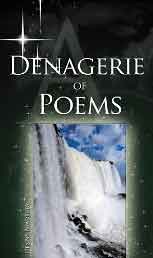
To purchase one of Denny’s books please click on the images below or contact Denny directly at email denisebradbury@btinternet.com.
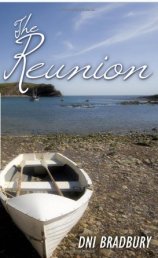
The Reunion Denagerie of Poems by Denny Bradbury

King Alfred

17 Tuesday May 2011

Posted by dennybradburybooks in History

≈ 8 Comments

Tags

anglo saxon kings, Borvo, Denny Bradbury, healer, King Alfred, Winchester

King Alfred

By Sarah Hogan

Statue of King Alfred in Winchester - image by Ewen and Donabel

King Alfred, or Alfred the Great, ruled the House of Wessex for 18 years. He became King of Wessex in 871 and was the first King to call himself King of the Anglo Saxons.

His reign was full of battles with the Vikings, on land and sea. He defended southern parts of England from invasion from his base in Winchester. Winchester became more prominent under the Wessex kings, King Alfred was buried there and a statue of him can be found in the Hampshire town.

King Alfred is now a central character in a new book from Denny Bradbury, Borvo. It is set in Winchester and tells the story of a pagan boy who comes to the aid of the great King.

Learning and culture was said to be of great importance to King Alfred. It’s thought that he encouraged English to be used as a written language. Under his rule, the Anglo Saxon Chronicle was begun, a huge source of early English history.

King Alfred is also said to be the founder of the Royal Navy. It most likely did exist in some before him, but he took it upon himself to greatly improve ships and defences across the Wessex kingdom.

It’s recorded in the Anglo Saxon Chronicle that Alfred died in 901. Although that could not necessarily be true as many different scholars and sources contributed to the Chronicle. He was initially buried in Winchester Cathedral, but his remains were moved to Hyde Abbey in 1110. When Henry VIII ordered the dissolution of the monasteries in 1536, the Abbey was demolished and his remains have never been found.

He is Elizabeth II’s 32nd great – grandfather.

King Alfred is known as the great Anglo Saxon ruler. In Borvo, Denny Bradbury explores how this eminent King needs help from a lowly pagan boy.

To find out more about Winchester Cathedral please click here.

To purchase one of Denny’s books please click on the images below or contact Denny directly at email denisebradbury@btinternet.com.
The Reunion Denagerie of Poems by Denny Bradbury

Anglo-Saxon Healing – Potions, amulets and chants

16 Monday May 2011

Posted by dennybradburybooks in History

≈ 1 Comment

Tags

Borvo, Denny Bradbury, healers, healing powers, King Alfred

Healers

Borvo means the deity of healing

The titular character in Denny Bradbury’s latest book is named after the deity of healing, Borvo.

This teenage boy comes from a healing family and we follow his growth into maturity in the time of King Alfred.

Every settlement during this era would likely have a healer within sight.  Women, in particular, were more prone to early deaths than their male counterparts: pregnancies, miscarriages and the act of child-birth itself were all dangerous times in the life of a woman in the Anglo-Saxon era.

Archaeologists have also linked other common problems to this era: toothache, headache, earache, burns, and joint pain/bone deformities in particular – linked to the harsh life and lack of certain nutritional items in their diet.

Nowadays we would go to the local shop and buy some medication or ointment to ease our problems – during the 9th century, however, treatments required longer preparation.

Salves, poultices, and infusions would be concocted from local plants: garlic was often used to treat infection; lichens were useful in assisting the mend of broken bones; and camomile for digestion.  Nettles, watercress and fungi were also frequently used.

It was not only ‘potions’ which were used in healing – advice was given, amulets worn and chants were sung.  Stones such as amber were thought to ward off evil spirits and joint pain; emerald to aid memory; and garnet for general good health.

There was a time when historians looked back to this period of history and ‘laughed’ at the so-called medical treatments – the idea of trial and error, praying to gods and ‘hoping for the best’.

Medical manuscripts written in the age – such as ‘The Leech Book of Bald’ by Bald, a companion of King Alfred – talk of flying venoms and a variety of elves (wood elves, water elves, bright elves and dark elves).

Taken at face-value these seem irrational causes of problems.  Yet look closer and understand ‘flying venom’ to mean airborne disease and elves to be carriers of conditions from various natural sources, and you begin to see the start of medical textbooks.

Nowadays, historians take a different view on medical treatment in Anglo-Saxon times.

Aside from community healers who usually learnt their trade through knowledge handed down through family, physicians – few and far in between – were also in existence.  During this period, professional medics were named ‘laece’ or ‘leech’.

Many originated from monasteries which were appearing more and more across the ‘British’ landscape.  They were taught language, studied Greek and Latin medical texts, and sometimes grew their own supply of herbs within the monastery gardens.

In her latest book, Denny beautifully merges historically sound life in the time of King Alfred, healing treatments and attitudes in particular, with an interesting fictional read.

Reserve your copy of her book now by emailing denisebradbury@btinternet.com

Laura Scott


To purchase one of Denny’s books please click on the images below or contact Denny directly at email denisebradbury@btinternet.com.
The Reunion Denagerie of Poems by Denny Bradbury

← Older posts
Newer posts →

Subscribe

  • Entries (RSS)
  • Comments (RSS)

Archives

  • March 2021
  • January 2021
  • April 2020
  • February 2020
  • January 2020
  • February 2019
  • September 2018
  • April 2018
  • March 2018
  • February 2018
  • January 2018
  • December 2017
  • November 2017
  • September 2017
  • August 2017
  • June 2017
  • May 2017
  • April 2017
  • March 2017
  • January 2017
  • December 2016
  • October 2016
  • September 2016
  • August 2016
  • July 2016
  • June 2016
  • May 2016
  • April 2016
  • March 2016
  • February 2016
  • January 2016
  • December 2015
  • November 2015
  • October 2015
  • September 2015
  • August 2015
  • June 2015
  • May 2015
  • April 2015
  • March 2015
  • February 2015
  • January 2015
  • December 2014
  • November 2014
  • October 2014
  • September 2014
  • August 2014
  • July 2014
  • June 2014
  • May 2014
  • April 2014
  • March 2014
  • February 2014
  • January 2014
  • December 2013
  • November 2013
  • October 2013
  • September 2013
  • August 2013
  • July 2013
  • June 2013
  • May 2013
  • April 2013
  • March 2013
  • February 2013
  • January 2013
  • December 2012
  • November 2012
  • October 2012
  • September 2012
  • August 2012
  • July 2012
  • June 2012
  • May 2012
  • April 2012
  • March 2012
  • February 2012
  • January 2012
  • December 2011
  • November 2011
  • October 2011
  • September 2011
  • August 2011
  • July 2011
  • June 2011
  • May 2011
  • April 2011
  • March 2011

Categories

  • Denny's Diary
  • fairytales
  • Fiction
  • History
  • Literacy News
  • Misc
  • Poetry
  • Polls
  • Reviews

Meta

  • Create account
  • Log in

Latest Tweets from Denny Bradbury Books

Tweets by DennyBradbury

Blog at WordPress.com.

Privacy & Cookies: This site uses cookies. By continuing to use this website, you agree to their use.
To find out more, including how to control cookies, see here: Cookie Policy
  • Subscribe Subscribed
    • Denny Bradbury Books
    • Join 73 other subscribers
    • Already have a WordPress.com account? Log in now.
    • Denny Bradbury Books
    • Subscribe Subscribed
    • Sign up
    • Log in
    • Report this content
    • View site in Reader
    • Manage subscriptions
    • Collapse this bar
 

Loading Comments...