• De:versify – New Poetry
  • Welcome
  • About
  • Blog
  • Reviews and Comments
  • BORVO
  • Denagerie of Poems
  • The Reunion
  • Contact

Denny Bradbury Books

Denny Bradbury Books

Monthly Archives: May 2011

The History of Fictional Prose – Part 2: The printing press and entertainment

09 Monday May 2011

Posted by dennybradburybooks in Fiction

≈ 1 Comment

Tags

Denny Bradbury, fiction, history, History of Poetry, Poetry, William Shakespeare

History of Fictional Prose

We have been exploring the emergence of literature, and fictional prose in particular.  How ‘symbols’ and ‘pictograms’ changed to words which recorded ‘fact’ in part 1.

Tales and myths, previously handed down through generations by word of mouth, became documented.  Then civilisations started to experiment with different writing styles and we left it last time with the introduction of a writing ‘frame’ as seen in One Thousand and One Nights.

What was still lacking, however, was the first true written work of a single piece of prose fiction.

A boost was made to prose-writing in 1455 with the introduction of the printing press to Europe.  Other forms of printing had already come to existence around the world but this introduced mass printing and ensured printed material became available to a larger population, not just the privileged few.

Unlike poetry, which had rhythm and rhyme to assist in its’ recount, prose was not easily remembered and therefore needed to be written down.  The printing press ensured prose a future and more people started to experiment in the longer-style of writing, with little or no ‘structure’ as seen in verse.

William Caxton was the first to publish a book in English in the late 15th century – this was not a work of fiction but the translation of a History of Troy.  Chaucer’s Canterbury Tales and Malory’s Le Morte d’Arthur are included in the works he published in England.  Again, these are collections of tales, not a single piece of continuous prose.

During the early modern period we see the likes of William Shakespeare and Christopher Marlowe writing plays for entertainment rather than education, so fiction as we understand it nowadays was starting to take shape.

Spanish author Miguel de Cervantes had ‘The Ingenious Gentleman Don Quixote of La Mancha’ published in two parts 1605 and 1615.  It is widely regarded as turning point in fictitious writing.  Again, it is written around several ‘stories’ of his exploits but these have no relation to historical figures – genuine fiction.

Early English novelists include John Bunyan, Daniel Defoe and Jonathan Swift, all born in the 17th century.  Indeed, in many circles, Daniel Defoe is credited as being the first true English fiction novelist with his work ‘Robinson Crusoe’ (published in 1719) – a fictional autobiography.

The history of fictional prose has been a difficult one to trace.  Works we now find ‘laughable’ were believed at the time.  Imagination was not encouraged in the early years – most written material was historical or religious.  It took a few brave authors to step out of the shadow; include emotions in their work.

Then we have the second obstacle of actually writing prose.  Poetry was in existence in oral form for millennia.  This slowly became documented and verse was formed.  An extended piece of writing was a long way off when written word was first introduced.

Tales were written, then collections of stories.  Gradually the expression of writing grew.  It was not a quick process.  One thing is widely accepted – we would not have experienced the joy of novels without the invention of the printing press.

Denny Bradbury is a modern-day fiction author and poet.  ‘The Reunion’ is a fictitious novel exploring a year in the lives and emotions of five friends. She is also promoting her new novel, Borvo, which is an extraordinary historical-fiction novel around King Alfred.

To read part 1 of my article on the History of Fictional Prose click here

Laura Scott

To purchase one of Denny’s books please click on the images below or contact Denny directly at email denisebradbury@btinternet.com.
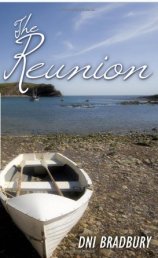
The Reunion Denagerie of Poems by Denny Bradbury

Denny Bradbury talks about her inspirations as a writer

06 Friday May 2011

Posted by dennybradburybooks in Denny's Diary, Fiction

≈ Leave a comment

Tags

Anthony Trollop, Books, Crime and PunishmentRussian Literature, Fyodor Dostoyvesky, Inspiration, interview, Jane Austen, Leo Tolstoy, reading, Thomas Hardy, War and Peace, Writing

Denny Bradbury has been speaking her inspirations as a writer and what she finds a good read.  Thomas Hardy still takes pride of place as Denny’s hero, along with Jane Austen and Anthony Trollop.  When Denny was younger she was interested in Russian writers such as Leo Tolstoy who made his fame with War and Peace and Fyodor Dostoyvesky who wrote Crime and Punishment.  Charles Dickens, who in his own right is a literay titan also makes and appearence as one of Denny’s inspirations.

To purchase one of Denny’s books please click on the images below or contact Denny directly at email denisebradbury@btinternet.com.
The Reunion Denagerie of Poems by Denny Bradbury

A Study Of Fairytales – Part I

05 Thursday May 2011

Posted by dennybradburybooks in fairytales

≈ Leave a comment

Tags

fairies, Fairytale, folklore, historical, magic

A study of FairytalesFairytales. In their most literal form they are imagined to be tales about fairies but in truth are so much more. Watching the Royal Wedding, a nation was united in experiencing a modern day fairy tale come true, where a handsome prince marries a young girl of a lesser standing and they live happily ever after.  I know I, for one, like to believe that such a fairy tale of perfect, unconditional and reciprocated love and happiness is possible.

Yet no fairytale is complete without the magical battle of good versus evil; where ultimately good triumphs but not before much suffering has taken place.  In our most popular fairy tales of today – Cinderella, Snow White & the Seven Dwarfs and Sleeping Beauty to name but a few – we find innocent, beautiful young creatures exploited by wicked step-mothers or relations, calling upon their friends for help before they can find true happiness.

Fairytales are not always just that – in fact, for the most part fairy tales do not contain fairies. Instead they stem as far back as c 1300 BC in Egpyt to The Tale of Two Brothers when the first recorded folklore began – and continues to be – grounded in historical truth as it is passed down throughout the ages. Over the years, such folk tales span centuries, generations and cultures, with fairy tales today often being a way to teach young children the difference between right and wrong, the risk of danger and the beauty of love – colourful, magical characters set in idyllic surroundings looking for the happy ever after. Rather than fairies, the magic is provided by talking animals, wizardry, and the forces of nature doing battle with those of human nature. Just as in Denny Bradbury’s The Water Sprite & the Waterfall, where the water sprite meets an orphaned little girl, Terpsichoria, so too do many fairy tales talk of woodland creatures joining forces to help a damsel in distress. Just as in the folk lore of thousands of years gone past, Denny’s fairytales talk of how “they all lived very happily together and no one was frightened or lonely again” – Denny Bradbury The Dryad and the Seahorse.

Often fairytales will highlight the complexities that may exist within families; the older men are found to be weak and unable to cope with the required emotions needed to bring joy and stability to their family unit – the fathers in Hansel & Gretel, Cinderella, & Snow White to name but a few.  In contrast, the women are shown to be strong, powerful creatures – for the older women it often manifests itself in the form of evil, whilst the younger generation are the heroines who battle such hostility to ultimately be rewarded with true happiness. Denny Bradbury draws upon this theme in her book The Reunion, where five women demonstrate their resilience and strength to the various challenging life experiences they encounter and in her new book Borvo where she harks back to the fairy tale time of Kings and Queens.

If you would like to know more, please listen to Denny discussing what motivates her to write her fairytales at Fairytales and in Part II I will discuss the origins of fairytales and how, once upon a time, it all began…

Elizabeth Bridgefield

To purchase one of Denny’s books please click on the images below or contact Denny directly at email denisebradbury@btinternet.com.
The Reunion Denagerie of Poems by Denny Bradbury

Digital books sales increase in UK

04 Wednesday May 2011

Posted by dennybradburybooks in Literacy News

≈ 1 Comment

Tags

Books, Denny Bradbury, digital books, ebooks

Sales of digital books in the UK are have quadrupled.

That’s according to new figures out from the Publishers Association.

Last year sales increased from four million pounds to sixteen million pounds.

Despite the big rise the sales still remain a small percentage of total book sales in the UK, which was just over three billion pounds.

Stephen the King of Writing

04 Wednesday May 2011

Posted by dennybradburybooks in Fiction

≈ Leave a comment

Tags

Carrie, Fantasy, fiction, Horror, Maine, Misery, Sci-Fi, Stephen King, The Dark Tower Series, The Shinning, Thriller, Writing

“The Greatest Popular Novelist of Our Day, Comparable to Dickens” – The Guardian on Stephen King

As of this year, at least one book written by Stephen King can be found in over 350 million book shelves across the world.  Stephen King has cemented himself as a pillar of numerous genres including horror, suspense, science fiction, thriller and fiction.

Stephen King was born in Maine in 1947.  When Stephen King was just two years old, his father left the family under the excuse “He was just going out for cigarettes.” His writing career was jumpstarted when he won a scholarship award to the University of Maine and in 1971 he later taught English, while his wife studied for her degree.

It was the publication of books such as Carrie and The Shinning and their adaptation into motion pictures which spring boarded King into his current position as one of the most prolific writers of the past 4 decades.  Carrie was followed by a host of best sellers including Hearts of Atlantis, Misery (which again was transformed into a film), Bag of Bones, The Dark Half, and the infamous Dark Tower Series, which has been transformed into a graphic novel headed by Marvel.  His books have given an opportunity for some of cinemas most revered actors to tread the boards and participate in the very art of story telling.  Jack Nicholson brought the role of Jack Torrance alive and gave cinema a line for the history books… “Heeres, Johnny.”  And Morgan Freeman took the role of Red from the Shawshank Redemption in what was arguably one of the best films of a generation.  Alas, Shawshank Redemption missed out on an Oscar.  Currently, Stephen King lives in Bangor, Maine with his wife Tabitha who too is a novelist.

Over the last 4 decades Stephen King has been involved in writing throughout his whole life, writing articles, talking at seminars, writing short stories and also full novels.

When doing research for this article I went on YouTube to find interviews with Stephen King, and to find out what makes him tick, what his style of writing is and how he gets his ideas.  One video detailed the very essence needed to be good writer, which is too read.  In one he quotes “If you can’t make time to read everything then how can you expect to write…All of a sudden a real wake up call is when you read something and say, that sucked…I can do better, and this guy got published!” Words of wisdom, which I myself have taken heed.

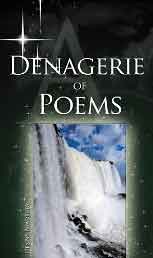
Stephen King has also dabbled in writing short stories, and putting together a collection after a few stories have been built up, much like Denny Bradbury’s Denagerie of Poems.   In Stephen King’s Different Seasons, he states, “It is the Tale, not he who tells it.”  That phrase sums up the entity of fiction in my opinion.

Eddie Fox

← Older posts
Newer posts →

Subscribe

  • Entries (RSS)
  • Comments (RSS)

Archives

  • March 2021
  • January 2021
  • April 2020
  • February 2020
  • January 2020
  • February 2019
  • September 2018
  • April 2018
  • March 2018
  • February 2018
  • January 2018
  • December 2017
  • November 2017
  • September 2017
  • August 2017
  • June 2017
  • May 2017
  • April 2017
  • March 2017
  • January 2017
  • December 2016
  • October 2016
  • September 2016
  • August 2016
  • July 2016
  • June 2016
  • May 2016
  • April 2016
  • March 2016
  • February 2016
  • January 2016
  • December 2015
  • November 2015
  • October 2015
  • September 2015
  • August 2015
  • June 2015
  • May 2015
  • April 2015
  • March 2015
  • February 2015
  • January 2015
  • December 2014
  • November 2014
  • October 2014
  • September 2014
  • August 2014
  • July 2014
  • June 2014
  • May 2014
  • April 2014
  • March 2014
  • February 2014
  • January 2014
  • December 2013
  • November 2013
  • October 2013
  • September 2013
  • August 2013
  • July 2013
  • June 2013
  • May 2013
  • April 2013
  • March 2013
  • February 2013
  • January 2013
  • December 2012
  • November 2012
  • October 2012
  • September 2012
  • August 2012
  • July 2012
  • June 2012
  • May 2012
  • April 2012
  • March 2012
  • February 2012
  • January 2012
  • December 2011
  • November 2011
  • October 2011
  • September 2011
  • August 2011
  • July 2011
  • June 2011
  • May 2011
  • April 2011
  • March 2011

Categories

  • Denny's Diary
  • fairytales
  • Fiction
  • History
  • Literacy News
  • Misc
  • Poetry
  • Polls
  • Reviews

Meta

  • Create account
  • Log in

Latest Tweets from Denny Bradbury Books

Tweets by DennyBradbury

Create a free website or blog at WordPress.com.

Privacy & Cookies: This site uses cookies. By continuing to use this website, you agree to their use.
To find out more, including how to control cookies, see here: Cookie Policy
  • Subscribe Subscribed
    • Denny Bradbury Books
    • Join 73 other subscribers
    • Already have a WordPress.com account? Log in now.
    • Denny Bradbury Books
    • Subscribe Subscribed
    • Sign up
    • Log in
    • Report this content
    • View site in Reader
    • Manage subscriptions
    • Collapse this bar
 

Loading Comments...