Keats and Nature

Tags

As I re read some of my favourite works of Keats (in sunny Dorset) I am reminded of the links with nature that the Romantic poets had in great number.  I love the imagery from ‘On the Grasshopper and the Cricket’.

The poetry of earth is never dead:

When all the birds are faint with the hot sun, and hide in cooling trees, a voice will run

from hedge to hedge about the new mown mead: That is the grasshopper’s – he takes the lead …

It is a poem full of hope and wonder in the smallest of creatures keeping the earth song going while others rest. I have tried to convey the hope of nature and her renewing spirit in my latest poems, De:versify and it is a real comfort to know that the voice of this great poet still has as much relevance today as when he wrote those lines.

Denny Bradbury

Poems of Robert Frost and the Forest of Dean

Tags

,

We have just spent a week in the Forest of Dean where every twist and turn of the forest byways reminded me of Robert Frost’s poems. Many poets capture the essence of forests but he in particular seems to embody a sense of belonging within the trees. The spectacular Symonds Yat with its steep wooded hillsides and foaming river Wye is so dramatic it begs to be written about. I’ll put that poem in Book 3.

Nature never fails to inspire. I wish you joy in your exploration. Denny Bradbury

A Day In The Life…

Tags

, , , ,

Saturday April 13th and in the quiet village of Wingrave in Buckinghamshire, a film crew were gathering….

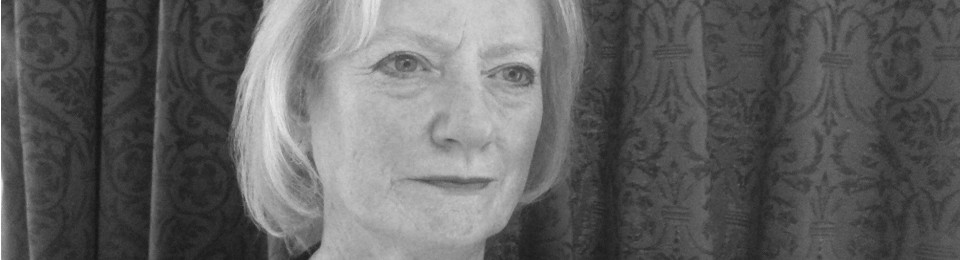
Denny Bradbury, the acclaimed author and poet famous for novels such as ‘Borvo’, an Anglo Saxon tale, and her first poetry collection ‘Denagerie of Poems’, is waiting to be interviewed about her recently published second book of poems entitled ‘De:versify’.

The opening scene is filmed outside the village’s picturesque church as the presenter and interviewer, Julie Davis, welcomes the viewers to Wingrave and sets the scene for who we are about to meet.

A short walk from the church and we are outside Denny’s house; a knock on the door and we are led in to meet the author herself.

Much of her writing takes place in a small study, full of books and personal memorabilia that inspire her to write the poems she does, be it a photo of a trip into the mountains of another country, or a letter from the office of HRH the Prince of Wales, recognising the issues that Denny tackles in her poetry such as the destruction by man of our green and pleasant land as a cause close to His Highness’ own heart.

Through the course of the interview we learn more about Denny the author, poet and person – she talks of how often inspiration for her poems can suddenly come to her whilst she is out walking or in the middle of the night when she cannot sleep, sometimes in their entirety, other times in short bursts that take a while for the full poem to form.

Her love of nature and the creatures that exist within it shine through the poems in her new collection – ‘Hare in the Moonlight’, one of her favourite poems from her new collection, was borne from an appreciation of a painting of such a subject whilst ‘Stars Tonight’ was written under the Dorset sky where the lack of light pollution means a clear, star-gazers paradise.

Denny shares with us how some of her poems are personal to her own life whilst others are brought to life by other events she has witnessed on the news or in print that have in some way touched her.

Future works consist of a sequel to ‘Borvo’ and as we walk with Denny and her dog, Rufus, through the beautiful Buckinghamshire countryside, she shares with us how walking aids the creative process.

A charming and extremely talented lady and we, as her readers, look forward to what the next few years hold for Denny and her creative offerings.

Crossing the Bar by Alfred, Lord Tennyson

Tags

, , , ,

Sandbar

Sandbar

“Sunset and evening star,
And one clear call for me!
And may there be no moaning of the bar,
When I put out to sea,

But such a tide as moving seems asleep,
Too full for sound and foam,
When that which drew from out the boundless deep
Turns again home.

Twilight and evening bell,
And after that the dark!
And may there be no sadness of farewell,
When I embark;

For though from out our bourne of Time and Place
The flood may bear me far,
I hope to see my Pilot face to face
When I have crossed the bar.”

Written in 1889, Tennyson speaks of his own impending death, which happened a few years after the poem was written. Within the poem, the image of the sea is used to represent the ‘barrier’ between life and death just as Denny Bradbury does in her poem ‘Broken in Time’ from her new collection of poetry “De:versify” when she writes of how the power of the sea ultimately breaks everything down to mere grains of sand:

“Sea reclaims its own
Pulling earth to drown
Sea reclaims its own
Shore has nowhere to turn.

Large boulders line the beach
Into pebbles given time
Then broken down to grains of sand
And silt and dust withal….”

Both Denny Bradbury and Tennyson draw reference to the vast natural power of the sea, with the ever-present danger to the men who cross it keeping the line between life and death always visible:

“….. However we perceive us to be
We will be brought down by time
We will be pounded and rounded
Until we are sand
Then we’ll hear only the sea” ~ ‘Broken in Time’

Tennyson talks of “crossing the bar” – a metaphor to describe moving over from life to death through the description of a physical bar of sand in shallow water.  He sets the poem at the end of the day, as if to represent a late stage in life and his reference to his own “moving on” means his description of evening can be seen to be illustrating old age. The sky darkens from ‘sunset’ to ‘twilight’ through to ‘dark’ and this notion of the passing of time is also echoed in the rhythm of the poem – each verse made of four lines of varying syllables.  Tennyson talks of the tide that ‘turns again home’:

“…But such a tide as moving seems asleep,
Too full for sound and foam,
When that which drew from out the boundless deep
Turns again home….”

Denny Bradbury does something similar in her poem “So Grey the Sea” where she talks of coming full circle and returning home, despite all the life experiences that one goes through:

“So grey the sea
All white the foam
I journey forth
To come back home…”

How like a winter hath my absence been (Sonnet 97) by William Shakespeare.

Tags

, , , ,

Winter

Winter

“How like a winter hath my absence been

From thee, the pleasure of the fleeting year!

What freezings have I felt, what dark days seen!

What old December’s bareness every where!

And yet this time remov’d was summer’s time;

The teeming autumn, big with rich increase,

Bearing the wanton burden of the prime,

Like widow’d wombs after their lords’ decease:

Yet this abundant issue seem’d to me

But hope of orphans and unfather’d fruit;

For summer and his pleasures wait on thee,

And, thou away, the very birds are mute:

Or, if they sing, ’tis with so dull a cheer,

That leaves look pale, dreading the winter’s near”

Sonnet 97 is one of the 154 sonnets written by William Shakespeare, which deal with themes such as the passage of time, love, beauty and mortality. Sonnets 1 – 126 are all addressed to the “Fair Youth”, an unnamed young man to whom Shakespeare uses both romantic and loving language in his sequence of sonnets, suggesting to some readers perhaps a sexual relationship or to others just platonic love.

In his first line of the sonnet, Shakespeare writes of how he and his lover not being together feels like wintertime. Denny Bradbury, in her poet “My Gift to You”, uses a similar analogy when she talks to her lover of love being like the seasons and how, like Shakespeare feels when he describes his desperate condition that feels like winter to him – no light because winter is dark and no warmth because winter is cold “ ..What freezings have I felt, what dark days seen!”:

“The discontent of winter
Lies heavy on your brow;
The eyes once full of summer sun

Shine solemn, wistful now.
You yearn for warmth and sunlight,
You long for birds to soar;
You look for buds to open
As they wake from frosty hoar.
Oh! Love is summer, it is spring –
But love is winter; too.
Be happy in the tide of life:
My love, my gift to you.”  ~ ‘My Gift To You’

Shakespeare’s sonnet talks of how he is as hopeless as an orphan because the pleasures of life are only there when his lover is with him:

“…But hope of orphans and unfather’d fruit;
For summer and his pleasures wait on thee,…”

Denny Bradbury, in her poem “Hold Me Gently”, from her new collection of poetry’ De:versify’, follows a similar theme when she speaks of being entirely alone without the heat of her lover’s love:

“Hold me gently,
Rock me deep
Into the fathomless pool of a deep, deep sleep.
There let me be till the sun reappears
And the heat of your love in the day
Dries my tears.

Tears come unbidden –
They swell up and spill
Down my cheeks to fall softly in space.
Random drops of my fears
And my loneliness
For none to see… as I am alone
Without you beside me.”

The tone of Shakespeare’s sonnet is one of sadness – he describes how the absence of the person he loves makes his surroundings look as dreary as winter and he yearns for his lover’s presence. The fact that everything is empty without that person means that the season of summer looks like winter to him. The imagery that prevails throughout his sonnet is that of winter. Denny Bradbury also describes how the absence of a love can cause the season of summer to feel cold in her poem “Summer Cold”:

“Summer cold reflects your thoughts:
Dark and dank and all of nought –
Save that the sun will never shine
While he refuses to be thine.
Dreary days and colder night,
Clouds hiding all the glorious light
That you know is there above…”