 Life inside an Abbey was mostly one of hard, physical work, scholarship and prayer. Some monasteries and Orders encouraged the existence of “lay brothers” – monks that did the majority of the physical labour in the fields and the workshops, whilst the fully-fledged monks were able to concentrate on prayer and learning.
The Abbey was under the authority of an Abbot or Abbess, beneath whom there was the Prior or the Prioress who would run the monastery in the Abbot’s absence. Other offices included the Cellarer who was in charge of food storage and preparation, and specialists in areas such as building, farming, masonry, education and caring for the sick.
A day in the Abbey would consist of regular prayer services in the Church every three hours, throughout the day and night, and when prayers weren’t taking place monks would spend their time on other tasks that would help grow and maintain a self-sufficient community.
Abbeys grew their own food, did all their own building and often became quite prosperous doing so. Certain Abbeys, such as Fountains Abbey in Yorkshire, grew to have a huge wealth through raising sheep and selling the wool.
Throughout the medieval period, Abbeys were the only places for scholarship and learning, with their inhabitants often being the only educated members of society. Monasteries were the libraries for ancient manuscripts and many monks occupied their time by copying out sacred texts in a room in the Abbeys called the Scriptorium. They also created “illuminated manuscripts” which were beautifully detailed Bibles and Prayer books that had images on most pages. One of the most famous, the Lindisfarne Gospel, now resides in the British museum and is regarded as one of the most precious remnants of early Christian Britain.
When the Dissolution of the Monasteries occurred, one of the biggest loses was to culture, as many of the monastic libraries that were full of the priceless illuminated manuscripts were destroyed with little or no regard for their value.
The decline of the monasteries occurred gradually. During the early 14th century there were as many as 500 different monastic houses but the Black Death in 1348 wiped out many nuns and monks and most houses never fully recovered. 
When Henry VIII then engineered his break with Rome in 1538, one of his first targets were the very rich monastic houses. He began by confiscating the property of the small, less powerful houses and by making the buildings themselves unsuitable for use. This was followed the next year by the larger houses, with the power of the King over the Church, plus his greed for money, being the driving factors. The buildings were either sold to the wealthy gentry as country estates or used as sources for cheap building materials for the local inhabitants. Although a few survived in the form of cathedrals or parish churches, such as Canterbury Cathedral, Durham Cathedral and Westminster Abbey, almost all the more isolated ones, including the Cistercian monasteries, were destroyed.
Shaftesbury Abbey, founded by King Alfred, was destroyed in 1539 and Thomas Hardy– whose own ashes are buried in the Poets Corner of Westminster Abbey – wrote of its ruins:
“Vague imaginings of its castle, it’s three mints, it’s magnificent apsidal Abbey, the chief glory of South Wessex, its twelve churches, its shrines, chantries, hospitals, its gabled freestone mansions – all now ruthlessly swept away – throw the visitor, even against his will, into a pensive melancholy which the stimulating atmosphere and limitless landscape around him can scarcely dispel.”
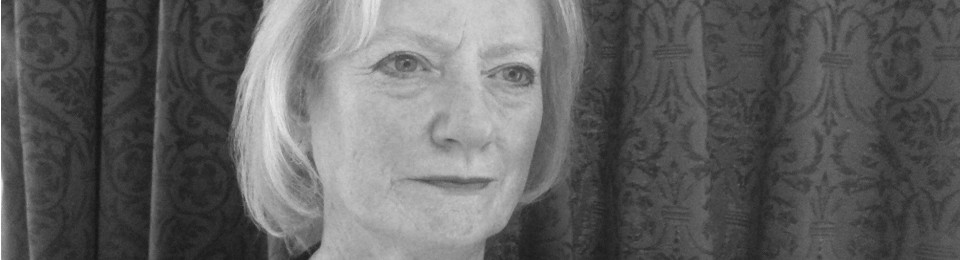
Denny Bradbury, whose second novel, Borvo, is to be released imminently, talks of how the inspiration for the journey her main character Borvo undertakes was enhanced by an early visit to Shaftesbury Abbey when she was a student at Bristol University. As can be read here Denny talks of how the Abbey spoke to her in such a way that years later, when writing Borvo, she felt it was natural to make it part of the character, Borvo’s, story.
The novel is set during the reign of King Alfred and when the monasteries were dissolved, Hyde Abbey was one that was ruined in an act of historical vandalism, with the tombs of a number of the Saxon Kings being destroyed. Some of the bones from the tombs were collected into caskets and placed above the Chancel in Westminster Cathedral – and King Alfred’s bones are believed to be amongst them.
Elizabeth Bridgefield
To purchase one of Denny’s books please click on the images below or contact Denny directly at email denisebradbury@btinternet.com.
 A claim J K Rowling copied the plot of a Harry Potter book from the work of another writer has been thrown out of court.
  Sales of ‘To Kill a Mockingbird’ have soared over the weekend.
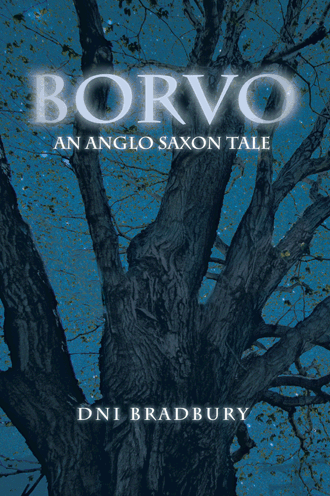


 Denny Bradbury Books