A Study Of Fairytales – Part II

Tags

, , , , ,

FairytalesOnce Upon A Time… These four words in themselves set the precedence for when each fairy story is set – rarely are they of a fixed period in time; scarcely ever do they refer to a specific moment. This is part of the beauty of the fairytale – it may have happened centuries ago or perhaps just yesterday, catching you unawares.

Fairytales, you see, make the seemingly impossible, possible.

As mentioned in Part I, the origin of the fairytale dates back as long ago as 1300BC, when tales were passed orally from generation to generation or through the medium of physical or dramatic theatre rather than by the written word.  Originally, each story was as much for the adults in society as they were for children. It was only in the 19th and 20th century that fairy stories became more of a teaching tool for the young with authors such as Hans Christian Andersen and The Brothers Grimm leading the way in Europe.  Prior to this, Aesop’s Fables were the first fairy tales to be made famous in the Western World, cultivating the beginning of myth and legend that would be passed down throughout the ages.

Centuries ago, as Denny Bradbury draws upon in her soon to be released novel Borvo, there was little or no understanding of science and its effects as is known now. Instead, the mysteries of the natural world were explained as being caused by the supernatural, by magic and enchantment, with the real and the unreal blurring to create something mystical and often fearful.  Denny writes of the time of Alfred the Great, of a period when there was much conflict between paganism and Christianity, when a young herbalist helps the King on a journey where the healing power of nature, often prevalent in fairytales, is viewed as witchcraft.

Fairytales are stories, often fairy-less ones; fables filled with darkness and light.  Some talk of superstition and the power of evil, yet at the same time they show the strength and honesty of beauty and love, all bound together in the complexities of human nature.  Cinderella’s father loves her unreservedly yet leaves her to suffer her fate at the hands of her step-family; those who behave decently are rewarded, those who’s greed and devilish nature lead them to commit foul deeds will receive their comeuppance.

Nature plays a large part in fairytales – animals talk, and nature protects just as easily as it harms as is demonstrated in Hansel & Gretel when the unsuspecting birds eat the trail of bread. Denny Bradbury feels much affinity with one aspect of nature – water – and it plays a part in many aspects of her work, as is discussed here, be it the Dorset coast in The Reunion, the lake in her short story Mirror Lake in Denagerie of Poems, or the brook her pagan healer spends time at in Borvo.

Fairytales explore the spiritual and the mystical, combining a fantastical story with the ordinariness of human nature.  They speak of humble, less fortunate people outwitting the rich, whilst drawing on the bonds of family, friendship and faith. They use colours to represent different emotions – black witches for evil, snow white for purity and red for love, passion and danger.Fairy stories

Finally, we must not forget that there is never a Happy Ever After for those with bad intentions – just like life today. That’s the joy of fairytales – they are timeless.

To read Part I of this study of Fairytales, please click here.

Elizabeth Bridgefield

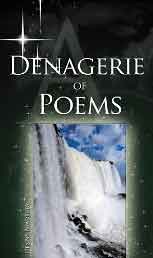
To purchase one of Denny’s books please click on the images below or contact Denny directly at email denisebradbury@btinternet.com.
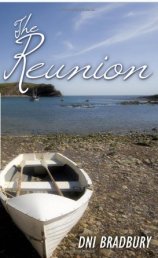
The Reunion Denagerie of Poems by Denny Bradbury

JK Rowling: From the start, but yet to finish…?

Tags

, , , , , , , , , , , ,

JK Rowling, the billionaire mother behind the Harry Potter empire. The JK Rowling legend starts off with a children’s book about an orphan wizard boy with a funny shaped scar on his forehead. A boy with a magical and most captivating destiny. A destiny shared only by his creator.

J.K. Rowling

Harry Potter Books by J.K. Rowling

JK Rowling is the first self made millionaire stroke billionaire author in history. Having sold more than 400 million books, with a readership in 69 languages and an audience spread over 200 countries around the world. Harry Potter’s final instalment The Deathly Hallows has been the fastest selling book of all time. JK Rowling is regarded to have contributed more to literacy than anyone on the planet. The JK Rowling Empire spans across films, merchandise and more recently a theme park. The Harry Potter film series are the highest grossing movie franchise in Hollywood history, having estimated to have churned out over £5 billion and counting.

When originally written, JK Rowling’s publisher targeted the book to boys, but they didn’t want their audience to know it was a woman who had written the book, so they decided to use her initials, except she doesn’t have a middle name. So she used her grandmothers name Kathleen for the K. And so it was that Joe Kathleen Rowling would write for the world. Although she didn’t fool the boys for long as the books grew in popularity she ended up in the press.

Before Harry Potter jumped from his creator’s authentastical imagination into the hearts of millions, JK Rowling was a struggling single mother living in Scotland. In the first book, Harry Potter and the Philosopher’s Stone she states that every child in the world will know Harry Potter’s name. Who would have thought that in the real world this would come true. And that’s in spite 12 publishers rejected the first book, something even more magical is that the 13th publisher (a number associated with bad luck) agreed to take the work to print. A warning came from her agent, “You won’t make money writing children’s books” How wrong could they have been!

Before appearing on the Sunday Times Rich list, JK Rowling led a modest lifestyle as a secretary in London. She was just 25 when her mother passed away sending JK Rowling into an emotional hurricane. Following that she moved to Portugal, married and gave birth to her daughter Jessica. In JK Rowling’s own words the marriage was “catastrophic”. So she upped sticks and moved to Scotland only to face clinical depression and a welfare budget.

JK Rowling has stated that its impossible to live without failure. Hitting rock bottom provided the solid base in which she rebuilt her life and gave birth (literally, metaphorically but not physically) to Harry Potter. Why try? For a fear or failing? What a silly idea. Try and fail or succeed.  To millions of children and adults, Harry Potter symbolises the essense of children and childhood.

Harry Potter by J.K. Rowling

Magic - not just for children anymore

So what happens now Harry Potter comes to an end? Is there room on the book shelf for another set of books as Harry, having survived puberty now steps into adulthood.

Eddie Fox

To purchase one of Denny’s books please click on the images below or contact Denny directly at email denisebradbury@btinternet.com.

The Reunion Denagerie of Poems by Denny Bradbury

Thomas Hardy across the atlantic

Tags

, , ,

Thomas Hardy

How great to hear fom Rhonda in the USA. It is marvellous to be able to share a passion for something, Hardy’s writing, with people all over the world. My particular favourite was Far from the Madding Crowd. We studied it at school and I was instantly hooked and have been a fan ever since. Discovering his poetry was a revelation for me too. His love poems are rather tortured as he seemd unable to love what was within his reach, only when women were unobtainable (like his dead first wife) did he truly realise his feelings. I wonder if he was difficult to live with!

Denny Bradbury

Winchester Cathedral

Tags

, , ,

Winchester Cathedral

By Sarah Hogan

Winchester Cathedral

Winchester Cathedral - image by Dan Taylor

Winchester Cathedral is one of the largest in Europe – and the oldest. It was originally founded in 642, as a small Saxon Church.

The original cross-shaped church became known as Old Minster. Its outline can still be seen today to the north of the present Cathedral. With the town of Winchester increasing in importance, the small Church became a Cathedral with great significance. Winchester became the capital of Wessex, the most important region in England at the time. And with that the Church became the most important royal church in Anglo-Saxon England, the burial place of many West Saxon Kings.

Winchester is now the setting for a new book from Denny Bradbury. The historical significance of the town and the Cathedral plays a huge part in Borvo. The historical fiction novel tells the story of a pagan boy who comes to the aid of King Alfred.

The construction of the great Cathedral which still stands today began in 1079, said to be ordered by William the Conqueror who had already extended the royal palace of Winchester and built a castle in the capital city.

King Alfred, one of the earliest Kings of Wessex, was originally buried at the Cathedral. Many of kings were buried in the Cathedral, including King Cnut who ruled England and Denmark in the eleventh century and William II, William the Conqueror’s son. Catholic Mary Tudor, daughter of Henry VIII chose to have her wedding to Phillip of Spain at the Cathedral, after it survived the reformation.

During the reformation, the Priory of Saint Swithun, where monks had studied for years was dissolved. The Chapter House and Cloister were demolished, but the Cathedral survived.

In the early 20th century, the Cathedral was near collapse and needed extensive restoration work. It was built in a valley of the river Itchen, so due to peaty soil, the foundations were waterlogged. But the water couldn’t be held back long enough for new foundations to be built around the existing ones. So William Walker, a deep sea diver, was called in to help. He delivered bags of concrete to the foundations everyday for six years, ensuring the Cathedral’s stability.

Adding to the ancient kings buried in the Cathedral, more recently it’s become famous for the burial of an author. Jane Austen died in 1817, having published some books but not reaching a great level of fame. She lived near the Cathedral with her sister, and was buried there with just four people in attendance at her funeral. Her fame increased throughout the later 19th century, and by 1900 a memorial window was installed in the Cathedral.

Winchester Cathedral is famed for its historical significance and ties with the past. Denny Bradbury’s new novel Borvo explores how a great King can relate to a pagan boy.

Borvo will be available in June. To preorder click here.

Find out more about Winchester here.

To purchase one of Denny’s books please click on the images below or contact Denny directly at email denisebradbury@btinternet.com.
The Reunion Denagerie of Poems by Denny Bradbury

The History of Fictional Prose – Part 2: The printing press and entertainment

Tags

, , , , ,

History of Fictional Prose

We have been exploring the emergence of literature, and fictional prose in particular.  How ‘symbols’ and ‘pictograms’ changed to words which recorded ‘fact’ in part 1.

Tales and myths, previously handed down through generations by word of mouth, became documented.  Then civilisations started to experiment with different writing styles and we left it last time with the introduction of a writing ‘frame’ as seen in One Thousand and One Nights.

What was still lacking, however, was the first true written work of a single piece of prose fiction.

A boost was made to prose-writing in 1455 with the introduction of the printing press to Europe.  Other forms of printing had already come to existence around the world but this introduced mass printing and ensured printed material became available to a larger population, not just the privileged few.

Unlike poetry, which had rhythm and rhyme to assist in its’ recount, prose was not easily remembered and therefore needed to be written down.  The printing press ensured prose a future and more people started to experiment in the longer-style of writing, with little or no ‘structure’ as seen in verse.

William Caxton was the first to publish a book in English in the late 15th century – this was not a work of fiction but the translation of a History of Troy.  Chaucer’s Canterbury Tales and Malory’s Le Morte d’Arthur are included in the works he published in England.  Again, these are collections of tales, not a single piece of continuous prose.

During the early modern period we see the likes of William Shakespeare and Christopher Marlowe writing plays for entertainment rather than education, so fiction as we understand it nowadays was starting to take shape.

Spanish author Miguel de Cervantes had ‘The Ingenious Gentleman Don Quixote of La Mancha’ published in two parts 1605 and 1615.  It is widely regarded as turning point in fictitious writing.  Again, it is written around several ‘stories’ of his exploits but these have no relation to historical figures – genuine fiction.

Early English novelists include John Bunyan, Daniel Defoe and Jonathan Swift, all born in the 17th century.  Indeed, in many circles, Daniel Defoe is credited as being the first true English fiction novelist with his work ‘Robinson Crusoe’ (published in 1719) – a fictional autobiography.

The history of fictional prose has been a difficult one to trace.  Works we now find ‘laughable’ were believed at the time.  Imagination was not encouraged in the early years – most written material was historical or religious.  It took a few brave authors to step out of the shadow; include emotions in their work.

Then we have the second obstacle of actually writing prose.  Poetry was in existence in oral form for millennia.  This slowly became documented and verse was formed.  An extended piece of writing was a long way off when written word was first introduced.

Tales were written, then collections of stories.  Gradually the expression of writing grew.  It was not a quick process.  One thing is widely accepted – we would not have experienced the joy of novels without the invention of the printing press.

Denny Bradbury is a modern-day fiction author and poet.  ‘The Reunion’ is a fictitious novel exploring a year in the lives and emotions of five friends. She is also promoting her new novel, Borvo, which is an extraordinary historical-fiction novel around King Alfred.

To read part 1 of my article on the History of Fictional Prose click here

Laura Scott

To purchase one of Denny’s books please click on the images below or contact Denny directly at email denisebradbury@btinternet.com.
The Reunion Denagerie of Poems by Denny Bradbury