• De:versify – New Poetry
  • Welcome
  • About
  • Blog
  • Reviews and Comments
  • BORVO
  • Denagerie of Poems
  • The Reunion
  • Contact

Denny Bradbury Books

Denny Bradbury Books

Tag Archives: Poetry

The History of Fictional Prose – Part 2: The printing press and entertainment

09 Monday May 2011

Posted by dennybradburybooks in Fiction

≈ 1 Comment

Tags

Denny Bradbury, fiction, history, History of Poetry, Poetry, William Shakespeare

History of Fictional Prose

We have been exploring the emergence of literature, and fictional prose in particular.  How ‘symbols’ and ‘pictograms’ changed to words which recorded ‘fact’ in part 1.

Tales and myths, previously handed down through generations by word of mouth, became documented.  Then civilisations started to experiment with different writing styles and we left it last time with the introduction of a writing ‘frame’ as seen in One Thousand and One Nights.

What was still lacking, however, was the first true written work of a single piece of prose fiction.

A boost was made to prose-writing in 1455 with the introduction of the printing press to Europe.  Other forms of printing had already come to existence around the world but this introduced mass printing and ensured printed material became available to a larger population, not just the privileged few.

Unlike poetry, which had rhythm and rhyme to assist in its’ recount, prose was not easily remembered and therefore needed to be written down.  The printing press ensured prose a future and more people started to experiment in the longer-style of writing, with little or no ‘structure’ as seen in verse.

William Caxton was the first to publish a book in English in the late 15th century – this was not a work of fiction but the translation of a History of Troy.  Chaucer’s Canterbury Tales and Malory’s Le Morte d’Arthur are included in the works he published in England.  Again, these are collections of tales, not a single piece of continuous prose.

During the early modern period we see the likes of William Shakespeare and Christopher Marlowe writing plays for entertainment rather than education, so fiction as we understand it nowadays was starting to take shape.

Spanish author Miguel de Cervantes had ‘The Ingenious Gentleman Don Quixote of La Mancha’ published in two parts 1605 and 1615.  It is widely regarded as turning point in fictitious writing.  Again, it is written around several ‘stories’ of his exploits but these have no relation to historical figures – genuine fiction.

Early English novelists include John Bunyan, Daniel Defoe and Jonathan Swift, all born in the 17th century.  Indeed, in many circles, Daniel Defoe is credited as being the first true English fiction novelist with his work ‘Robinson Crusoe’ (published in 1719) – a fictional autobiography.

The history of fictional prose has been a difficult one to trace.  Works we now find ‘laughable’ were believed at the time.  Imagination was not encouraged in the early years – most written material was historical or religious.  It took a few brave authors to step out of the shadow; include emotions in their work.

Then we have the second obstacle of actually writing prose.  Poetry was in existence in oral form for millennia.  This slowly became documented and verse was formed.  An extended piece of writing was a long way off when written word was first introduced.

Tales were written, then collections of stories.  Gradually the expression of writing grew.  It was not a quick process.  One thing is widely accepted – we would not have experienced the joy of novels without the invention of the printing press.

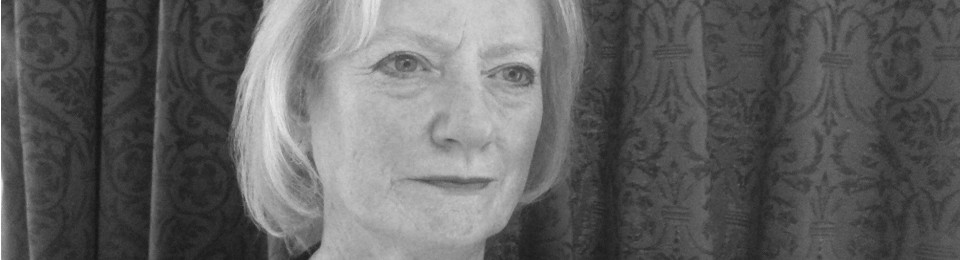
Denny Bradbury is a modern-day fiction author and poet.  ‘The Reunion’ is a fictitious novel exploring a year in the lives and emotions of five friends. She is also promoting her new novel, Borvo, which is an extraordinary historical-fiction novel around King Alfred.

To read part 1 of my article on the History of Fictional Prose click here

Laura Scott

To purchase one of Denny’s books please click on the images below or contact Denny directly at email denisebradbury@btinternet.com.
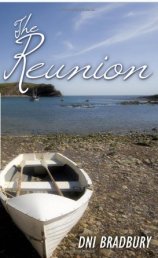
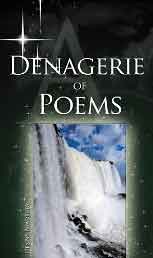
The Reunion Denagerie of Poems by Denny Bradbury

Listen to the ‘Spirit Song’ part 2

28 Thursday Apr 2011

Posted by dennybradburybooks in Fiction

≈ Leave a comment

Tags

Borvo, Denny Bradbury, New Book, Poetry, Song, Writing

The ‘Spirit Song’ can be found in Denny Bradbury’s new book ‘Borvo’.

To pre-order a copy of ‘Borvo’ by Denny Bradbury, contact us.

Percy Bysshe Shelley – Writing in the Blood

27 Wednesday Apr 2011

Posted by dennybradburybooks in Fiction, Literacy News, Poetry

≈ Leave a comment

Tags

Atheism, Denny Bradbury, Frankenstein, Mary Shelley, Percy Bysshe Shelley, Poetry, Shelley, The Cloud

 Unless you’re really up on your literature, you may not have heard of Shelley.  In my ignorance, I hadn’t heard of old Percy until recently.  And if you were around in his lifetime you probably wouldn’t have either, as its estimated he only had an audience of 50 readers up until his death and over the course of his lifetime made a measly 40 pounds for his writing.  When I did look into it, I was pretty amazed at the works that had been created and how much of an impact he’s had on the landscape of English literature.  Having experimented in the alternative gothic art movement, producing long visionary poems with titles such as The Mask of Anarchy you could argue he was the Tim Burton of his day, except he wasn’t as famous.  They say artists are only truly appreciated after they die.

His early life read like some sort of legend.  Bullied as a child and tormented by his colleagues at Eton you can tell where his authoritative tone as a writer came from.  It probably explains his gothic tendencies and cause for his atheist views on what would have been a religious time.  The myth of Shelley doesn’t stop there.  He enrolled at Oxford University, a true privilege even today.  Yet it’s said that he only attended one lecture…Ever.  Instead he spent 16 hours a day reading.  A true literary alternative rebel.    His first book was Zastrozzi in 1810, a gothic novel where by he used the villain as a device to vent his views on religion.  This wasn’t going to be the last time he did such a thing, a year later he published a pamphlet called The Necessity of Atheism which cost him his place in Oxford along with fellow poet Thomas Jefferson Hogg.

In 2008, it was finally acknowledged that Percy Shelley was the co-author of one of the most famous horror gothic novels all time.  Frankenstein, which his wife Mary Shelley has held the title for.  The thing about Shelley is that in many ways, he is an unsung hero to English literature.  Having claimed to influence a host of writers including Thomas Hardy, Oscar Wilde, Karl Marx and William Butler Yeats to name a few.  With Thomas Hardy being a hero Denny Bradbury, its safe to say that so too is Percy Shelley.

Shelly indulged in sophisticated language techniques, such as internal rhymes.  An internal rhyme involves having two rhyming words on the same line.  For example, in Shelley’s The Cloud:

I am the daughter of Earth and Water,
And the nursling of the Sky;
I pass through the pores of the ocean and shores;
I change, but I cannot die.

Denny Bradbury has used a similar technique in Denagerie of Poems, particularly in Mirror Lake, which isn’t a poem but instead a short story.

The Lake was a mirror.  Dusk was drawing nigh. Light streaks of pale white and pink lifted the light blue of the sky

A simple but rather effective take upon a language which is like a flower, as it grows and later blooms.

An Introduction to John Keats

25 Monday Apr 2011

Posted by dennybradburybooks in Misc

≈ Leave a comment

Tags

Keats, Poetry, Romantic

To Autumn, John Keats

October 1795 saw the birth of John Keats in London, one of the most studied and analysed poets of the second British Romantic era.

His life was marred by tragedy from a very early age – something which was to haunt him yet influence him greatly in his works.

John was the eldest of five children – George (was to die penniless in America), Thomas (tragically taken by tuberculosis in 1818), Francis ‘Fanny’ and Edward (died in infancy) being the other four.

His first heartache was when he was four years old, losing his father in a work-related accident.  His mother died when he was just 14 years old, but not before remarrying and then leaving her new husband, forcing her children on their grandmother.

The death of his mother, however,  seemed to many at that time a blessing in disguise as his appointed guardians removed him from his boarding school in Enfield (where he met long-term friend author Charles Cowden Clarke) and placed him in an apprenticeship to apothecary-surgeon Thomas Hammond in 1810.

Although Keats studied hard and progressed in the medical profession, studying at Guys’ Hospital in London and obtaining his license to practice as an apothecary in 1816, his true love was poetry.  A brave decision was made and he gave up medicine in the pursuit of literary freedom.

‘Imitation of Spenser’ is Keats’ first surviving poem, written in 1814 alongside his medical studies.  Even before reading the poem, the title itself guides us to one of Keats’ influences – Elizabethan poet Sir Edmund Spenser who was himself noted as being a lead in the Modern English verse.

Keats was introduced by Clarke to Leigh Hunt, an editor of ‘Examiner’, who printed Keats’ first sonnet ‘Ode to Solitude’ in 1816.  This was followed in 1817 by the publishing of his first volume entitled ‘Poems’ which included 31 works.  Although reviews were mixed, it did indicate promise in a young poet.

His second publication, ‘Endymion’ in 1818, was not so successful.  Leading critical magazines of the time gave scathing reviews of the 4,000 line romantic and sometimes erotic piece on the Greek myth of the same name.  Indeed, it is believed that Percy Shelley had advised Keats not to rush ahead with another publication but wait until he had a larger collection to offer.

After the failure of Endymion, however, he toured the north of England and Scotland, returning south to continue caring for his younger brother until Tom’s death in December 1818 of tuberculosis.

It was towards the end of Tom’s life that Keats wrote one of his most recognised works ‘Hyperion’ (a blank-verse epic based on the Greek myth of creation, written in the style of John Milton).  His original work on ‘Hyperion’ remained unfinished with the death of his brother, however Keats returned to complete it in a reawakening of the piece entitled ‘The Fall of Hyperion’.

After Tom’s death Keats moved in with close friend Charles Armitage Brown, met William Wordsworth and fell in love with neighbour Fanny Brawne.  It is believed that this period of his life was the time he wrote his best work (published in 1820 – ‘Lamina, Isabella, The Eve of St. Agnes, and Other Poems’).

Indeed, Keats was unofficially engaged to Brawne but ill-health saw to it that they never married.  On medical advice to be in warmer climates over the winter, he travelled with artist Joseph Severn to Italy – landing in Naples before renting on the Spanish Steps in Rome.

Keats was never to recover from tuberculosis, and he died on 23rd February 1821.

This poet has been recognised in recent years as being one of the few to have emerged over a short space of time – he had three works published in the space of four years, the last of which is arguably his best.

Like many poets, however, Keats’ reputation in the literary world was not truly acknowledged until after his death and the publication of his letters in the mid and late nineteenth century gave an additional if not more prominent insight into his workings.  Students of poetry study his letters in equal measure to his poems.

It is through these letters that we really come to understand Keats’ view of ‘negative capability’ – in short, there are ‘uncertainties’ and not everything can be resolved.

Oscar Wilde wrote of Keats:

Rid of the world’s injustice, and his pain,
He rests at last beneath God’s veil of blue:
Taken from life when life and love were new
The youngest of the martyrs here is lain

(The Grave of Keats, Oscar Wilde)

And Keats himself wished only one line to be writ on his gravestone:

‘Here Lies One Whose Name Was Writ in Water’.

Keats was a literary genius whose life was so tragically cut short at the age of 25.

 Laura Scott

You can read more about styles of poetry in the History of Poetry series Part 1, Part 2, Part 3.

Shelley is favourite poet

22 Friday Apr 2011

Posted by dennybradburybooks in Literacy News, Polls

≈ Leave a comment

Tags

Denny Bradbury, Keats, Poetry, Shakespeare, Shelley

To a Sky Lark, Shelley

Shelley has come out top of our poll on poets.

He received forty per-cent of the vote, easily beating the other suggestions.

 Shakespeare, Edgar Allen Poe and Keats all jointly tied for second place.

← Older posts
Newer posts →

Subscribe

  • Entries (RSS)
  • Comments (RSS)

Archives

  • March 2021
  • January 2021
  • April 2020
  • February 2020
  • January 2020
  • February 2019
  • September 2018
  • April 2018
  • March 2018
  • February 2018
  • January 2018
  • December 2017
  • November 2017
  • September 2017
  • August 2017
  • June 2017
  • May 2017
  • April 2017
  • March 2017
  • January 2017
  • December 2016
  • October 2016
  • September 2016
  • August 2016
  • July 2016
  • June 2016
  • May 2016
  • April 2016
  • March 2016
  • February 2016
  • January 2016
  • December 2015
  • November 2015
  • October 2015
  • September 2015
  • August 2015
  • June 2015
  • May 2015
  • April 2015
  • March 2015
  • February 2015
  • January 2015
  • December 2014
  • November 2014
  • October 2014
  • September 2014
  • August 2014
  • July 2014
  • June 2014
  • May 2014
  • April 2014
  • March 2014
  • February 2014
  • January 2014
  • December 2013
  • November 2013
  • October 2013
  • September 2013
  • August 2013
  • July 2013
  • June 2013
  • May 2013
  • April 2013
  • March 2013
  • February 2013
  • January 2013
  • December 2012
  • November 2012
  • October 2012
  • September 2012
  • August 2012
  • July 2012
  • June 2012
  • May 2012
  • April 2012
  • March 2012
  • February 2012
  • January 2012
  • December 2011
  • November 2011
  • October 2011
  • September 2011
  • August 2011
  • July 2011
  • June 2011
  • May 2011
  • April 2011
  • March 2011

Categories

  • Denny's Diary
  • fairytales
  • Fiction
  • History
  • Literacy News
  • Misc
  • Poetry
  • Polls
  • Reviews

Meta

  • Create account
  • Log in

Latest Tweets from Denny Bradbury Books

Tweets by DennyBradbury

Blog at WordPress.com.

Privacy & Cookies: This site uses cookies. By continuing to use this website, you agree to their use.
To find out more, including how to control cookies, see here: Cookie Policy
  • Subscribe Subscribed
    • Denny Bradbury Books
    • Join 73 other subscribers
    • Already have a WordPress.com account? Log in now.
    • Denny Bradbury Books
    • Subscribe Subscribed
    • Sign up
    • Log in
    • Report this content
    • View site in Reader
    • Manage subscriptions
    • Collapse this bar