• De:versify – New Poetry
  • Welcome
  • About
  • Blog
  • Reviews and Comments
  • BORVO
  • Denagerie of Poems
  • The Reunion
  • Contact

Denny Bradbury Books

Denny Bradbury Books

Category Archives: History

A Study of Abbeys Part II

18 Monday Jul 2011

Posted by dennybradburybooks in History, Misc

≈ Leave a comment

Tags

Abbeys, Borvo, King Alfred, libraries, manuscripts, monks

AbbeysLife inside an Abbey was mostly one of hard, physical work, scholarship and prayer.  Some monasteries and Orders encouraged the existence of “lay brothers” – monks that did the majority of the physical labour in the fields and the workshops, whilst the fully-fledged monks were able to concentrate on prayer and learning.

The Abbey was under the authority of an Abbot or Abbess, beneath whom there was the Prior or the Prioress who would run the monastery in the Abbot’s absence.  Other offices included the Cellarer who was in charge of food storage and preparation, and specialists in areas such as building, farming, masonry, education and caring for the sick.

A day in the Abbey would consist of regular prayer services in the Church every three hours, throughout the day and night, and when prayers weren’t taking place monks would spend their time on other tasks that would help grow and maintain a self-sufficient community.

Abbeys grew their own food, did all their own building and often became quite prosperous doing so.  Certain Abbeys, such as Fountains Abbey in Yorkshire, grew to have a huge wealth through raising sheep and selling the wool.

Throughout the medieval period, Abbeys were the only places for scholarship and learning, with their inhabitants often being the only educated members of society.  Monasteries were the libraries for ancient manuscripts and many monks occupied their time by copying out sacred texts in a room in the Abbeys called the Scriptorium.  They also created “illuminated manuscripts” which were beautifully detailed Bibles and Prayer books that had images on most pages.  One of the most famous, the Lindisfarne Gospel, now resides in the British museum and is regarded as one of the most precious remnants of early Christian Britain.

When the Dissolution of the Monasteries occurred, one of the biggest loses was to culture, as many of the monastic libraries that were full of the priceless illuminated manuscripts were destroyed with little or no regard for their value.

The decline of the monasteries occurred gradually.  During the early 14th century there were as many as 500 different monastic houses but the Black Death in 1348 wiped out many nuns and monks and most houses never fully recovered. Dissolution

When Henry VIII then engineered his break with Rome in 1538, one of his first targets were the very rich monastic houses.  He began by confiscating the property of the small, less powerful houses and by making the buildings themselves unsuitable for use.  This was followed the next year by the larger houses, with the power of the King over the Church, plus his greed for money, being the driving factors.  The buildings were either sold to the wealthy gentry as country estates or used as sources for cheap building materials for the local inhabitants.  Although a few survived in the form of cathedrals or parish churches, such as Canterbury Cathedral, Durham Cathedral and Westminster Abbey, almost all the more isolated ones, including the Cistercian monasteries, were destroyed.

Shaftesbury Abbey, founded by King Alfred, was destroyed in 1539 and Thomas Hardy– whose own ashes are buried in the Poets Corner of Westminster Abbey – wrote of its ruins:

“Vague imaginings of its castle, it’s three mints, it’s magnificent apsidal Abbey, the chief glory of South Wessex, its twelve churches, its shrines, chantries, hospitals, its gabled freestone mansions – all now ruthlessly swept away – throw the visitor, even against his will, into a pensive melancholy which the stimulating atmosphere and limitless landscape around him can scarcely dispel.”

Denny Bradbury, whose second novel, Borvo, is to be released imminently, talks of how the inspiration for the journey her main character Borvo undertakes was enhanced by an early visit to Shaftesbury Abbey when she was a student at Bristol University.  As can be read here Denny talks of how the Abbey spoke to her in such a way that years later, when writing Borvo, she felt it was natural to make it part of the character, Borvo’s, story.

The novel is set during the reign of King Alfred and when the monasteries were dissolved, Hyde Abbey was one that was ruined in an act of historical vandalism, with the tombs of a number of the Saxon Kings being destroyed.  Some of the bones from the tombs were collected into caskets and placed above the Chancel in Westminster Cathedral – and King Alfred’s bones are believed to be amongst them.

Elizabeth Bridgefield

To purchase one of Denny’s books please click on the images below or contact Denny directly at email denisebradbury@btinternet.com.
The Reunion Denagerie of Poems by Denny Bradbury

Herbal Plants and Medicines

11 Monday Jul 2011

Posted by dennybradburybooks in History

≈ Leave a comment

Tags

Borvo, Denny Bradbury, herbalism, herbs, history, King Arthur, medicine

Herbal Plants and Medicines

During the middle ages, herbal plants and medicines were a hugely important part of life. Much more than an add or a supplement like today, herbs and plants were all the medicine they had. In the 5th and 6th centuries, every house would have its own herb garden, full of lots of different plants to help a variety of ailments.

These home grown medicines were the only available and therefore a necessary part of family life. Generally, the ‘art’ of knowing which herbs cured what would be passed down through family lines, a mother would tell her daughter and she in turn would tell her own child.

Particular women in villages who had an extensive knowledge of herbal medicine would become known as ‘wise women’. This eventually led to their downfall hundreds of years later when they would be accused of being witches. But during the early 5th and 6th centuries, their knowledge was respected and they were thought to be the village equivalent of a doctor or nurse.

The use of herbal medicine dates back thousands of years at least to the ancient Egyptians who were known to use garlic and opium for medicinal purposes. The ancient Greek doctor Hippocrates, known as the father of western medicine advocated the use of herbs.

These preserved ancient writings mean that in the middle ages it was often monasteries that had the best herbal gardens and were the experts in using them for medicinal purposes.

In Denny Bradbury’s new novel ‘Borvo’ she explores how a young peasant boy uses his knowledge of herbal plants and medicines to come to the aid of the great King Arthur.

Denny Bradbury’s latest novel ‘Borvo‘ will be available in both print and as an e-book.

To purchase one of Denny’s books please click on the images below or contact Denny directly at email denisebradbury@btinternet.com.
The Reunion Denagerie of Poems by Denny Bradbury

Danish Invaders

08 Friday Jul 2011

Posted by dennybradburybooks in History

≈ Leave a comment

Tags

Borvo, danes, Denny Bradbury, invaders, King Alfred, pagan, viking

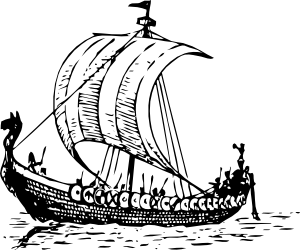
Viking in ‘old Norse’ translates as ‘pirate raid’ and for the Anglo-Saxons that is what it must have felt like.

Warriors from Denmark, Norway and Sweden crossed the seas in their long ships in search of treasure or a new place to settle.

The Anglo-Saxon Chronicle recalls the first invasion by these people in the South-East of England in AD787.   Whilst Anglo-Saxons tended to call these invaders ‘Danes’ the Norwegians who headed to Scotland and the North of England were in fact ‘Norsemen’.

Initially it is felt these attacks were merely ‘raids’.  Attacks on monasteries were frequent – a wealth of food, cattle and treasures but with no resistance.  In the mid-9th century these invaders started to settle with intent on conquest.

Denny Bradbury’s book ‘Borvo’ is set during the time of King Alfred the Great.  It focuses on a young pagan boy growing up in the time of the King’s defence of his realm against these ‘Danish invaders’.

Alfred is acknowledged as king of the only independent English kingdom, having successfully resisted invasion time and again.

Yet what was it he faced on the battlefields?

The Danes would be armed with spears, axes or swords.  Spears were commonplace and used for thrusting or throwing.  Indeed, a battle was prone to start with a defensive line of warriors hurling spears 2-3 metres in length to gain an early advantage.

Axes were a favourite in close-quarter fighting, although the famed double-handed axe did not come into existence until the latter years of DanViking Swordsish occupation.

Swords were rare due to their cost and anyone fighting with such a weapon was likely to hold a high status within the Danes.

Whatever their status, all warriors would have a small side-knife for general use as well as battle if absolutely necessary.

For defence, these invaders would hold circular shields approximately 1 meter wide.

Kite-shaped shields which gave better defence to the legs, were not invented until the turn of the first millennium.

Long tunics of chain mail were also worn – ‘byrnies’.  Again, similar to swords, these were expensive to make and likely to have only been worn by high-ranking officials.

Reindeer hide is thought to have been worn for protection, absorbing some of the impact from weapons.

The famed two-horned helmet of the ‘Vikings’ is, however, unlikely.  Any helmets were expensive to produce and again would only have been worn by someone with the correct status.

These warriors trained from a young age in the art of weaponry, through hunting and raiding.  For many, it was an ambition to become a celebrated warrior and so they would volunteer for battle in the hopes of winning prized weapons and the status that came with the reward.

In fact it was a requirement for all ‘free’ Scandinavians to own weapons – the metalwork, designs and style dictated their status.  They would travel to far-off lands on long-ships which had a shallow draft allowing for deeper incursions via river.

Vary rarely were these warriors seen on horseback – they were not a means to enter battle but sometimes used to assist travel if the distance was great.

The battle lines were not those of professional, organised soldiers but bands of ‘brothers’ – friends and warriors who would fight side-by-side.  Numbers varied depending on the battle, but could be as many as 7000.  A group of around 30 would surround the main leader of the army as a ‘last defence’.

The ‘beserks’ were a feared group of the invaders, known for getting so hyper for battle that it is believed they did not feel pain.  Their belief in their god of war ‘Odin’ for protection meant these fearless few tended to wear only bear skins for armour.

Read how the Danes were perceived by the Anglo-Saxons in Denny Bradbury’s book Borvo.

Laura Scott

Denny Bradbury’s latest novel ‘Borvo‘ will be available in both print and as an e-book.

To purchase one of Denny’s books please click on the images below or contact Denny directly at email denisebradbury@btinternet.com.
The Reunion Denagerie of Poems by Denny Bradbury

Man and his dog

02 Saturday Jul 2011

Posted by dennybradburybooks in History

≈ Leave a comment

Tags

dogs being used hunters, Man and His Dog, nature, why dogs are being used

Man and His Dog

Dogs were used for hunting to establish a purpose

Why is the dog a man’s best friend? Why do dogs play such a crucial role in today’s society?   The answer to these questions dates back tens of thousands of years.  Nobody knows when dogs became domesticated, but archaeologists know that at some point in the fabric of history these loyal creatures were being accepted as one of the tribe.  We know this because of the burials that have been discovered, whereby people were buried with their pet. 

Dogs are team players when mixing in human circles.  Canine intelligence dictates that dogs can learn to follow, lead and work with humans on a social level.  Experts know the basic motives for their actions include hunger (i.e. seeing the master as the giver of food), Mimic (i.e. being trained constantly to carry out a certain task, Nature (For example if a dog was reared since it was a pup it would build up a bond with its owner). 

Interestingly like humans, different dogs have different natures and this comes down to breeding.  Police dogs are bred with other species of dog to enhance a selective nature, in the case of a police dog its to attack when commanded and develop an acute sense of smell.  This is true with blind dogs.  They are trained to pick up certain skills and develop a bond with their owner.  Greyhounds are bred for sporting purposes, for speed.  It would be no good breeding two slow dogs, as the outcome probably wouldn’t satisfy their owner.  Either way the core nature of the humble pooch is to please their pack mates, their owners and those in its social domestic circles.  The influence of the human on the dog can be found through the thousands of years of interaction between the two species.  They can sense danger, develop a sense of loyalty and more importantly they can act upon those sense or emotions if you will.

In many ways humans and dogs are very similar creatures.  The ability to feel deep affection between one another show how strong we can build bonds.  The sense to look after one another adds the feeling of wanting that is present in us as humans.  In both dog and human you get the good and the bad.

To purchase one of Denny’s books please click on the images below or contact Denny directly at email denisebradbury@btinternet.com.


The Reunion Denagerie of Poems by Denny Bradbury

Weapons of the Era

27 Monday Jun 2011

Posted by dennybradburybooks in History

≈ Leave a comment

Tags

9th century, Beowulf, gunpowder, history, King Alfred, swords, weapons

Weapons of the Era

Weaponry at the time of King Alfred, in the late 9th century focused on swords. The influx of civilisations and their cultures changed the face of Britain and the weapons and tools used there.

Swords

In a time structured by battles, weapons were a symbol of status. Looking at the literature at the time battles were central, such as in Beowulf. In the epic poem, the protagonist Beowulf takes art in three great battles stretched over time. The battles are the pillars of the tale with the story fabricated around them.

In her new novel Borvo, Denny Bradbury depicts the struggle of a pagan boy who comes to the aid of King Alfred. Instead of using weapons he uses healing to help him – rather than force.

In Winchester, the statue of King Alfred shows him holding a sword aloft. The status of a powerful war king was important during his era. With his sword held in the air he looks heroic and strong.

Elsewhere, in China Taoist monks had stumbled across an early form of gunpowder, which would later become infamous in Britain. The monks were supposedly trying to create the exilir of eternal youth when they created the formation for saltpetre, one of the components for gunpowder.

The phrase ‘the pen is mightier than the sword’ is suggested to come originally from the 9th century – possibly by King Arthur himself. So perhaps the allure and status of weaponry was losing its power.

Sarah Hogan

To purchase one of Denny’s books please click on the images below or contact Denny directly at email denisebradbury@btinternet.com.
The Reunion Denagerie of Poems by Denny Bradbury

← Older posts
Newer posts →

Subscribe

  • Entries (RSS)
  • Comments (RSS)

Archives

  • March 2021
  • January 2021
  • April 2020
  • February 2020
  • January 2020
  • February 2019
  • September 2018
  • April 2018
  • March 2018
  • February 2018
  • January 2018
  • December 2017
  • November 2017
  • September 2017
  • August 2017
  • June 2017
  • May 2017
  • April 2017
  • March 2017
  • January 2017
  • December 2016
  • October 2016
  • September 2016
  • August 2016
  • July 2016
  • June 2016
  • May 2016
  • April 2016
  • March 2016
  • February 2016
  • January 2016
  • December 2015
  • November 2015
  • October 2015
  • September 2015
  • August 2015
  • June 2015
  • May 2015
  • April 2015
  • March 2015
  • February 2015
  • January 2015
  • December 2014
  • November 2014
  • October 2014
  • September 2014
  • August 2014
  • July 2014
  • June 2014
  • May 2014
  • April 2014
  • March 2014
  • February 2014
  • January 2014
  • December 2013
  • November 2013
  • October 2013
  • September 2013
  • August 2013
  • July 2013
  • June 2013
  • May 2013
  • April 2013
  • March 2013
  • February 2013
  • January 2013
  • December 2012
  • November 2012
  • October 2012
  • September 2012
  • August 2012
  • July 2012
  • June 2012
  • May 2012
  • April 2012
  • March 2012
  • February 2012
  • January 2012
  • December 2011
  • November 2011
  • October 2011
  • September 2011
  • August 2011
  • July 2011
  • June 2011
  • May 2011
  • April 2011
  • March 2011

Categories

  • Denny's Diary
  • fairytales
  • Fiction
  • History
  • Literacy News
  • Misc
  • Poetry
  • Polls
  • Reviews

Meta

  • Create account
  • Log in

Latest Tweets from Denny Bradbury Books

Tweets by DennyBradbury

Blog at WordPress.com.

Privacy & Cookies: This site uses cookies. By continuing to use this website, you agree to their use.
To find out more, including how to control cookies, see here: Cookie Policy
  • Subscribe Subscribed
    • Denny Bradbury Books
    • Join 73 other subscribers
    • Already have a WordPress.com account? Log in now.
    • Denny Bradbury Books
    • Subscribe Subscribed
    • Sign up
    • Log in
    • Report this content
    • View site in Reader
    • Manage subscriptions
    • Collapse this bar
 

Loading Comments...