• De:versify – New Poetry
  • Welcome
  • About
  • Blog
  • Reviews and Comments
  • BORVO
  • Denagerie of Poems
  • The Reunion
  • Contact

Denny Bradbury Books

Denny Bradbury Books

Category Archives: History

Monastic Life – Servitude and Prayer

13 Monday Jun 2011

Posted by dennybradburybooks in History, Misc

≈ 1 Comment

Tags

Borvo, Christianity, Denny Bradbury, How to be a monk?, King Alfred, monastery, monk, What it takes to be a monk? why did people become monks in medieval times?, Why do monks take a vow of silence?, Winchester

In Denny Bradbury’s new book ‘Borvo‘ her main character attends a monastery in Winchester during the Anglo-Saxon era.

We have already explored the progression of a new recruit from postulant to novice (Monastic Life – From Postulant to Monk), also looking into the clothing that they wear and symbolic significance  (Monastic Life – A ‘habit’ of a lifetime).

Now we will study the daily practices and ask why anyone would choose to leave their loved-ones for a life of strict rule.

Monasteries around the time of King Alfred followed Benedictine rule – a strict regime of prayer, divine reading, and manual labour.

The Liturgy of the Hours was an official set of daily prayers.  They consisted mainly of psalms with hymns and readings.

Traditionally it was an 8-hour set routine:

  • Matins – overnight/midnight
  • Lauds – Dawn or 3am
  • Prime – 6am
  • Terce – 9am
  • Sext – Noon
  • None – 3pm
  • Vespers – 6pm
  • Compline – 9pm

Monks who were ordained in Holy Orders to carry on the teaching i.e. priests were ‘choir monks’.  They had to recite the Divine Office daily in choir which was in Latin.  Their life within the enclave consisted of prayer, divine office and mass.

‘Lay brothers’ was the term associated with those not part of the Holy Orders, monks who did not involve themselves in spreading the word of God.  They provided the material needs of the community i.e. growing food, preparing meals and maintaining the grounds.

Those who could not read Latin learnt The Lords Prayer and Hail Mary and recited those up to 150 times a day.

Secular clergymen and lay brothers had ‘shorter’ prayer routines to fit in with their different lifestyles.

The vow of silence is found in many monasteries however not all orders practised strict silence.  Some had a ‘silent period’ overnight; others would only talk when it was deemed necessary to fulfil their duties.

But why would you leave your families and villages, choosing to sacrifice your independent life for one of servitude and hard labour?

As many would have you believe at the time, they went to monasteries purely to find God and live a good existence.  Of course we cannot deny that some people did sacrifice their freedoms to be closer to their Lord.

What we cannot forget, however, is that monasteries were centres of knowledge and learning, sometimes the only places for scholarship and learning in Europe.  Many contained big libraries including important ancient texts.  The copying of these texts formed a large part of the monks’ life.

Laura Scott

To purchase one of Denny’s books please click on the images below or contact Denny directly at email denisebradbury@btinternet.com.
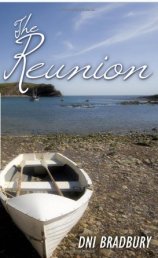
The Reunion Denagerie of Poems by Denny Bradbury

Food and Drink of Iron Age Britain

10 Friday Jun 2011

Posted by dennybradburybooks in History

≈ Leave a comment

Tags

food in iron age britain, How to use wheat grain and barley, iron age customs, iron age food.

Today when we walk into the local supermarket, we take for granted how everything is presented in clean packaging, ready to eat.  Meat is grown and reared, crops are grown and harvested and so too were grains.  In Iron Age Britain people of the time carried the same mentality.  However food wasn’t prepared on a mass scale, and it’s this which differs the customs between now and then.

Over the years archaeologists have pieced together how Iron Age Britain’s prepared their food by looking at the evidence that has been left behind including pots, pans and other food related tools.  Most of the cooked food would have been cooked on an open fire which would have been done either outside during the summer or inside a dwelling during the winter. Unlike today, much of the food would have been dictated by seasons, excluding the meat which would have been slaughtered when needed. However this isn’t to say that meat was an everyday commodity. Fresh Meat would have only been cooked on rare occasions, with small amounts being eaten every now again in the form of stews.  This was because stews kept longer and could be reheated gradually on a fire. Lamb, Pork and Cow were the animals of choice in the day, but it was not unusual to eat rabbit, deer, dog and even horse to survive.

To form the basic natural food stuffs, wheat, barley and corn was purposefully grown and ground down using stone to make other food, such as bread (as previously mentioned). Vegetables also provided a clear everyday diet.  Beans, brassicas (such as broccoli, cabbage and possibly sprouts) and root vegetables also added to the healthy diet.  Pure self sufficiency took up most of the daily routine.  When it came to rearing livestock, it doesn’t stop at just providing food.  Milk was available at different points during the year, so its safe to assume that the milk was used to make cheese to store throughout the year.  Wool and the coats of the animals were also used for clothing and the bones could be dried and used for other tools such as pegs and maybe even weapons.

Interestingly historians have found that there is little evidence to suggest that fish was eaten, only in settlements that were located by the coast. When it came to preparing food, pots and pans were use to brew stews, with larger pots doubling as ovens.

The main diet would have come from grain. Stews, crudely brewed beer and porridges would have been simple commodities to produce, which most people would have eaten on a daily basis.  Bread, then and is now a well sort after item due to its specifications.  Bread was and is a long lasting, fresh and all round basic food stuff for any cupboard or whole in the ground.  When it comes to food, the Iron Age was literally a proverbial soup (excuse the pun) and its from this soup which set the grounding for food is produced today for masses.

Eddie Fox

To purchase one of Denny’s books please click on the images below or contact Denny directly at email denisebradbury@btinternet.com.

The Reunion Denagerie of Poems by Denny Bradbury

Tiger’s wife author scoops Orange Prize

09 Thursday Jun 2011

Posted by dennybradburybooks in History, Literacy News

≈ Leave a comment

Tags

fiction, Orange Prize for Fiction, Tea Obreht

Photos of Tea Obreht and The Tiger WifeTea Obreht has won the 2011 Orange Prize for Fiction.

It’s been awarded for her debut novel The Tiger’s Wife.

The 25-year-old was praised by the judges as a “truly exciting new talent”.

The annual award recognises the work of fiction written in the English language by women.

Monastic Life – The ‘habit’ of a lifetime

08 Wednesday Jun 2011

Posted by dennybradburybooks in History

≈ Leave a comment

Tags

Borvo, Christianity, Denny Bradbury, How to be a medieval monk?, King Alfred, monks, The history of monks?, What did they wear under their habit?, Why did different monks wear different colours?, Why did monks shave their heads?, Winchester

St. Benedict - founder of the Benedictine Monks

Last time we looked at the path a new recruit to religious life must walk – trialing life as a postulant, then entering training as a novice, being permitted to make his solemn or permanent vows (Monastic Life – From Postulant to Monk).

We are now going to look into more detail about the clothing worn.

The monks’ clothing is called the ‘habit’.  It is made up of several different layers.

When the postulant decided to start his proper training as a ‘novice’ he would have been supplied with two tunics, a scapula for work, stockings and shoes.

The two tunics enable him to work and sleep in one whilst the other is being washed.  They were often ankle-length and tied at the middle by cloth or leather belt.

Over the tunic, a monk would wear a scapula.  This was a long wide piece of woolen cloth worn over the shoulders, with a hole for head.  This garment was secured at the front.  The scapula signified ‘obedience’.

The colours varied between orders.  The Benedictine Monks, which were practicing during the period of King Alfred (the setting of Denny Bradbury’s book ‘Borvo’), started out wearing white or grey habits – the colour of un-dyed wool.

In later years, they dyed their clothing black, and became known as ‘the Black Monks’.

Other orders, such as Cistercian and Carthusian, wore greyish-white or brown.

After taking their solemn vows, monks were issued with two cowls (hoods).  These highlighted the fact they had given their allegiance to God.

Some monks would also wear a cross and chain over their scapula, others would instigate suffering and self-punishment by wearing hair-shirts under their tunics.

Another part of ‘dress’ associated with monks was the tonsure – the shaved head.  It was often the preference of the monk as to how shaved the head would be.

All of these items helped the monks to focus on God and set them out from the rest of the people on their travels.

Next time, we explore the daily routine of life within a monastery and ask why people would give up freedoms in the pursuit of monastic life.

Laura Scott

To purchase one of Denny’s books please click on the images below or contact Denny directly at email denisebradbury@btinternet.com.
The Reunion Denagerie of Poems by Denny Bradbury

A History of Christianity Part 1.

06 Monday Jun 2011

Posted by dennybradburybooks in History

≈ 1 Comment

Tags

Borvo, Christianity, God, history of christianity, history of religion, Paganism, religion, resurrection

ChristianityWith all that has been written about the beginnings and growth of Christianity, it has been said that the history of Christianity’s origin could appear to be nothing more than a fairytale.  Many people feel that it is too implausible that the story – for that is what it is to all intent and purposes, of Jesus Christ, his followers and all that surrounded his birth, death and resurrection – actually took place.

Yet the Christian faith, unlike any other religion, is formed through historical events, including the pivotal fact of Jesus’ resurrection.  Were this historical fact not made valid through reported evidence of key witnesses, then Jesus Christ’s claims of being the Son of God would be continuously questioned.

Christianity is the world’s largest religion.  It began to spread from Jerusalem, through to the Near East, to Armenia by 301, Ethiopia in 325, Georgia in 337 and to the State Church of the Roman Empire in 380.  Early Christianity was split into two periods: firstly, the apostolic period stemming from a faithful group of men who began to follow Jesus, calling him teacher and becoming his disciples and learning that mankind had lost its relationship with God due to sin.  Jesus taught them that a “new covenant” would restore love and forgiveness with God and Jesus paid the price of humanity’s sins by being crucified upon a Roman Cross before rising back to life three days later, having conquered death and creating the possibility of everlasting life.

The apostolic period was then followed by the post-apostolic period, under which the Episcopal structure was developed, led by the Bishops and supported by the deacons who took on the role of looking after the poor and sick.  This was a time when intense persecution of the Christians took place by the Romans, and it was not until AD 313 under the reign of Constantine the Great that such persecution finally came to an end.

Constantine played an important role in the leadership of the Church, issuing the Nicene Creed in 325 which first introduced the idea of “One Holy Catholic Apostolic Church”.  Yet this period of respite from unrest was once more challenged when Julian, Constantine’s son, became Emperor and chose to renounce Christianity and chose instead to embrace a mystical form of Paganism, which shocked the Christian leaders – such contrast in religions is explored in Denny Bradbury’s soon to be released novel, Borvo.

Whilst in charge, Julian began to re-open the Pagan temples, working to re-introduce the prestige of the old Pagan beliefs by carefully modifying them so they would resemble Christian traditions.

Such battles between Paganism and the emergence and strengthening of Christianity continued throughout the 1st Century.  Converting Pagan Saxons to Christianity became the task of both the Celtic Church in Scotland to reform the North and the Roman Church led by missionaries from Rome to convert the South.  Counties such as Northumbria converted to Christianity under the rule and baptism of King Edwin of Northumbria, but upon his death many reverted back to Paganism before being converted all over again by Celtic monks. Church

Although by the end of the 7th Century all of England was largely Christian, many people continued to secretly worship the Pagan gods as late as the 8th Century. Denny Bradbury explores such religious divisions in Borvo, with a young pagan healer determined to continue to practise his healing powers in a country dominated by King Alfred’s fervent belief in Christianity.

Yet when Christianity began, what it did was to initially create a religion that was independent of man’s political loyalties – establishing order amongst local rites, pagan myths and what was originally seen as the cult of the Emperor.

In Part II we shall discuss how the beginning of the Christian faith led to the relevance of Christianity in our world today.


Elizabeth Bridgefield

To purchase one of Denny’s books please click on the images below or contact Denny directly at email denisebradbury@btinternet.com.
The Reunion Denagerie of Poems by Denny Bradbury

← Older posts
Newer posts →

Subscribe

  • Entries (RSS)
  • Comments (RSS)

Archives

  • March 2021
  • January 2021
  • April 2020
  • February 2020
  • January 2020
  • February 2019
  • September 2018
  • April 2018
  • March 2018
  • February 2018
  • January 2018
  • December 2017
  • November 2017
  • September 2017
  • August 2017
  • June 2017
  • May 2017
  • April 2017
  • March 2017
  • January 2017
  • December 2016
  • October 2016
  • September 2016
  • August 2016
  • July 2016
  • June 2016
  • May 2016
  • April 2016
  • March 2016
  • February 2016
  • January 2016
  • December 2015
  • November 2015
  • October 2015
  • September 2015
  • August 2015
  • June 2015
  • May 2015
  • April 2015
  • March 2015
  • February 2015
  • January 2015
  • December 2014
  • November 2014
  • October 2014
  • September 2014
  • August 2014
  • July 2014
  • June 2014
  • May 2014
  • April 2014
  • March 2014
  • February 2014
  • January 2014
  • December 2013
  • November 2013
  • October 2013
  • September 2013
  • August 2013
  • July 2013
  • June 2013
  • May 2013
  • April 2013
  • March 2013
  • February 2013
  • January 2013
  • December 2012
  • November 2012
  • October 2012
  • September 2012
  • August 2012
  • July 2012
  • June 2012
  • May 2012
  • April 2012
  • March 2012
  • February 2012
  • January 2012
  • December 2011
  • November 2011
  • October 2011
  • September 2011
  • August 2011
  • July 2011
  • June 2011
  • May 2011
  • April 2011
  • March 2011

Categories

  • Denny's Diary
  • fairytales
  • Fiction
  • History
  • Literacy News
  • Misc
  • Poetry
  • Polls
  • Reviews

Meta

  • Create account
  • Log in

Latest Tweets from Denny Bradbury Books

Tweets by DennyBradbury

Create a free website or blog at WordPress.com.

Privacy & Cookies: This site uses cookies. By continuing to use this website, you agree to their use.
To find out more, including how to control cookies, see here: Cookie Policy
  • Subscribe Subscribed
    • Denny Bradbury Books
    • Join 73 other subscribers
    • Already have a WordPress.com account? Log in now.
    • Denny Bradbury Books
    • Subscribe Subscribed
    • Sign up
    • Log in
    • Report this content
    • View site in Reader
    • Manage subscriptions
    • Collapse this bar
 

Loading Comments...