• De:versify – New Poetry
  • Welcome
  • About
  • Blog
  • Reviews and Comments
  • BORVO
  • Denagerie of Poems
  • The Reunion
  • Contact

Denny Bradbury Books

Denny Bradbury Books

Category Archives: Misc

Counting bees in a restless world

02 Monday May 2011

Posted by dennybradburybooks in Misc

≈ Leave a comment

Tags

bees, Busy, Counting Bees, Denny Bradbury, honey

Whatever happens in the world on the political stage, life continues in its smallness and its safety. Today, I watched the news as usual, and decided to count bumblebees, as I do for the Bumblebee Conservation Society. I care deeply about world peace but my way of preserving sanity is wrapped up in performing tasks such as counting the declining bee population on a local site. However we care or take note of the wider issues, if we continue to live and work and study, perhaps, just may be we will come through this international turmoil to find we have much more in common than differences that keep us apart.

Denny Bradbury

The History of Fictional Prose – Part 1: From symbols to style

02 Monday May 2011

Posted by dennybradburybooks in Misc

≈ 1 Comment

Tags

Books, Denny Bradbury, fiction, Writing

Nowadays people enjoy a variety of literature – autobiographies, biographies (which may or may not be approved), books on nature, theology, science fiction (or indeed science fact), poems and stories to allow the reader to get lost in other world, another life.

Non-fiction is often used as an educational tool – to gain a better understanding; either improvement to our knowledge of a topic or as an insight into someone else’s life and thoughts.

Yet when did fiction as opposed to non-fiction writing really come about?  You may think it is easy to define and separate the two, and on the surface of the debate there is a simple difference – one is true, one is not.

This simple divide is harder to spot when you look back in history and attempt to trace the origins of fictional prose.

We know from archaeological finds that ‘writing’ originated many millennia ago – symbols and pictographs dating back to 7th millennium BC.  Yet writing and literary prose are very different.

It is widely accepted that writings from the early millennia were basic historical records – a diary of events, what happened and when, and therefore deemed ‘true’.  These were symbols with no writing style – just ‘pictures’ representing fact.

Writing as something more than a mere depiction of an event is not recognised until 2000BC with the Epic of Gilgamesh (the earliest known works of literature).  Yet this ‘written’ work was a compilation of earlier orally told legends and poems – stories handed down through the generations which, at the time of telling were ‘histories’ and therefore depicting fact.

Today, however, legends are often seen as stories, possibly started as truth but which have been ‘added to’ to ensure excitement, adventure and that they would be passed down in history. Even if we take that view, the Epic of Gilgamesh was not a fictional story fresh from the author’s mind.

The earliest surviving works of literature are written versions of poems, histories and teachings already in existence.  Homer’s Iliad and Odyssey were written verse in the 8th century BC; China’s mystic philosopher Loa Tze, wrote ideas in verse dating to the Iron Age; sacred ancient Indian hymns (Rigveda) were found in written form dating to the 2nd millennium BC.

Verse (or poetry) in written form emerged early (see A History of Poetry: Part 1).  Written prose, however, took longer to emerge.

It is thought that prose as an ‘art form’ started to appear in Ancient Greece.

Aeschylus is applauded as introducing the first ‘drama/tragedy’ with interaction between characters.  Prior to this, performances tended to be ‘recitals’ of poetry rather than several people with their own lines to act.  Irony and comedy also came to the fore during this time.

Although more and more was being written, the increase in works tended to be non-fiction: science, philosophy, theology.  People started to question and to explore personal feelings/emotions.

During medieval times, written prose was few and far in between.  Verse was evolving and although some prose came about in the 14th century, for example the author Geoffrey Chaucer, these works tended to be ‘tales’ and folklore – still not the ‘novel’ form of fiction we are used to reading nowadays.

Islamic literature is thought to have played an important part in changing the way Europeans confronted literature.  The Book of One Thousand and One Nights was completed in the 14th century, and it introduced a ‘frame’ to collections of literary works:  the idea that a main story was being told by many shorter stories.

These works were not merely thrown together as individual works, but each story helped to tell a bigger story. It is the style of writing rather than the content alone which was thus far unseen in text.

Yet this collection of manuscripts was not an ’original’ story but a compilation of earlier mythology and tales.

The novel – the single piece of fictitious prose – is yet to be written.

And it is here that we leave the ‘story’ of prose fiction for now.  In the meantime, listen to Denny Bradbury’s interview on Fiction.

Laura Scott

An Introduction to John Keats

25 Monday Apr 2011

Posted by dennybradburybooks in Misc

≈ Leave a comment

Tags

Keats, Poetry, Romantic

To Autumn, John Keats

October 1795 saw the birth of John Keats in London, one of the most studied and analysed poets of the second British Romantic era.

His life was marred by tragedy from a very early age – something which was to haunt him yet influence him greatly in his works.

John was the eldest of five children – George (was to die penniless in America), Thomas (tragically taken by tuberculosis in 1818), Francis ‘Fanny’ and Edward (died in infancy) being the other four.

His first heartache was when he was four years old, losing his father in a work-related accident.  His mother died when he was just 14 years old, but not before remarrying and then leaving her new husband, forcing her children on their grandmother.

The death of his mother, however,  seemed to many at that time a blessing in disguise as his appointed guardians removed him from his boarding school in Enfield (where he met long-term friend author Charles Cowden Clarke) and placed him in an apprenticeship to apothecary-surgeon Thomas Hammond in 1810.

Although Keats studied hard and progressed in the medical profession, studying at Guys’ Hospital in London and obtaining his license to practice as an apothecary in 1816, his true love was poetry.  A brave decision was made and he gave up medicine in the pursuit of literary freedom.

‘Imitation of Spenser’ is Keats’ first surviving poem, written in 1814 alongside his medical studies.  Even before reading the poem, the title itself guides us to one of Keats’ influences – Elizabethan poet Sir Edmund Spenser who was himself noted as being a lead in the Modern English verse.

Keats was introduced by Clarke to Leigh Hunt, an editor of ‘Examiner’, who printed Keats’ first sonnet ‘Ode to Solitude’ in 1816.  This was followed in 1817 by the publishing of his first volume entitled ‘Poems’ which included 31 works.  Although reviews were mixed, it did indicate promise in a young poet.

His second publication, ‘Endymion’ in 1818, was not so successful.  Leading critical magazines of the time gave scathing reviews of the 4,000 line romantic and sometimes erotic piece on the Greek myth of the same name.  Indeed, it is believed that Percy Shelley had advised Keats not to rush ahead with another publication but wait until he had a larger collection to offer.

After the failure of Endymion, however, he toured the north of England and Scotland, returning south to continue caring for his younger brother until Tom’s death in December 1818 of tuberculosis.

It was towards the end of Tom’s life that Keats wrote one of his most recognised works ‘Hyperion’ (a blank-verse epic based on the Greek myth of creation, written in the style of John Milton).  His original work on ‘Hyperion’ remained unfinished with the death of his brother, however Keats returned to complete it in a reawakening of the piece entitled ‘The Fall of Hyperion’.

After Tom’s death Keats moved in with close friend Charles Armitage Brown, met William Wordsworth and fell in love with neighbour Fanny Brawne.  It is believed that this period of his life was the time he wrote his best work (published in 1820 – ‘Lamina, Isabella, The Eve of St. Agnes, and Other Poems’).

Indeed, Keats was unofficially engaged to Brawne but ill-health saw to it that they never married.  On medical advice to be in warmer climates over the winter, he travelled with artist Joseph Severn to Italy – landing in Naples before renting on the Spanish Steps in Rome.

Keats was never to recover from tuberculosis, and he died on 23rd February 1821.

This poet has been recognised in recent years as being one of the few to have emerged over a short space of time – he had three works published in the space of four years, the last of which is arguably his best.

Like many poets, however, Keats’ reputation in the literary world was not truly acknowledged until after his death and the publication of his letters in the mid and late nineteenth century gave an additional if not more prominent insight into his workings.  Students of poetry study his letters in equal measure to his poems.

It is through these letters that we really come to understand Keats’ view of ‘negative capability’ – in short, there are ‘uncertainties’ and not everything can be resolved.

Oscar Wilde wrote of Keats:

Rid of the world’s injustice, and his pain,
He rests at last beneath God’s veil of blue:
Taken from life when life and love were new
The youngest of the martyrs here is lain

(The Grave of Keats, Oscar Wilde)

And Keats himself wished only one line to be writ on his gravestone:

‘Here Lies One Whose Name Was Writ in Water’.

Keats was a literary genius whose life was so tragically cut short at the age of 25.

 Laura Scott

You can read more about styles of poetry in the History of Poetry series Part 1, Part 2, Part 3.
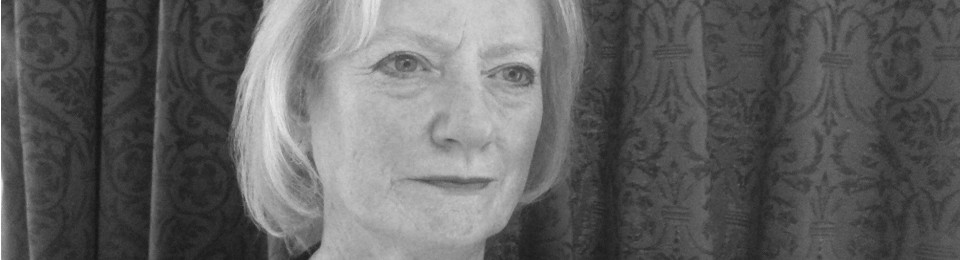
A Study Of How Different Writers Write.

21 Thursday Apr 2011

Posted by dennybradburybooks in Misc

≈ Leave a comment

Tags

Books, Denny Bradbury, experience, romances, Thomas Hardy, Writing


What makes a writer? Experience? Published works? Popularity? A writer is anybody who picks up a pen, metaphorically or otherwise, and commits their thoughts to paper or nowadays often a computer screen, and tells a story in one form or another.

Writing can take on the form of journals, articles, poems, novels and every writer has their own style, possibly drawing on past experiences to create a world of their own. Some writers will choose to write in short bursts, perhaps writing everything by hand before committing to type; others may take years to complete a novel that has been a lifetime in the making.

Whilst some authors may use writing as a cathartic experience, exorcising their own demons, others write for pure, unadulterated pleasure; whilst some may steep their novels in historical fact, others choose to base their works in complete fantasy. Whatever the approach, writing is a very personal, solitary activity – some will write in an almost autobiographical format and often in isolation

Denny Bradbury, in her first novel The Reunion and in her new novel Borvo due for release in June, draws upon her geographical and historical knowledge combined with her personal affinity of the location to set her works in the county of Wessex – whereas The Reunion is set in present day, Borvo harks back to the first century and the time of Alfred The Great, the King of Wessex. Just as Alfred was the actual king of Wessex by royal appointment, Thomas Hardy, one of Denny’s literary heroes, could be described as the literary King of Wessex, a writer of many novels and a vastly talented poet.  Just as Denny Bradbury in her writing style blends romantic optimism with the stark reality of life and death, Hardy’s style also uses humour to contrast the bleakness of situations ruled by nature and the harsh Victorian social conventions.

In many cases, writers are often inspired by other writers, and styles will differ depending on the aim behind the words, be it to educate, inform, shock, titillate, inspire, teach or merely to entertain. Style can also differ depending on the genre, with romances, crime thrillers, biographies and historical works all requiring a different approach as each will appeal to a wide spectrum of audiences.

One thing is certain, no matter what style, format, or way of writing is adopted, to be a writer is to allow oneself the luxury of indulging in a favourite pastime and openly sharing creativity with others.

More information on writers such as Thomas Hardy can be found here.

A History of Poetry: Part 3 – The hard truth and freedom to express

18 Monday Apr 2011

Posted by dennybradburybooks in Misc

≈ Leave a comment

Tags

Browning, Denagerie of Poems, Denny Bradbury, DH Lawrence, History of Poetry, Oscar Wilde, Poetry, romantics, Tennyson, Victorian

Poetry has existed in many forms over many millennia.  Some styles have broken away from the ‘traditional’ of their time, whereas others have stood the test of time and which transcend the various poetical eras.

From the Babylonians to Ancient Greeks, Romans to Medieval Europe, Renaissance and Romantics, poetry has reflected views of the time as well as influenced them.

During the Victorian era, the traits started by the Romantics such as personal emotions (varying extremes from sadness to euphoria) and conflicting attitudes to religion versus science, really took hold.  Writings were seen to highlight the contrasts within the Industrial society and the political status of the Empire.

Lord Alfred Tennyson described beautifully the contradiction of the ‘heroic’ attitudes of imperial conquest and the questionable decisions taken in ‘The Charge of the Light Brigade’:

“Forward, the Light Brigade!”
Was there a man dismayed?
Not tho’ the soldiers knew
Someone had blundered;

(The Charge of the Light Brigade, Lord Alfred Tennyson)

‘The Cry of the Children’ by Elizabeth Barrett Browning is a moving piece exploring the use of children in factories and mines.  Again, she contrasts the idyllic life children should lead with the harsh reality of life, questioning, too, whether god actually exists to allow such hardships and injustice.

Oscar Wilde is another poet who emerged in the late Victorian age; and his poetry often targeted the rights’ and wrongs’ of the times: his poem ‘The New Remorse’ is an example of forbidden love.

Aside from the new ‘topics and emotions’ expressed during the Victorian era, experimental meter also came into practice during the 19th century:

Walt Whitman was an American poet who often used free verse where strict rhyme, rhythm, and specific techniques were not required – although often incorporated to allow a structure.

Gerard Manley Hopkins introduced ‘sprung’ rhythm to poetry – again, breaking away from the strict form of ‘running rhythm’ as he saw it to a freer form, albeit still encompassing a beat.

‘The child is father to the man’.
How can he be?  The words are wild.
Suck any sense from that who can:
‘The child is father to the man’.

(The Child Is Father To The Man, Gerard Manley Hopkins)

The honest and sometimes brutal outlook of life in the Victorian Era made way to the Georgian writings, war and yet another romantic wave.

This was but a short period in the history of poetry, often seen as the stepping stone between Victorian and Modern.

Yet it was during this time that DH Lawrence and TS Elliot made names for themselves.

Reject me not if I should say to you
I do forget the sounding of your voice,
I do forget your eyes that searching through
The mists perceive our marriage, and rejoice

(A Love Song, D.H. Lawrence)

Imagist poetry was a form to emerge during the Georgian era.  This style was thought to be a rebuff against abstract language and romanticism – an attempt to bring poetry back to ‘exact’ interpretation.

The apparition of these faces in the crowd;
Petals on a wet, black bough.

(In A Station Of The Metro, Ezra Pound)

This poem from 1913 is exact and to the point and describes the Imagist views perfectly.

Another style emerging around the same time as the Imagist was Surrealism.

A style brought to the fore by French poets, finding a launch-pad in Andre Breton’s ‘Manifesto of Surrealism’ (1924).  Poetry moved away from rigid writing within strict rules to ‘dream-state’ interpretation and accessing the subconscious mind.

Modern poetry has taken its’ own form.  There are no strict rules you have to follow – if you desire, you can return to the ancient styles of rhyme and meter, finding heroes in current affairs.  Alternatively, look to free verse where anything is accepted as long as you are true to yourself.

Take a look at poet from the present – Denny Bradbury varies her poetic styles yet you can see influences dating back hundreds of years.  Read through ‘Denagerie of Poems’ and explore life through her eyes.

There is a poet in all of us – when will it be your time to set yourself free?

Laura Scott

← Older posts
Newer posts →

Subscribe

  • Entries (RSS)
  • Comments (RSS)

Archives

  • March 2021
  • January 2021
  • April 2020
  • February 2020
  • January 2020
  • February 2019
  • September 2018
  • April 2018
  • March 2018
  • February 2018
  • January 2018
  • December 2017
  • November 2017
  • September 2017
  • August 2017
  • June 2017
  • May 2017
  • April 2017
  • March 2017
  • January 2017
  • December 2016
  • October 2016
  • September 2016
  • August 2016
  • July 2016
  • June 2016
  • May 2016
  • April 2016
  • March 2016
  • February 2016
  • January 2016
  • December 2015
  • November 2015
  • October 2015
  • September 2015
  • August 2015
  • June 2015
  • May 2015
  • April 2015
  • March 2015
  • February 2015
  • January 2015
  • December 2014
  • November 2014
  • October 2014
  • September 2014
  • August 2014
  • July 2014
  • June 2014
  • May 2014
  • April 2014
  • March 2014
  • February 2014
  • January 2014
  • December 2013
  • November 2013
  • October 2013
  • September 2013
  • August 2013
  • July 2013
  • June 2013
  • May 2013
  • April 2013
  • March 2013
  • February 2013
  • January 2013
  • December 2012
  • November 2012
  • October 2012
  • September 2012
  • August 2012
  • July 2012
  • June 2012
  • May 2012
  • April 2012
  • March 2012
  • February 2012
  • January 2012
  • December 2011
  • November 2011
  • October 2011
  • September 2011
  • August 2011
  • July 2011
  • June 2011
  • May 2011
  • April 2011
  • March 2011

Categories

  • Denny's Diary
  • fairytales
  • Fiction
  • History
  • Literacy News
  • Misc
  • Poetry
  • Polls
  • Reviews

Meta

  • Create account
  • Log in

Latest Tweets from Denny Bradbury Books

Tweets by DennyBradbury

Blog at WordPress.com.

Privacy & Cookies: This site uses cookies. By continuing to use this website, you agree to their use.
To find out more, including how to control cookies, see here: Cookie Policy
  • Subscribe Subscribed
    • Denny Bradbury Books
    • Join 73 other subscribers
    • Already have a WordPress.com account? Log in now.
    • Denny Bradbury Books
    • Subscribe Subscribed
    • Sign up
    • Log in
    • Report this content
    • View site in Reader
    • Manage subscriptions
    • Collapse this bar