• De:versify – New Poetry
  • Welcome
  • About
  • Blog
  • Reviews and Comments
  • BORVO
  • Denagerie of Poems
  • The Reunion
  • Contact

Denny Bradbury Books

Denny Bradbury Books

Tag Archives: fiction

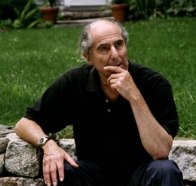
Philip Roth wins Man Booker International Prize

18 Wednesday May 2011

Posted by dennybradburybooks in Fiction, Literacy News, Misc

≈ Leave a comment

Tags

fiction, Man Booker International Prize, Man Booker Prize, Philip Roth

Phillip Roth

Phillip Roth

Philip Roth has been announced as the winner of the fourth Man Booker International Prize.

He was selected from a list of 13 contenders.

The Man Booker International Prize, worth £60,000, is awarded for an achievement in fiction on the world stage and awarded every two years.

The World and Universe of J.R.R. Tolkien

18 Wednesday May 2011

Posted by dennybradburybooks in Fiction

≈ Leave a comment

Tags

Epic, Fantasy, fiction, Gollum, Hobbits, J.R.R. Tolkien, literature, Lord of the Rings, Lord of the Rings Trilogy, Middle Earth, Mordor, Novel, The Hobbit, Tolkien, Writing

Gollum a character from Lord of the Rings

John Ronald Reuel Tolkien , Oxford professor, master of the languages and literatures of the ancient north, poet, story teller, creator of the orcs, the hobbits, the high-elves, the black riders, of Rivendell, Lothlorien and the misty mountains, creator of Mirkwood and the black land of Mordor.  Creator of the Fellowship of the Ring and the Dark Lords.  J.R.R. Tolkien is the omniscient presence behind Middle Earth.

His writings and teachings have been an inspiration to other artists.  The Hobbit, which was originally written for his children, and published over 50 years ago is now known to generations across the world.  And the Lord of the Rings has become one of the most intricate pieces of fantasy fiction of our time.  The writings of Tolkien go deeper than the pages.  In a more comprehensive look at Lord of the Rings, the attraction to readers is the belief in an unreal world.  What Tolkien called “Secondary World”.  A “Secondary World” is one that exists only in the mind, cannot be seen or found. Pure imagination.  Readers who enter the “Secondary World” or Middle Earth, probably liked where they were, but were bound by the physics of the real world.  Interesting stuff don’t you think?  The ultimate secret to Tolkien’s appeal (which is a mystery) is the quality of imagination.  For example Ents, nobody talked about Ents before Tolkien, as its not a traditional piece of literature, but today most people understand what it is.  A more obvious example would be the Hobbits.  Hobbit in terms of the word sounds like a traditional English word, but is in fact nonsense.  J.R.R. Tolkien made the whole thing up.  Very few writers can invent a notion which becomes recognised by the whole world.

It was the countryside just outside of Birmingham where Tolkien discovered his love of nature and this can be seen prominently throughout his descriptions of Middle Earth.  J.R.R. Tolkien was a devout Roman Catholic, speaking Latin he developed this into an interest into languages and teachings.  Middle Earth was a melting pot in Tolkien’s mind even as a school boy at King Edwards in Birmingham.  Ironically like a plant, this idea grew, flourished and over spilled onto pages and pages of writing.

The fantasy genre has been around since the dawn of writing itself.  Since Homer’s epic poem the Odyssey to the old English myth of Beowulf and even in Shakespeare’s Midsummer Nights Dream.  The genre has been evolving.  John Ronald Reuel Tolkien is considered the father of modern fantasy with over 150million readers spanning generations upon generations.

The Lord of the Rings Trilogy is the second highest selling set of books of all time after the Bible.  And was made into a set of films which is still considered one of the most ambitious film projects of all time, having spent over $285 million to create the finished project.  It also claimed a number of academy awards that rival Ben Hur and Titanic.

World wide, the Lord of Rings raked in  $2,915,155,189 in at the Box Office.  All from one mind. The mind of Tolkien.

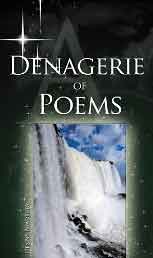
To purchase one of Denny’s books please click on the images below or contact Denny directly at email denisebradbury@btinternet.com.
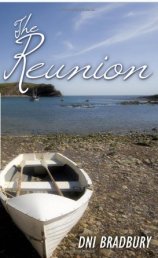
The Reunion Denagerie of Poems by Denny Bradbury

Denny reveals the latest on her new book Borvo

13 Friday May 2011

Posted by dennybradburybooks in Denny's Diary, Fiction

≈ 6 Comments

Tags

Author, Borvo, Christianity, Denny Bradbury, England, fiction, New Book, pagan, re-write, Writing


Denny Bradbury has been working hard on bringing her new book to life.  Having completed a second re-write a few selected individuals have had the privilidge of reading a copy before Denny feels the publication can go for publication.  Denny’s main character Borvo is a Pagan Healer who embarks on a journey to help him deal with a Christianising England  she’s been revealing what we could expect.

To purchase one of Denny’s books please click on the images below or contact Denny directly at email denisebradbury@btinternet.com.
The Reunion Denagerie of Poems by Denny Bradbury

JK Rowling: From the start, but yet to finish…?

11 Wednesday May 2011

Posted by dennybradburybooks in Fiction

≈ Leave a comment

Tags

Books, fiction, Harry, Harry Potter, Hogwarts, J.K, JK Rowling, magic, Money, Potter, Potter Universe, Rowling, Wizardry

JK Rowling, the billionaire mother behind the Harry Potter empire. The JK Rowling legend starts off with a children’s book about an orphan wizard boy with a funny shaped scar on his forehead. A boy with a magical and most captivating destiny. A destiny shared only by his creator.

J.K. Rowling

Harry Potter Books by J.K. Rowling

JK Rowling is the first self made millionaire stroke billionaire author in history. Having sold more than 400 million books, with a readership in 69 languages and an audience spread over 200 countries around the world. Harry Potter’s final instalment The Deathly Hallows has been the fastest selling book of all time. JK Rowling is regarded to have contributed more to literacy than anyone on the planet. The JK Rowling Empire spans across films, merchandise and more recently a theme park. The Harry Potter film series are the highest grossing movie franchise in Hollywood history, having estimated to have churned out over £5 billion and counting.

When originally written, JK Rowling’s publisher targeted the book to boys, but they didn’t want their audience to know it was a woman who had written the book, so they decided to use her initials, except she doesn’t have a middle name. So she used her grandmothers name Kathleen for the K. And so it was that Joe Kathleen Rowling would write for the world. Although she didn’t fool the boys for long as the books grew in popularity she ended up in the press.

Before Harry Potter jumped from his creator’s authentastical imagination into the hearts of millions, JK Rowling was a struggling single mother living in Scotland. In the first book, Harry Potter and the Philosopher’s Stone she states that every child in the world will know Harry Potter’s name. Who would have thought that in the real world this would come true. And that’s in spite 12 publishers rejected the first book, something even more magical is that the 13th publisher (a number associated with bad luck) agreed to take the work to print. A warning came from her agent, “You won’t make money writing children’s books” How wrong could they have been!

Before appearing on the Sunday Times Rich list, JK Rowling led a modest lifestyle as a secretary in London. She was just 25 when her mother passed away sending JK Rowling into an emotional hurricane. Following that she moved to Portugal, married and gave birth to her daughter Jessica. In JK Rowling’s own words the marriage was “catastrophic”. So she upped sticks and moved to Scotland only to face clinical depression and a welfare budget.

JK Rowling has stated that its impossible to live without failure. Hitting rock bottom provided the solid base in which she rebuilt her life and gave birth (literally, metaphorically but not physically) to Harry Potter. Why try? For a fear or failing? What a silly idea. Try and fail or succeed.  To millions of children and adults, Harry Potter symbolises the essense of children and childhood.

Harry Potter by J.K. Rowling

Magic - not just for children anymore

So what happens now Harry Potter comes to an end? Is there room on the book shelf for another set of books as Harry, having survived puberty now steps into adulthood.

Eddie Fox

To purchase one of Denny’s books please click on the images below or contact Denny directly at email denisebradbury@btinternet.com.

The Reunion Denagerie of Poems by Denny Bradbury

The History of Fictional Prose – Part 2: The printing press and entertainment

09 Monday May 2011

Posted by dennybradburybooks in Fiction

≈ 1 Comment

Tags

Denny Bradbury, fiction, history, History of Poetry, Poetry, William Shakespeare

History of Fictional Prose

We have been exploring the emergence of literature, and fictional prose in particular.  How ‘symbols’ and ‘pictograms’ changed to words which recorded ‘fact’ in part 1.

Tales and myths, previously handed down through generations by word of mouth, became documented.  Then civilisations started to experiment with different writing styles and we left it last time with the introduction of a writing ‘frame’ as seen in One Thousand and One Nights.

What was still lacking, however, was the first true written work of a single piece of prose fiction.

A boost was made to prose-writing in 1455 with the introduction of the printing press to Europe.  Other forms of printing had already come to existence around the world but this introduced mass printing and ensured printed material became available to a larger population, not just the privileged few.

Unlike poetry, which had rhythm and rhyme to assist in its’ recount, prose was not easily remembered and therefore needed to be written down.  The printing press ensured prose a future and more people started to experiment in the longer-style of writing, with little or no ‘structure’ as seen in verse.

William Caxton was the first to publish a book in English in the late 15th century – this was not a work of fiction but the translation of a History of Troy.  Chaucer’s Canterbury Tales and Malory’s Le Morte d’Arthur are included in the works he published in England.  Again, these are collections of tales, not a single piece of continuous prose.

During the early modern period we see the likes of William Shakespeare and Christopher Marlowe writing plays for entertainment rather than education, so fiction as we understand it nowadays was starting to take shape.

Spanish author Miguel de Cervantes had ‘The Ingenious Gentleman Don Quixote of La Mancha’ published in two parts 1605 and 1615.  It is widely regarded as turning point in fictitious writing.  Again, it is written around several ‘stories’ of his exploits but these have no relation to historical figures – genuine fiction.

Early English novelists include John Bunyan, Daniel Defoe and Jonathan Swift, all born in the 17th century.  Indeed, in many circles, Daniel Defoe is credited as being the first true English fiction novelist with his work ‘Robinson Crusoe’ (published in 1719) – a fictional autobiography.

The history of fictional prose has been a difficult one to trace.  Works we now find ‘laughable’ were believed at the time.  Imagination was not encouraged in the early years – most written material was historical or religious.  It took a few brave authors to step out of the shadow; include emotions in their work.

Then we have the second obstacle of actually writing prose.  Poetry was in existence in oral form for millennia.  This slowly became documented and verse was formed.  An extended piece of writing was a long way off when written word was first introduced.

Tales were written, then collections of stories.  Gradually the expression of writing grew.  It was not a quick process.  One thing is widely accepted – we would not have experienced the joy of novels without the invention of the printing press.

Denny Bradbury is a modern-day fiction author and poet.  ‘The Reunion’ is a fictitious novel exploring a year in the lives and emotions of five friends. She is also promoting her new novel, Borvo, which is an extraordinary historical-fiction novel around King Alfred.

To read part 1 of my article on the History of Fictional Prose click here

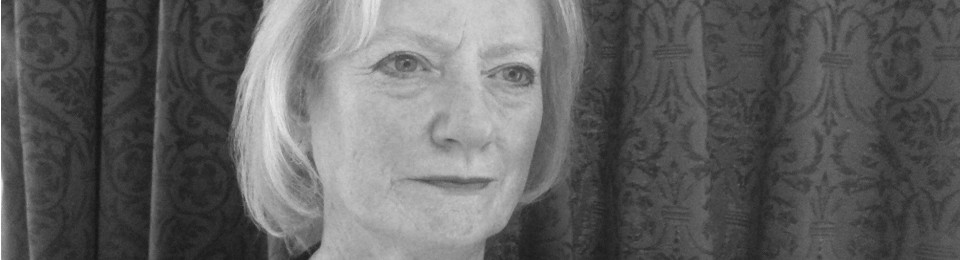
Laura Scott

To purchase one of Denny’s books please click on the images below or contact Denny directly at email denisebradbury@btinternet.com.
The Reunion Denagerie of Poems by Denny Bradbury

← Older posts
Newer posts →

Subscribe

  • Entries (RSS)
  • Comments (RSS)

Archives

  • March 2021
  • January 2021
  • April 2020
  • February 2020
  • January 2020
  • February 2019
  • September 2018
  • April 2018
  • March 2018
  • February 2018
  • January 2018
  • December 2017
  • November 2017
  • September 2017
  • August 2017
  • June 2017
  • May 2017
  • April 2017
  • March 2017
  • January 2017
  • December 2016
  • October 2016
  • September 2016
  • August 2016
  • July 2016
  • June 2016
  • May 2016
  • April 2016
  • March 2016
  • February 2016
  • January 2016
  • December 2015
  • November 2015
  • October 2015
  • September 2015
  • August 2015
  • June 2015
  • May 2015
  • April 2015
  • March 2015
  • February 2015
  • January 2015
  • December 2014
  • November 2014
  • October 2014
  • September 2014
  • August 2014
  • July 2014
  • June 2014
  • May 2014
  • April 2014
  • March 2014
  • February 2014
  • January 2014
  • December 2013
  • November 2013
  • October 2013
  • September 2013
  • August 2013
  • July 2013
  • June 2013
  • May 2013
  • April 2013
  • March 2013
  • February 2013
  • January 2013
  • December 2012
  • November 2012
  • October 2012
  • September 2012
  • August 2012
  • July 2012
  • June 2012
  • May 2012
  • April 2012
  • March 2012
  • February 2012
  • January 2012
  • December 2011
  • November 2011
  • October 2011
  • September 2011
  • August 2011
  • July 2011
  • June 2011
  • May 2011
  • April 2011
  • March 2011

Categories

  • Denny's Diary
  • fairytales
  • Fiction
  • History
  • Literacy News
  • Misc
  • Poetry
  • Polls
  • Reviews

Meta

  • Create account
  • Log in

Latest Tweets from Denny Bradbury Books

Tweets by DennyBradbury

Create a free website or blog at WordPress.com.

Privacy & Cookies: This site uses cookies. By continuing to use this website, you agree to their use.
To find out more, including how to control cookies, see here: Cookie Policy
  • Subscribe Subscribed
    • Denny Bradbury Books
    • Join 73 other subscribers
    • Already have a WordPress.com account? Log in now.
    • Denny Bradbury Books
    • Subscribe Subscribed
    • Sign up
    • Log in
    • Report this content
    • View site in Reader
    • Manage subscriptions
    • Collapse this bar