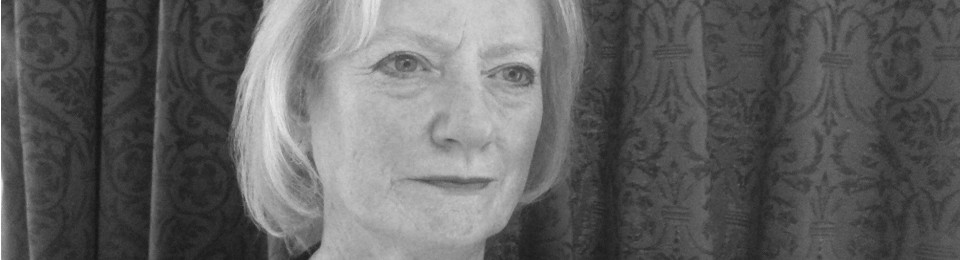
Westminster Abbey

Tags

, ,

Westminster Abbey

Westminster Abbey

I love to browse around cathedrals. Usually the medieval ones hold the most interest for me although I have been to Coventry and was blown away by the sincerity of the place with its overwhelming sense of reconcilliation. However on Friday last week I visited Westminster Abbey, the last time I was there I was a child. The tomb of the unknown soldier and poet’s corner were a must and never fail to give one a sense of awe and humility but the aspect that struck me most was the beautiful vaulted ceiling, arguably the most spiritually sensitive of any ceiling in the world, magnificent in its clarity and purity.

Denny Bradbury June 7th 2011

A History of Christianity Part 1.

Tags

, , , , , , ,

ChristianityWith all that has been written about the beginnings and growth of Christianity, it has been said that the history of Christianity’s origin could appear to be nothing more than a fairytale.  Many people feel that it is too implausible that the story – for that is what it is to all intent and purposes, of Jesus Christ, his followers and all that surrounded his birth, death and resurrection – actually took place.

Yet the Christian faith, unlike any other religion, is formed through historical events, including the pivotal fact of Jesus’ resurrection.  Were this historical fact not made valid through reported evidence of key witnesses, then Jesus Christ’s claims of being the Son of God would be continuously questioned.

Christianity is the world’s largest religion.  It began to spread from Jerusalem, through to the Near East, to Armenia by 301, Ethiopia in 325, Georgia in 337 and to the State Church of the Roman Empire in 380.  Early Christianity was split into two periods: firstly, the apostolic period stemming from a faithful group of men who began to follow Jesus, calling him teacher and becoming his disciples and learning that mankind had lost its relationship with God due to sin.  Jesus taught them that a “new covenant” would restore love and forgiveness with God and Jesus paid the price of humanity’s sins by being crucified upon a Roman Cross before rising back to life three days later, having conquered death and creating the possibility of everlasting life.

The apostolic period was then followed by the post-apostolic period, under which the Episcopal structure was developed, led by the Bishops and supported by the deacons who took on the role of looking after the poor and sick.  This was a time when intense persecution of the Christians took place by the Romans, and it was not until AD 313 under the reign of Constantine the Great that such persecution finally came to an end.

Constantine played an important role in the leadership of the Church, issuing the Nicene Creed in 325 which first introduced the idea of “One Holy Catholic Apostolic Church”.  Yet this period of respite from unrest was once more challenged when Julian, Constantine’s son, became Emperor and chose to renounce Christianity and chose instead to embrace a mystical form of Paganism, which shocked the Christian leaders – such contrast in religions is explored in Denny Bradbury’s soon to be released novel, Borvo.

Whilst in charge, Julian began to re-open the Pagan temples, working to re-introduce the prestige of the old Pagan beliefs by carefully modifying them so they would resemble Christian traditions.

Such battles between Paganism and the emergence and strengthening of Christianity continued throughout the 1st Century.  Converting Pagan Saxons to Christianity became the task of both the Celtic Church in Scotland to reform the North and the Roman Church led by missionaries from Rome to convert the South.  Counties such as Northumbria converted to Christianity under the rule and baptism of King Edwin of Northumbria, but upon his death many reverted back to Paganism before being converted all over again by Celtic monks. Church

Although by the end of the 7th Century all of England was largely Christian, many people continued to secretly worship the Pagan gods as late as the 8th Century. Denny Bradbury explores such religious divisions in Borvo, with a young pagan healer determined to continue to practise his healing powers in a country dominated by King Alfred’s fervent belief in Christianity.

Yet when Christianity began, what it did was to initially create a religion that was independent of man’s political loyalties – establishing order amongst local rites, pagan myths and what was originally seen as the cult of the Emperor.

In Part II we shall discuss how the beginning of the Christian faith led to the relevance of Christianity in our world today.


Elizabeth Bridgefield

To purchase one of Denny’s books please click on the images below or contact Denny directly at email denisebradbury@btinternet.com.
The Reunion Denagerie of Poems by Denny Bradbury

What is the link between Music and Poetry?

Tags

, , , , ,

What is the link between music and poetry

music and poetry, a fine line?

Music and Poetry are very similar forms. The big difference in a nutshell is the execution of each. Poetry of course is written and so therefore can be read, music on the other hand is again written, but is meant to be heard. If you’re not to hot on your musical literature then reading it isn’t much use to you. But this doesn’t mean that they don’t carry a similar purpose. Both are out to appeal to a certain kind of human nature and act as catalyst to stir the soul.

The link between music and poetry is not an easy one to explain, both are very different entities and then again very similar. Music is poetry in motion. I think that sums it up pretty well. The similarities between the two different forms are great and are not usually spotted by the general public and the media for that fact. When composing or writing a song, rhythm is taken into consideration. And so to is it with poetry. You could argue that rhythm is a lot more important in music than what it is with poetry. A flowing melody, and smooth words all add to greater meaning of the piece. Expression is also a key ingredient. As a writer and poet, Denny Bradbury has often said that as a writer your work just flows once you have an idea or a feeling in your head. It’s the same with music. Once you’re in the zone, you’re good to go.

But Expression of what? Emotion. Many singer songwriters, poets and ordinary writers usually have something on their mind. Its this particular topic or feeling which acts as the muse for many artists. Its these three key ingredients which is present in both music and poetry. There is a form of poetry which can be transformed into music, and those are known as lyrical poems. Lyrical poems are mostly used in music, but there’s nothing wrong with keeping them as they are in the written form. Specific words are chosen that produce a certain kind of rhythm, and the words provide the reader with the thoughts and feelings of their author. Lyrical Poems are more prominent in today’s than you might think. Rap music is made up of rhythm, rhyme and peppered with alliteration. It is still poetry and yet it is music at the same time.

Monastic Life – From Postulant to Monk

Tags

, , , , , , ,

Denny Bradbury’s latest book ‘Borvo’ looks at an important period of Anglo-Saxon history.  It’s a pivotal period where paganism and Christianity ‘clash’ – out with the old beliefs of polytheism and in with the new monotheism.

Denny’s titular character, brought up with multiple deities, combines the two beliefs when he attends a Catholic monastery in Winchester (see the earlier article on Winchester Cathedral).

Today we start our exploration of monastic life – the communities and the route from postulant to monk.

Monasteries were communities where people would go to dedicate their lives to God.  In the early years, both men and woman could attend within the same walls, but lived separate lives within the enclave.

Over time, practices changed and separate communities were formed; abbeys and priories, nunneries and convents.

Within the boundary walls (the enclave) you would find several buildings – a church, workshops, kitchen and cells (the monks’ individual rooms for sleep and prayer).

The Abbott would be in charge of the Abbey (having been elected by his brethren) and the Prior would oversee the running of a Priory (smaller community).  Others within the community were ‘choir monks’ and ‘lay brothers’.  Tasks between them differed and very often it was due to their ‘status’ and ‘abilities’ gained in existence outside the walls before the move into the monastery.

When Denny’s character Borvo turned up at the doors of the monastery in Winchester, he would not have entered strict rule immediately.

He would have been known as a ‘postulant’ – someone living within the walls on a ‘trial basis’.  Not making any vows, he would have been free to leave at any time.

The trial would only have given him an insight into the life, the sacrifices and the rewards of monastic teaching, usually over a few months.  To truly access the lifestyle, a postulant would request permission to stay.  If the rest of the brethren agreed, he would be given his ‘habit’ (clothing) and be known as a ‘novice’.  The novice would now dress appropriately and participate in monastic life (the structure and duties of which we will examine in a later article).

When the ‘novice’ feels ready, which can be about a year after they begin their training, they can take their ‘solemn vows’: poverty, obedience and chastity.  These can be renewed annually until such time as they are prepared to make their ‘permanent vows’ which, as the name suggests, ties them for life to the rule of their order.

Within the Benedictine order, ‘religious vows’ were also taken which were similar to the solemn vows – obedience, conversion of life, and stability (the latter ensuring the monk would be buried within the walls).

Once basic training was complete (of course, life was one continuous training event), they could either be ‘regular’ or ‘secular’ clergy.

‘Regular’ came from the latin ‘regula’ meaning ‘rule’ – in this instance meaning the strict lifestyle they would lead within the monastery walls.

‘Secular’ is from the latin ‘saecularis’ meaning ‘of the world’ – and this related to priests who would leave the safety of the monastery and visit the people (not just to spread the word but to trade/sell produce).

We shall explore the clothing and routines of those within the monastery next time, and look at why people chose to leave their families and villages, choosing to sacrifice their independent life for one of servitude and hard labour.

Laura Scott

To purchase one of Denny’s books please click on the images below or contact Denny directly at email denisebradbury@btinternet.com.
The Reunion Denagerie of Poems by Denny Bradbury