• De:versify – New Poetry
  • Welcome
  • About
  • Blog
  • Reviews and Comments
  • BORVO
  • Denagerie of Poems
  • The Reunion
  • Contact

Denny Bradbury Books

Denny Bradbury Books

Category Archives: History

What is the link between Music and Poetry?

03 Friday Jun 2011

Posted by dennybradburybooks in History, Poetry

≈ Leave a comment

Tags

and composing, expressing yourself, fiction, The link be music and poetry, what are lyrical poems? writing, Writing

What is the link between music and poetry

music and poetry, a fine line?

Music and Poetry are very similar forms. The big difference in a nutshell is the execution of each. Poetry of course is written and so therefore can be read, music on the other hand is again written, but is meant to be heard. If you’re not to hot on your musical literature then reading it isn’t much use to you. But this doesn’t mean that they don’t carry a similar purpose. Both are out to appeal to a certain kind of human nature and act as catalyst to stir the soul.

The link between music and poetry is not an easy one to explain, both are very different entities and then again very similar. Music is poetry in motion. I think that sums it up pretty well. The similarities between the two different forms are great and are not usually spotted by the general public and the media for that fact. When composing or writing a song, rhythm is taken into consideration. And so to is it with poetry. You could argue that rhythm is a lot more important in music than what it is with poetry. A flowing melody, and smooth words all add to greater meaning of the piece. Expression is also a key ingredient. As a writer and poet, Denny Bradbury has often said that as a writer your work just flows once you have an idea or a feeling in your head. It’s the same with music. Once you’re in the zone, you’re good to go.

But Expression of what? Emotion. Many singer songwriters, poets and ordinary writers usually have something on their mind. Its this particular topic or feeling which acts as the muse for many artists. Its these three key ingredients which is present in both music and poetry. There is a form of poetry which can be transformed into music, and those are known as lyrical poems. Lyrical poems are mostly used in music, but there’s nothing wrong with keeping them as they are in the written form. Specific words are chosen that produce a certain kind of rhythm, and the words provide the reader with the thoughts and feelings of their author. Lyrical Poems are more prominent in today’s than you might think. Rap music is made up of rhythm, rhyme and peppered with alliteration. It is still poetry and yet it is music at the same time.
Monastic Life – From Postulant to Monk

30 Monday May 2011

Posted by dennybradburybooks in History

≈ 1 Comment

Tags

Borvo, Christianity, Denny Bradbury, monk, training to be a monk, What was it like to become a monk in the middle ages?, What was the training process to be a monk?, Winchester

Denny Bradbury’s latest book ‘Borvo’ looks at an important period of Anglo-Saxon history.  It’s a pivotal period where paganism and Christianity ‘clash’ – out with the old beliefs of polytheism and in with the new monotheism.

Denny’s titular character, brought up with multiple deities, combines the two beliefs when he attends a Catholic monastery in Winchester (see the earlier article on Winchester Cathedral).

Today we start our exploration of monastic life – the communities and the route from postulant to monk.

Monasteries were communities where people would go to dedicate their lives to God.  In the early years, both men and woman could attend within the same walls, but lived separate lives within the enclave.

Over time, practices changed and separate communities were formed; abbeys and priories, nunneries and convents.

Within the boundary walls (the enclave) you would find several buildings – a church, workshops, kitchen and cells (the monks’ individual rooms for sleep and prayer).

The Abbott would be in charge of the Abbey (having been elected by his brethren) and the Prior would oversee the running of a Priory (smaller community).  Others within the community were ‘choir monks’ and ‘lay brothers’.  Tasks between them differed and very often it was due to their ‘status’ and ‘abilities’ gained in existence outside the walls before the move into the monastery.

When Denny’s character Borvo turned up at the doors of the monastery in Winchester, he would not have entered strict rule immediately.

He would have been known as a ‘postulant’ – someone living within the walls on a ‘trial basis’.  Not making any vows, he would have been free to leave at any time.

The trial would only have given him an insight into the life, the sacrifices and the rewards of monastic teaching, usually over a few months.  To truly access the lifestyle, a postulant would request permission to stay.  If the rest of the brethren agreed, he would be given his ‘habit’ (clothing) and be known as a ‘novice’.  The novice would now dress appropriately and participate in monastic life (the structure and duties of which we will examine in a later article).

When the ‘novice’ feels ready, which can be about a year after they begin their training, they can take their ‘solemn vows’: poverty, obedience and chastity.  These can be renewed annually until such time as they are prepared to make their ‘permanent vows’ which, as the name suggests, ties them for life to the rule of their order.

Within the Benedictine order, ‘religious vows’ were also taken which were similar to the solemn vows – obedience, conversion of life, and stability (the latter ensuring the monk would be buried within the walls).

Once basic training was complete (of course, life was one continuous training event), they could either be ‘regular’ or ‘secular’ clergy.

‘Regular’ came from the latin ‘regula’ meaning ‘rule’ – in this instance meaning the strict lifestyle they would lead within the monastery walls.

‘Secular’ is from the latin ‘saecularis’ meaning ‘of the world’ – and this related to priests who would leave the safety of the monastery and visit the people (not just to spread the word but to trade/sell produce).

We shall explore the clothing and routines of those within the monastery next time, and look at why people chose to leave their families and villages, choosing to sacrifice their independent life for one of servitude and hard labour.

Laura Scott

To purchase one of Denny’s books please click on the images below or contact Denny directly at email denisebradbury@btinternet.com.
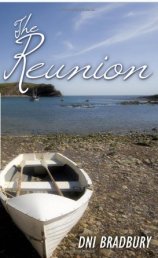
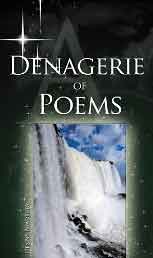
The Reunion Denagerie of Poems by Denny Bradbury

How they lived in King Alfred’s Time- Part II

26 Thursday May 2011

Posted by dennybradburybooks in History

≈ 2 Comments

Tags

Borvo, Christianity, education, folk healer, King Alfred, Paganism

PagansAnglo-Saxon England at the time of King Alfred’s reign was the epitome of a country paralysed by fear.  The constant battles with the Pagan Danes meant that England was not only losing men who were fighters but also losing valuable farmers, which in turn had a detrimental effect on the country’s ability to sustain itself as a thriving nation.

King Alfred’s biographer, and also his friend, Asser, writes that in the spring of 871 when Alfred was crowned “he did not think that he alone could ever withstand such great harshness from the pagans unless strengthened by divine help, since he had already sustained great losses of many men while his brothers were alive.” 

For much of Alfred’s reign he was doing battle with the heathen Viking King Guthrum, yet England in this period, despite being Christianised, still had many pagan tendencies.  Although Alfred was a Christian King who ultimately converted a pagan ruler such as Guthrum to Christianity through the ritual of Baptism at his final defeat, Alfred did commit a pagan act of vengeance against his defeated opponent by such a conversion.

Denny Bradbury’s latest novel, Borvo, due for release in July, draws upon a combination of Christianity, represented by King Alfred himself, and Paganism represented by the young healer boy who utilises the pagan rituals of healing through nature.  Just as Alfred himself lived for a time as a peasant in the marshes of Athelney , when he was in hiding from the Danes – a humbled and appreciative King living with his wife and children alongside his own people – so too in Borvo does the King form a friendship with a young boy of no social standing but remarkable skill and eventual vital necessity to the King.Marshes

When Alfred came to the throne of Wesssex as a young boy aged twenty one, his kingdom lay in ruins.  Pagan Vikings, led by Guthrum, had destroyed the country’s crop, torn down and looted churches and monasteries and burned whole towns to the ground.  Through Alfred’s sheer determination, applied knowledge and skill, and his unwavering faith in God, he began to slowly rebuild his kingdom for his people, making it his mission to rescue and restore the culture of England that the Pagans had all but destroyed.  Alfred not only trained and taught the next generation to stand firm in their belief in the Christian faith, resisting what he saw to be the influences of paganism such as fame, fate and vengeance, he also worked extremely hard to promote and grow a cultural vision steeped in Christianity through many mediums such as art, literature and education, teaching men how to read and creating his own written law code.

His time spent in hiding, learning to live like one of his own people, meant he developed a strong bond with those of humble origins who later helped him to fight for, and reclaim, his crown.

In Denny Bradbury’s “A Denagerie Of Poems” there is a poem entitled “Heathland” where she writes:

“Heathland calls and pulls my heart,
This is not where I made my start,
I came to view on journey wild,
And found my place, as though a child.”

As in Borvo, and during the reign of King Alfred, the land and those who worked the land were vital in sustaining the country’s growth.  Denny explores this theme by mixing in both the elements of Paganism and Christianity at a time of great change and unrest, illustrating the plight of a pagan folk healer in the wake of Christian dominance and how common ground can be found between the two.

To read more about Paganism versus Christianity, please click here.

Elizabeth Bridgefield


To purchase one of Denny’s books please click on the images below or contact Denny directly at email denisebradbury@btinternet.com.
The Reunion Denagerie of Poems by Denny Bradbury

Healing – Pagan versus Christianity

23 Monday May 2011

Posted by dennybradburybooks in History

≈ Leave a comment

Tags

Borvo, Christianity, Denny Bradbury, healers, King Alfred, pagan

The 'wise' or the 'witches'

We have already ventured into the world of healers, focussing on the Anglo-Saxon era around the time of King Alfred.  Indeed this topic and this time-frame is the source of Denny Bradbury’s new book ‘Borvo’.

One area Denny touches upon is the plight of folk-healers in the face of Christian dominance.

Within their communities, folk-healers were respected and a vital part of survival for the villages.  Their tasks varied from nurses, midwives and counsellors to pharmacists and surgeons.

Indeed, they have been described as the ‘unlicensed doctors and anatomists of western history’ (Ehrenreich/English 1971).

As mentioned in ‘Anglo-Saxon Healing – Potions, amulets and chants‘, knowledge of anatomy and treatments tended to be handed down through generations of family; each person learning from their predecessor and adding their own refined methods to the vault of history.

Working with Mother Nature and using the forces around them was a main characteristic of folk-healing, and that was a form of pagan religion.

Unfortunately it is always the victor of any battle who will write its’ history and paganism got a raw deal at the hands of Christianity.

The Edict of Milan in AD313 sealed the fate of paganism and other druid religions, confirming Christianity as the religion of the Roman Empire.

Pagan healers were written into history as devil worshippers.  Christians believed any illness was God’s will – pain was a form of punishment – and only faith and prayer for forgiveness would alleviate the condition if, indeed, it was God’s desire for them to be healed.

As such, should anyone try to heal by other means, such as folk-healers and their herbs, then they were working against God.  Any successes were therefore attributed to the devil and any treatments were deemed ‘evil’.

Prayers vs chants; faith in God vs belief in Mother Nature.  The two ‘religions’ were very similar yet on a political scale one was accepted; the other was to be feared.

The role of the physician as a profession only really came about in the 13th century.  The Church up to this point was deemed to have hindered the development of medicine and anatomical knowledge: faith was preferred to science.

The folk-healers did not understand ‘science’ as such but they are respected in the present day for their understanding of ailments and cures.

It was only through the crusades an experience of the Arab world that medicine became recognised.  From that moment, the idea of treatment was becoming more acceptable and the Church assisted in the improvement of knowledge.

Until this time any physicians used to treat royalty and the upper classes tended to get their training through reading Latin texts which based ideas on theology and astrology – monks and priests.

Peasants would not have had access to these ‘doctors’ and had all folk-healers been eradicated, which was the attempt during the witch-trials of 14th-17th century, then there is no doubt that society would be very different today.

It is a sorry state of affairs when the people call healers ‘wise’ yet the authorities term them ‘witches and charlatans’.

Laura Scott

To purchase one of Denny’s books please click on the images below or contact Denny directly at email denisebradbury@btinternet.com.
The Reunion Denagerie of Poems by Denny Bradbury

How they lived in King Alfred’s Time

19 Thursday May 2011

Posted by dennybradburybooks in History

≈ Leave a comment

Tags

Christianity, Denny Bradbury, education, healing, King Alfred, Paganism

The time of King Alfred.  To many, indeed my own introduction to the Great man himself was to learn about a King of England who infamously burnt a humble woman’s cakes.  Disguised as a soldier in his own army, fleeing the marauding Danes, he concentrated too much on planning his warfare strategy and subsequently forgot his minder’s duties.  Burnt cakes and a thoroughly chastised King by one of his own subjects who had no idea she was giving a dressing down to the great King of Wessex himself.

King Alfred’s reign from 871 – 899 was a period of much change, with his subjects living through a time of war as the majority of it was spent fighting the Danes.  On the White Horse Hill in Uffington, the battles between the Danish and King Alfred’s army was so fierce and so brutal that the Danish blood drowned the grass on the knoll and it is a proven fact that to this day no vegetation will grow there.

The latter half of the ninth century was in the midst of the decades when the Pagan Vikings from Scandinavia were constantly raiding the Christian British Isles.  This is a topic that Denny Bradbury takes to her heart in her soon to be published novel, Borvo, where her chief protagonist is a young healer boy who still practices his healing pagan rituals at a time of critical religious change within England.  In the book, as discussed here, Denny tells of how one of the King’s own subjects comes to his aid with his pagan healing at a time when the King was rejecting Paganism in favour of Christianity.  Denny’s love of the county of Wessex leads her to set her novel in the period when the very first King of Wessex was appointed.

During Alfred’s reign, he pushed very hard for better education for a nation of people that were not well-educated and more importantly he helped make learning important in the lives of the people of his land.  With the Danes having looted the monasteries and the churches – buildings that were the centres of education – and having burnt down many libraries, Alfred sought to promote a national educational system by establishing a Court school, and also importing internationally famous scholars to teach there.  He regarded access to public education based upon a Christian foundation as the birthright of every Englishman.  Under Alfred, the nation was united in fighting for their homeland and also educated to have a far clearer understanding of the rules they were living by, which Alfred did by translating the Ten Commandments under his own Law Code, despite having had no formal education.  It was during this period that English became the official written language.King Alfred and books

Through the time of his reign, Alfred defeated the Danes, protected his people and improved social order, applying all his energy to the physical task of defending his country and the mental task of improving the way the country was governed.  Such a devoted ruler was he and such a positive influence upon his people that he remains the only English Sovereign ever to be given the epithet the Great which was bestowed upon him in the 17th century.

In Part II, I shall concentrate more on the differences between Paganism and Christianity and how Alfred’s battle against one to introduce the other meant a dramatic time of change.  For, as Alfred himself said, “Learning makes life more rewarding and enjoyable… the worst thing of all is ignorance.”

Never a truer word was said.

Elizabeth Bridgefield

To purchase one of Denny’s books please click on the images below or contact Denny directly at email denisebradbury@btinternet.com.
The Reunion Denagerie of Poems by Denny Bradbury

← Older posts
Newer posts →

Subscribe

  • Entries (RSS)
  • Comments (RSS)

Archives

  • March 2021
  • January 2021
  • April 2020
  • February 2020
  • January 2020
  • February 2019
  • September 2018
  • April 2018
  • March 2018
  • February 2018
  • January 2018
  • December 2017
  • November 2017
  • September 2017
  • August 2017
  • June 2017
  • May 2017
  • April 2017
  • March 2017
  • January 2017
  • December 2016
  • October 2016
  • September 2016
  • August 2016
  • July 2016
  • June 2016
  • May 2016
  • April 2016
  • March 2016
  • February 2016
  • January 2016
  • December 2015
  • November 2015
  • October 2015
  • September 2015
  • August 2015
  • June 2015
  • May 2015
  • April 2015
  • March 2015
  • February 2015
  • January 2015
  • December 2014
  • November 2014
  • October 2014
  • September 2014
  • August 2014
  • July 2014
  • June 2014
  • May 2014
  • April 2014
  • March 2014
  • February 2014
  • January 2014
  • December 2013
  • November 2013
  • October 2013
  • September 2013
  • August 2013
  • July 2013
  • June 2013
  • May 2013
  • April 2013
  • March 2013
  • February 2013
  • January 2013
  • December 2012
  • November 2012
  • October 2012
  • September 2012
  • August 2012
  • July 2012
  • June 2012
  • May 2012
  • April 2012
  • March 2012
  • February 2012
  • January 2012
  • December 2011
  • November 2011
  • October 2011
  • September 2011
  • August 2011
  • July 2011
  • June 2011
  • May 2011
  • April 2011
  • March 2011

Categories

  • Denny's Diary
  • fairytales
  • Fiction
  • History
  • Literacy News
  • Misc
  • Poetry
  • Polls
  • Reviews

Meta

  • Create account
  • Log in

Latest Tweets from Denny Bradbury Books

Tweets by DennyBradbury

Blog at WordPress.com.

Privacy & Cookies: This site uses cookies. By continuing to use this website, you agree to their use.
To find out more, including how to control cookies, see here: Cookie Policy
  • Subscribe Subscribed
    • Denny Bradbury Books
    • Join 73 other subscribers
    • Already have a WordPress.com account? Log in now.
    • Denny Bradbury Books
    • Subscribe Subscribed
    • Sign up
    • Log in
    • Report this content
    • View site in Reader
    • Manage subscriptions
    • Collapse this bar