• De:versify – New Poetry
  • Welcome
  • About
  • Blog
  • Reviews and Comments
  • BORVO
  • Denagerie of Poems
  • The Reunion
  • Contact

Denny Bradbury Books

Denny Bradbury Books

Tag Archives: Denny Bradbury

Night writing

19 Thursday May 2011

Posted by dennybradburybooks in Denny's Diary

≈ Leave a comment

Tags

Catherine of Braganza, Denny Bradbury, fiction, longer poem, Poetry

Night Time

Why writing at night can be a wonderful experience

Often when the night comes and sleep eludes us we let our minds roam to places both pleasant and dark. One such night a while ago I mused on the difference between day and night, specifically 4 o’clock. A poem emerged which gave tribute to Catherine of Braganza who brought with her a love of tea and consequently tea time. The night time verses show how we can turn the darkness to our advantage and clear away some unproductive thoughts, here are a couple of verses from a longer poem:

Those distant sun filled memories of tea upon the lawn; Drive us mad with fever as we wait upon the dawn

With what demonic pleasure do the night elves sit and wait; to curse you with each measure of the seconds on your plate

Yet night is often when our darkest thoughts come home; they’re sorted into status, by morning they are gone

Denny Bradbury

To purchase one of Denny’s books please click on the images below or contact Denny directly at email denisebradbury@btinternet.com.
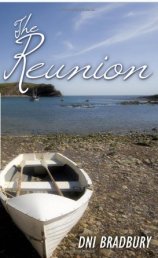
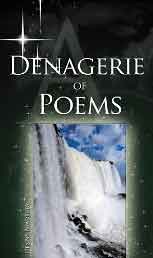
The Reunion Denagerie of Poems by Denny Bradbury

King Alfred

17 Tuesday May 2011

Posted by dennybradburybooks in History

≈ 8 Comments

Tags

anglo saxon kings, Borvo, Denny Bradbury, healer, King Alfred, Winchester

King Alfred

By Sarah Hogan

Statue of King Alfred in Winchester - image by Ewen and Donabel

King Alfred, or Alfred the Great, ruled the House of Wessex for 18 years. He became King of Wessex in 871 and was the first King to call himself King of the Anglo Saxons.

His reign was full of battles with the Vikings, on land and sea. He defended southern parts of England from invasion from his base in Winchester. Winchester became more prominent under the Wessex kings, King Alfred was buried there and a statue of him can be found in the Hampshire town.

King Alfred is now a central character in a new book from Denny Bradbury, Borvo. It is set in Winchester and tells the story of a pagan boy who comes to the aid of the great King.

Learning and culture was said to be of great importance to King Alfred. It’s thought that he encouraged English to be used as a written language. Under his rule, the Anglo Saxon Chronicle was begun, a huge source of early English history.

King Alfred is also said to be the founder of the Royal Navy. It most likely did exist in some before him, but he took it upon himself to greatly improve ships and defences across the Wessex kingdom.

It’s recorded in the Anglo Saxon Chronicle that Alfred died in 901. Although that could not necessarily be true as many different scholars and sources contributed to the Chronicle. He was initially buried in Winchester Cathedral, but his remains were moved to Hyde Abbey in 1110. When Henry VIII ordered the dissolution of the monasteries in 1536, the Abbey was demolished and his remains have never been found.

He is Elizabeth II’s 32nd great – grandfather.

King Alfred is known as the great Anglo Saxon ruler. In Borvo, Denny Bradbury explores how this eminent King needs help from a lowly pagan boy.

To find out more about Winchester Cathedral please click here.

To purchase one of Denny’s books please click on the images below or contact Denny directly at email denisebradbury@btinternet.com.
The Reunion Denagerie of Poems by Denny Bradbury

Anglo-Saxon Healing – Potions, amulets and chants

16 Monday May 2011

Posted by dennybradburybooks in History

≈ 1 Comment

Tags

Borvo, Denny Bradbury, healers, healing powers, King Alfred

Healers

Borvo means the deity of healing

The titular character in Denny Bradbury’s latest book is named after the deity of healing, Borvo.

This teenage boy comes from a healing family and we follow his growth into maturity in the time of King Alfred.

Every settlement during this era would likely have a healer within sight.  Women, in particular, were more prone to early deaths than their male counterparts: pregnancies, miscarriages and the act of child-birth itself were all dangerous times in the life of a woman in the Anglo-Saxon era.

Archaeologists have also linked other common problems to this era: toothache, headache, earache, burns, and joint pain/bone deformities in particular – linked to the harsh life and lack of certain nutritional items in their diet.

Nowadays we would go to the local shop and buy some medication or ointment to ease our problems – during the 9th century, however, treatments required longer preparation.

Salves, poultices, and infusions would be concocted from local plants: garlic was often used to treat infection; lichens were useful in assisting the mend of broken bones; and camomile for digestion.  Nettles, watercress and fungi were also frequently used.

It was not only ‘potions’ which were used in healing – advice was given, amulets worn and chants were sung.  Stones such as amber were thought to ward off evil spirits and joint pain; emerald to aid memory; and garnet for general good health.

There was a time when historians looked back to this period of history and ‘laughed’ at the so-called medical treatments – the idea of trial and error, praying to gods and ‘hoping for the best’.

Medical manuscripts written in the age – such as ‘The Leech Book of Bald’ by Bald, a companion of King Alfred – talk of flying venoms and a variety of elves (wood elves, water elves, bright elves and dark elves).

Taken at face-value these seem irrational causes of problems.  Yet look closer and understand ‘flying venom’ to mean airborne disease and elves to be carriers of conditions from various natural sources, and you begin to see the start of medical textbooks.

Nowadays, historians take a different view on medical treatment in Anglo-Saxon times.

Aside from community healers who usually learnt their trade through knowledge handed down through family, physicians – few and far in between – were also in existence.  During this period, professional medics were named ‘laece’ or ‘leech’.

Many originated from monasteries which were appearing more and more across the ‘British’ landscape.  They were taught language, studied Greek and Latin medical texts, and sometimes grew their own supply of herbs within the monastery gardens.

In her latest book, Denny beautifully merges historically sound life in the time of King Alfred, healing treatments and attitudes in particular, with an interesting fictional read.

Reserve your copy of her book now by emailing denisebradbury@btinternet.com

Laura Scott


To purchase one of Denny’s books please click on the images below or contact Denny directly at email denisebradbury@btinternet.com.
The Reunion Denagerie of Poems by Denny Bradbury

Denny reveals the latest on her new book Borvo

13 Friday May 2011

Posted by dennybradburybooks in Denny's Diary, Fiction

≈ 6 Comments

Tags

Author, Borvo, Christianity, Denny Bradbury, England, fiction, New Book, pagan, re-write, Writing


Denny Bradbury has been working hard on bringing her new book to life.  Having completed a second re-write a few selected individuals have had the privilidge of reading a copy before Denny feels the publication can go for publication.  Denny’s main character Borvo is a Pagan Healer who embarks on a journey to help him deal with a Christianising England  she’s been revealing what we could expect.

To purchase one of Denny’s books please click on the images below or contact Denny directly at email denisebradbury@btinternet.com.
The Reunion Denagerie of Poems by Denny Bradbury

A Study Of Fairytales – Part II

12 Thursday May 2011

Posted by dennybradburybooks in fairytales

≈ 1 Comment

Tags

cinderella, Denny Bradbury, Fairytales, magic, myth, nature

FairytalesOnce Upon A Time… These four words in themselves set the precedence for when each fairy story is set – rarely are they of a fixed period in time; scarcely ever do they refer to a specific moment. This is part of the beauty of the fairytale – it may have happened centuries ago or perhaps just yesterday, catching you unawares.

Fairytales, you see, make the seemingly impossible, possible.

As mentioned in Part I, the origin of the fairytale dates back as long ago as 1300BC, when tales were passed orally from generation to generation or through the medium of physical or dramatic theatre rather than by the written word.  Originally, each story was as much for the adults in society as they were for children. It was only in the 19th and 20th century that fairy stories became more of a teaching tool for the young with authors such as Hans Christian Andersen and The Brothers Grimm leading the way in Europe.  Prior to this, Aesop’s Fables were the first fairy tales to be made famous in the Western World, cultivating the beginning of myth and legend that would be passed down throughout the ages.

Centuries ago, as Denny Bradbury draws upon in her soon to be released novel Borvo, there was little or no understanding of science and its effects as is known now. Instead, the mysteries of the natural world were explained as being caused by the supernatural, by magic and enchantment, with the real and the unreal blurring to create something mystical and often fearful.  Denny writes of the time of Alfred the Great, of a period when there was much conflict between paganism and Christianity, when a young herbalist helps the King on a journey where the healing power of nature, often prevalent in fairytales, is viewed as witchcraft.

Fairytales are stories, often fairy-less ones; fables filled with darkness and light.  Some talk of superstition and the power of evil, yet at the same time they show the strength and honesty of beauty and love, all bound together in the complexities of human nature.  Cinderella’s father loves her unreservedly yet leaves her to suffer her fate at the hands of her step-family; those who behave decently are rewarded, those who’s greed and devilish nature lead them to commit foul deeds will receive their comeuppance.

Nature plays a large part in fairytales – animals talk, and nature protects just as easily as it harms as is demonstrated in Hansel & Gretel when the unsuspecting birds eat the trail of bread. Denny Bradbury feels much affinity with one aspect of nature – water – and it plays a part in many aspects of her work, as is discussed here, be it the Dorset coast in The Reunion, the lake in her short story Mirror Lake in Denagerie of Poems, or the brook her pagan healer spends time at in Borvo.

Fairytales explore the spiritual and the mystical, combining a fantastical story with the ordinariness of human nature.  They speak of humble, less fortunate people outwitting the rich, whilst drawing on the bonds of family, friendship and faith. They use colours to represent different emotions – black witches for evil, snow white for purity and red for love, passion and danger.Fairy stories

Finally, we must not forget that there is never a Happy Ever After for those with bad intentions – just like life today. That’s the joy of fairytales – they are timeless.

To read Part I of this study of Fairytales, please click here.

Elizabeth Bridgefield

To purchase one of Denny’s books please click on the images below or contact Denny directly at email denisebradbury@btinternet.com.
The Reunion Denagerie of Poems by Denny Bradbury

← Older posts
Newer posts →

Subscribe

  • Entries (RSS)
  • Comments (RSS)

Archives

  • March 2021
  • January 2021
  • April 2020
  • February 2020
  • January 2020
  • February 2019
  • September 2018
  • April 2018
  • March 2018
  • February 2018
  • January 2018
  • December 2017
  • November 2017
  • September 2017
  • August 2017
  • June 2017
  • May 2017
  • April 2017
  • March 2017
  • January 2017
  • December 2016
  • October 2016
  • September 2016
  • August 2016
  • July 2016
  • June 2016
  • May 2016
  • April 2016
  • March 2016
  • February 2016
  • January 2016
  • December 2015
  • November 2015
  • October 2015
  • September 2015
  • August 2015
  • June 2015
  • May 2015
  • April 2015
  • March 2015
  • February 2015
  • January 2015
  • December 2014
  • November 2014
  • October 2014
  • September 2014
  • August 2014
  • July 2014
  • June 2014
  • May 2014
  • April 2014
  • March 2014
  • February 2014
  • January 2014
  • December 2013
  • November 2013
  • October 2013
  • September 2013
  • August 2013
  • July 2013
  • June 2013
  • May 2013
  • April 2013
  • March 2013
  • February 2013
  • January 2013
  • December 2012
  • November 2012
  • October 2012
  • September 2012
  • August 2012
  • July 2012
  • June 2012
  • May 2012
  • April 2012
  • March 2012
  • February 2012
  • January 2012
  • December 2011
  • November 2011
  • October 2011
  • September 2011
  • August 2011
  • July 2011
  • June 2011
  • May 2011
  • April 2011
  • March 2011

Categories

  • Denny's Diary
  • fairytales
  • Fiction
  • History
  • Literacy News
  • Misc
  • Poetry
  • Polls
  • Reviews

Meta

  • Create account
  • Log in

Latest Tweets from Denny Bradbury Books

Tweets by DennyBradbury

Create a free website or blog at WordPress.com.

Privacy & Cookies: This site uses cookies. By continuing to use this website, you agree to their use.
To find out more, including how to control cookies, see here: Cookie Policy
  • Subscribe Subscribed
    • Denny Bradbury Books
    • Join 73 other subscribers
    • Already have a WordPress.com account? Log in now.
    • Denny Bradbury Books
    • Subscribe Subscribed
    • Sign up
    • Log in
    • Report this content
    • View site in Reader
    • Manage subscriptions
    • Collapse this bar
 

Loading Comments...